
Eritrea’s pharmaceutical story is one of the more remarkable chapters in the country’s modern history. It did not begin in a ministry office, a university laboratory, or a post-independence development plan. Its roots go much deeper — into the mountains of Sahel, where medicine, survival, science, and national struggle became inseparable.
The Eritrean Pharmaceutical Association, known as ERIPA, and the later industrial work of Azel Pharmaceutical Share Company are often viewed as post-independence achievements. That is true, but only partly. They are also the continuation of a wartime culture shaped by necessity, discipline, and self-reliance. During the thirty-year liberation struggle, Eritreans were forced to build systems where none existed. Healthcare was not a secondary concern. It was a matter of survival.
To understand Eritrea’s pharmaceutical sector today, one has to begin there: in a war environment where the movement had to care for fighters and civilians under blockade, bombardment, and extreme scarcity. Out of those conditions emerged a medical and pharmaceutical apparatus that was practical, inventive, and deeply tied to the broader project of nation-building.
The Foundations of Revolutionary Medicine
The origins of Eritrea’s pharmaceutical resilience go back to the harsh conditions of the early 1960s. When the armed struggle for independence began in 1961, rural Eritrea had almost no medical infrastructure, especially in areas affected by conflict. As the war expanded, access to basic medicines became even more difficult.
The Ethiopian imperial government, and later the Derg military regime, used medical restriction as part of its war strategy. Antibiotics, antiseptics, surgical tools, and other essential supplies were blocked or criminalized when they were suspected of reaching liberated or contested areas. The aim was clear: weaken the liberation movement not only through military force, but through disease, untreated wounds, and preventable death.
In the beginning, the response was improvised. Medics relied on whatever they could find. Traditional herbal knowledge was used alongside basic field medicine. Cloth was boiled and reused as bandages. Crude tools were sterilized over open flames. Nothing was wasted. Nothing was taken for granted.
But as the Eritrean People’s Liberation Front, the EPLF, expanded its presence in parts of Sahel during the mid-1970s, it became clear that improvisation alone would not be enough. The war was becoming long, organized, and punishing. A movement that expected to survive such a struggle needed more than courage. It needed a disciplined medical and pharmaceutical system.
That realization marked a turning point. The EPLF understood that victory depended not only on weapons and fighters, but also on the ability to preserve life, treat the wounded, and protect civilians. From that point onward, it began building a wartime health and pharmaceutical infrastructure that, in many ways, functioned like a ministry of health before the state formally existed.
The Orotta Phenomenon: Science Under Bombardment
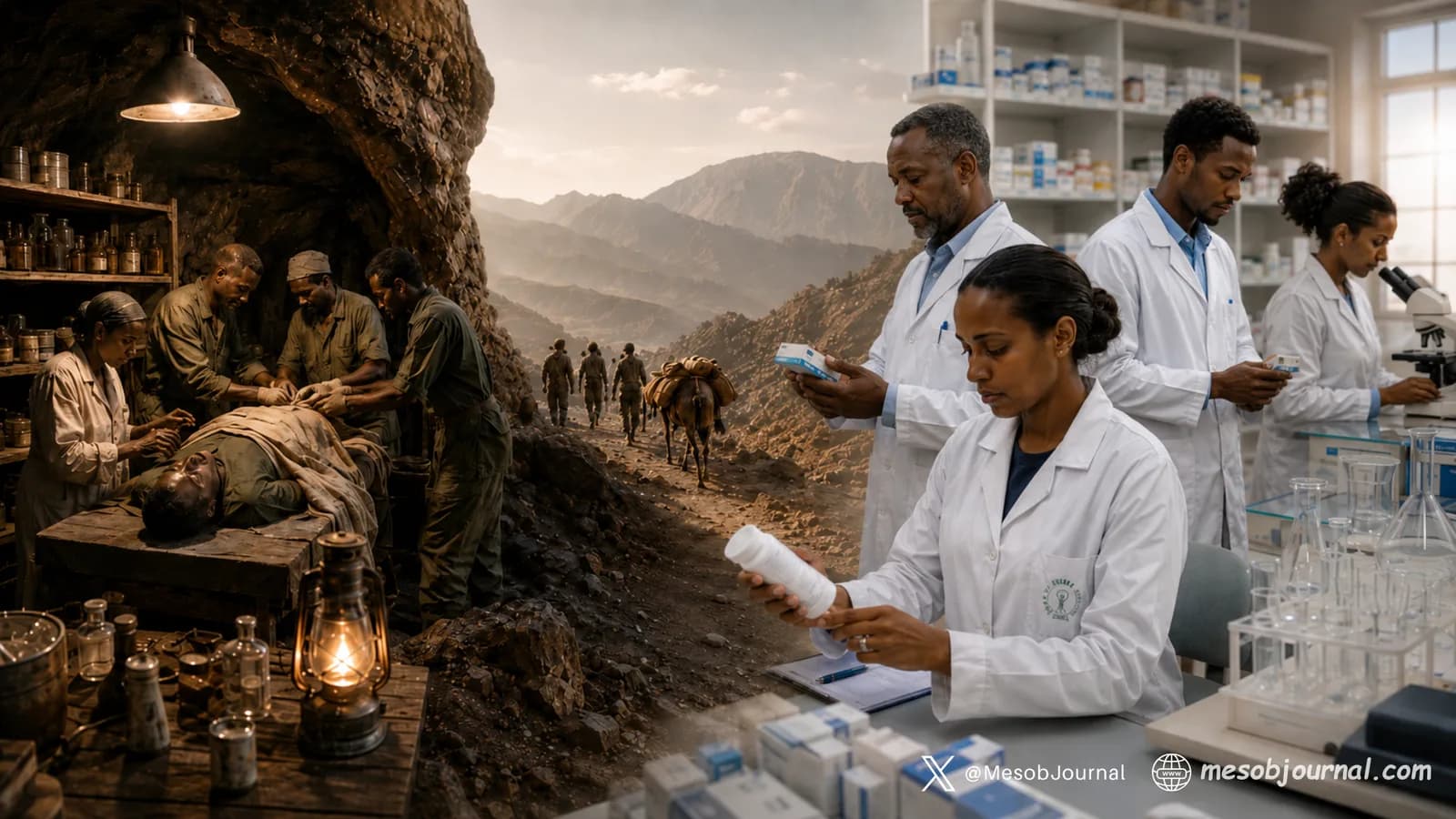
At the center of this effort stood the Orotta Underground Hospital, one of the most extraordinary institutions built during the liberation struggle. Carved into the volcanic rock of the Sahel mountains, Orotta was designed to survive constant aerial bombardment. From above, it was nearly invisible. Inside, it contained an entire medical world.
There were surgical rooms, recovery areas, treatment wards, storage spaces, and pharmaceutical units. These were not symbolic facilities. They were working institutions, linked by tunnels that allowed patients, medics, and supplies to move with relative safety even during military pressure.
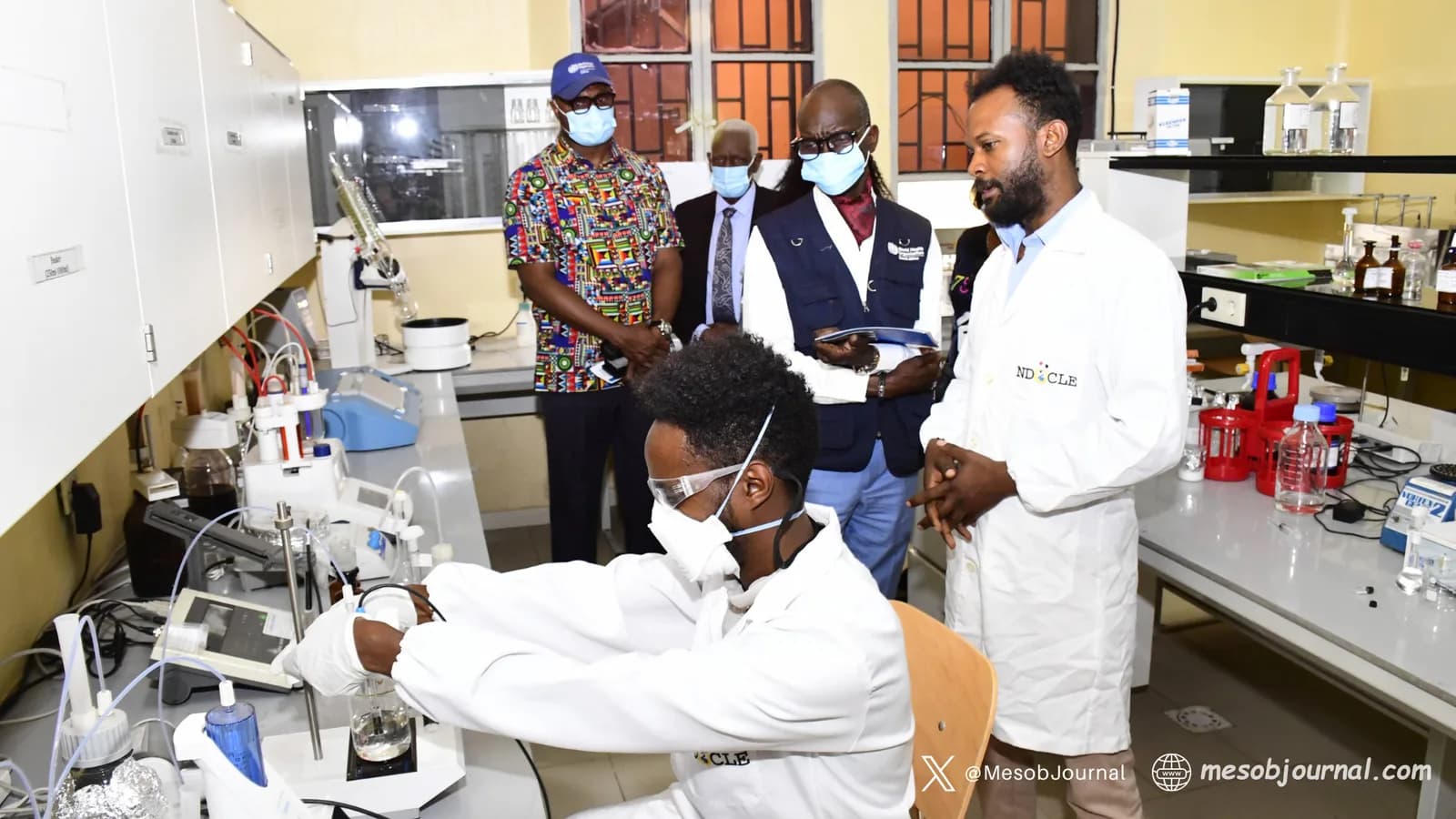
Inside those underground spaces, the EPLF did not simply distribute medicine. It produced medicine. Cut off from normal international supply chains, the pharmaceutical unit developed its own methods. Glass was recycled to make vials. Distillation units were built from scrap metal to produce sterile water. Alcohol for disinfection was generated through fermentation. Every process had to be adapted to the conditions of war.
This was survival, but it was not guesswork. It was science under pressure.
The wartime pharmaceutical institution developed laboratories, training systems, quality control procedures, and distribution networks. At first, production focused on the most urgent needs: saline solutions, simple pain relief, disinfectants, and wound-care materials. Over time, the system expanded. It began compounding antibiotics, ointments, and other essential preparations.
Even with limited equipment, safety remained central. Locally produced medicines were tested carefully before use. The goal was not merely to produce something quickly, but to produce something that could be trusted. That commitment to discipline became one of the defining features of Eritrea’s wartime medical culture.
Innovation, Education, and Gender Equality
The wartime pharmaceutical system also drew strength from a blend of modern science and local knowledge. Researchers and medical workers studied local plants for their medicinal value, looking for ways to supplement or replace scarce imported chemicals. Medicinal plants were tested and incorporated where useful. Cotton grown in liberated areas was processed into sterile wound-care materials.
This ability to combine available resources with scientific discipline gave the system flexibility. It allowed Eritrean medical workers to respond to the realities around them rather than wait for ideal conditions that never came.
Human training was just as important. The EPLF faced a severe shortage of trained medical professionals, so it created its own programs to train medics, nurses, laboratory technicians, and pharmacists. These programs covered anatomy, physiology, pharmacology, and practical emergency care, often taught by experienced practitioners who had learned under the pressure of war.
One of the most important features of this period was the inclusion of women in technical and medical roles. Women served as laboratory workers, medics, researchers, and frontline health personnel. This was not a minor detail. By breaking traditional gender barriers, the movement expanded its human capacity and made the pharmaceutical institution a genuinely national effort.
The supply network behind this system was equally demanding. Visible movement was dangerous because enemy aircraft targeted transport routes. Medicines were often moved at night or through camouflaged caravans. Camels carried supplies across steep and arid terrain. Underground caches helped keep frontline clinics stocked even during major military campaigns.
This integration of production, training, storage, and distribution allowed the system to keep functioning under conditions that would have destroyed a less organized structure. By the late 1980s, it was supporting large-scale military operations and ensuring that wounded fighters could receive timely treatment. That capacity contributed directly to the EPLF’s ability to sustain major victories, including Afabet and Massawa.
Post-Independence: The Birth of ERIPA
After independence in 1991, the challenge changed. Eritrea no longer had to build medical systems in secret under bombardment. It now had to transform wartime experience into formal national institutions.
The establishment of the Eritrean Pharmaceutical Association, ERIPA, in 1992 was a key part of that transition. ERIPA helped professionalize the pharmaceutical sector and drew on the knowledge of those who had worked in the Sahel laboratories and wartime medical units. It became more than a professional association. It carried forward a historical legacy in which healthcare, science, and national development were closely linked.
ERIPA’s mission has centered on improving pharmacy practice, encouraging the rational use of medicines, and supporting national health development. One of its important areas of work has been alignment with international public health frameworks, including the World Health Organization’s AWaRe classification for antibiotics — Access, Watch, and Reserve. Through this focus, ERIPA has helped address antimicrobial resistance and strengthen the country’s approach to essential medicines.
Its work on the National Essential Medicines List also reflects this balance: self-reliance on one side, internationally recognized safety and quality standards on the other. Through conferences, professional training, and policy review, ERIPA has helped raise the role of pharmacists from dispensers of medicine to active participants in patient care and public health.
The association has also supported scientific research, public education, and awareness campaigns on safe medicine use. Issues such as maternal health, pharmaceutical safety, and responsible access to medicine have remained part of its broader public mission.
The continuity between the wartime pharmaceutical institution and ERIPA is visible in the values that shaped both: discipline, practical innovation, and public service.
Azel Pharmaceutical: A Symbol of Industrial Self-Reliance
While ERIPA provided a professional and regulatory framework, Azel Pharmaceutical Share Company became the industrial expression of Eritrea’s health sovereignty.
Established in 2003 as a joint venture with the Jordanian Pharmaceutical Manufacturing Company, Azel was created to strengthen Eritrea’s domestic pharmaceutical capacity. The reason was simple. A country that depends almost entirely on imported medicines remains vulnerable — to cost increases, supply disruptions, sanctions, transport problems, and global crises.
Building the facility in Keren was not easy. It required coordination between limited local infrastructure, foreign technical expertise, and the training of Eritrean staff to meet international manufacturing standards. From the beginning, Azel was designed to operate according to Good Manufacturing Practice guidelines.
Once operational, the company began producing essential medicines used across the public health system, including antibiotics, antimalarials, and treatments for chronic conditions. This was a major shift for the country. Local production reduced both the cost and logistical burden of importing essential drugs.
Azel also strengthened national resilience. During periods of global disruption, having domestic manufacturing capacity helped stabilize parts of the supply chain. Just as importantly, the company became a training ground for Eritrean technicians, laboratory workers, and pharmaceutical specialists.
That transfer of knowledge matters. It shows that industrial development is not only about machines and buildings. It is also about people. With targeted investment and disciplined training, countries facing difficult conditions can still build viable manufacturing sectors in strategic areas.
The Legacy of Self-Reliance and Transformation
The movement from the underground hospitals of Sahel to the production lines of Keren tells a larger story about Eritrea itself. It is a story of resilience, but also of organization. The wartime pharmaceutical institution proved that even under conditions of extreme scarcity, effective systems could be built when there was discipline, shared purpose, and scientific seriousness.
The later establishment of ERIPA and Azel Pharmaceutical shows how those wartime principles were carried into peace. What began as a survival system became part of a national health infrastructure. What was once produced in tunnels and hidden laboratories eventually found expression in professional associations, public health standards, and industrial production.
The values formed during the struggle — self-reliance, collective effort, and disciplined institution-building — continue to shape Eritrea’s pharmaceutical sector. ERIPA and Azel stand as examples of how a liberation-era commitment to protecting life became part of the country’s modern development path.
The journey from Orotta’s mountain tunnels to a national pharmaceutical system is not only a medical story. It is also a story of state formation, social transformation, and sovereignty. It shows how a society under pressure can turn the tools of survival into the foundations of a modern health system.
Conclusion
Eritrea’s pharmaceutical evolution, from the subterranean laboratories of Sahel to the production lines of Keren, remains one of the strongest examples of purposeful nation-building in the country’s modern history. It began under military blockade and bombardment, but it did not end there. It matured into a formal national infrastructure rooted in the same principles that sustained the struggle: discipline, self-reliance, and service to the people.
The wartime pharmaceutical institution showed that scientific rigor and quality care are possible even in conditions of severe deprivation. The key was organization. Eritrea’s liberation movement did not wait for peace to begin building the foundations of a future state. It trained people, created systems, protected civilians, and treated medicine as a national responsibility.
The transition to ERIPA and Azel Pharmaceutical represents the institutionalization of those values. ERIPA provided the professional and regulatory foundation needed to connect local practice with global standards. Azel gave the country an industrial base for pharmaceutical self-sufficiency. Together, they transformed a legacy of wartime survival into a long-term project of health sovereignty.
In the end, Eritrea’s pharmaceutical history shows that national strength is not measured only by military endurance. It is also measured by a country’s ability to protect life, train its people, and build institutions that last. The work of ERIPA and the achievements of Azel are more than professional or industrial milestones. They are part of a decades-long struggle for dignity, science, and sovereignty.