
The United States is preparing to lift sanctions imposed on Eritrea, Reuters reported, in a move that could mark one of the clearest signs yet of a shifting Washington approach toward the Horn of Africa and the Red Sea corridor.
Reuters, citing an internal U.S. government document, said Washington was set to rescind sanctions imposed under the Biden administration in 2021, measures that targeted Eritrea’s military, the ruling People’s Front for Democracy and Justice, and senior officials over the war in northern Ethiopia. The report said the decision was linked by analysts to Eritrea’s strategic position along the Red Sea, at a time of widening maritime insecurity and growing concern over the Horn’s fragile balance of power.
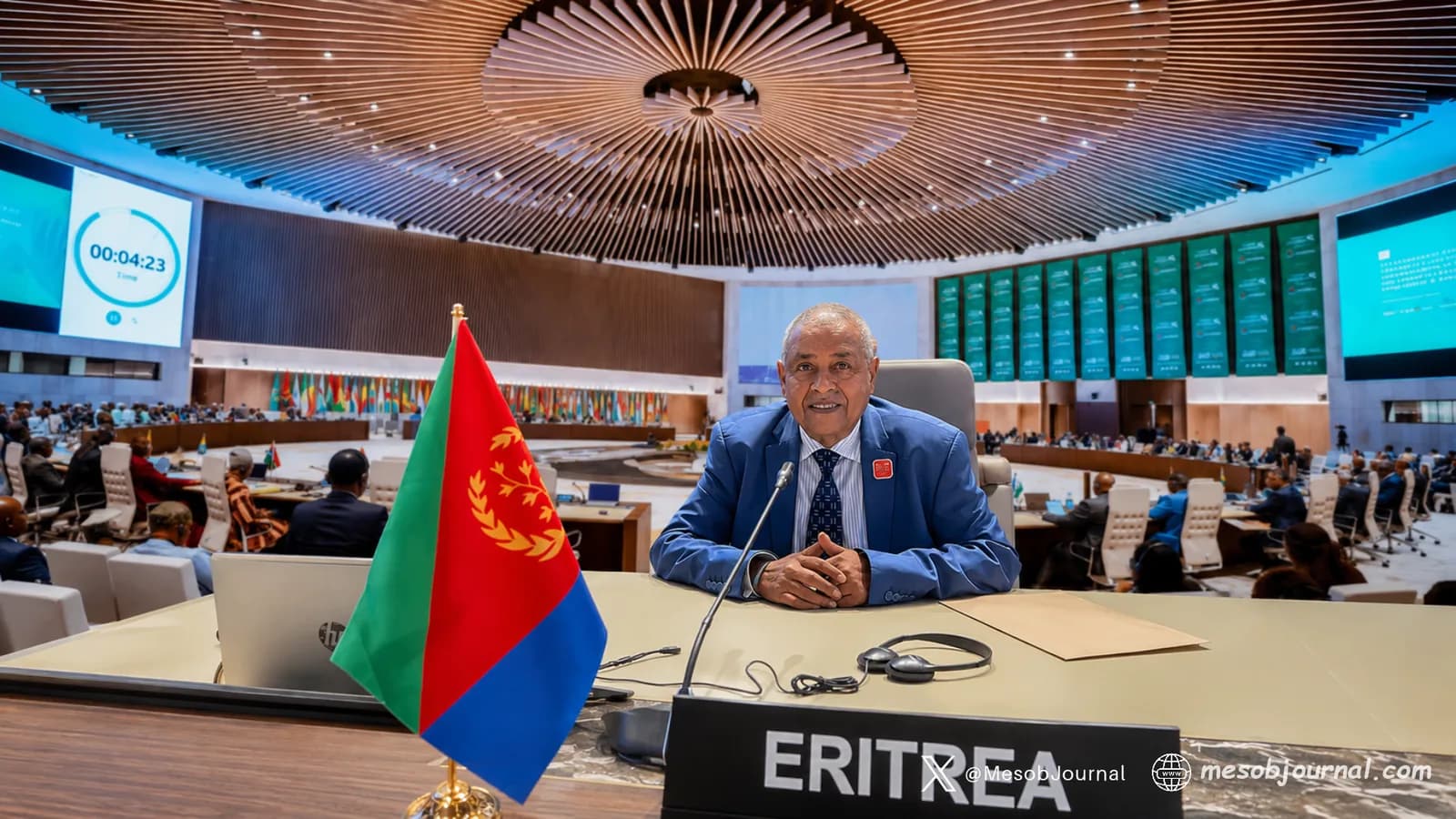
Eritrea’s Ministry of Information responded on Wednesday with a press release, welcoming reports of a possible reversal but placing the issue in a longer historical frame. The ministry said the sanctions were not an isolated episode, but part of what it described as more than two decades of “unwarranted” pressure against Eritrea.
“At a time of heightened interest, and reportedly, positive and impending measures that may be on the offing to redress unwarranted sanctions imposed on Eritrea for more than two decades now, a sober and retrospective overview of the episodes is perhaps appropriate,” the statement said.
The ministry traced the record back to December 24, 2009, when the U.N. Security Council imposed sanctions on Eritrea over allegations related to Somalia. Asmara has long rejected those allegations, saying they were politically driven and unsupported by credible evidence. The U.N. Security Council lifted the sanctions in November 2018 through Resolution 2444.
For Eritrea, the issue did not end with the lifting of the U.N. measures. The Ministry of Information said Asmara had sought explanations for why the sanctions were imposed in the first place, arguing that accountability remained necessary for “the maintenance of the requisite standards for the dispensation of international justice.”
The ministry asked who had been accountable for what it called “illicit sanctions” and whether legal recourse existed to examine the damage caused by the measures.
The reported U.S. move comes amid a wider reassessment of Red Sea security. Reuters said tensions linked to Iran and disruptions around the Strait of Hormuz had increased the strategic importance of the Red Sea route, where Eritrea holds one of Africa’s longest coastlines facing Saudi Arabia and the Arabian Peninsula.
The same report said U.S. officials also viewed the sanctions reversal as a message to Ethiopia, whose recent public rhetoric on sea access has raised alarm in the region. Reuters cited the U.S. government note as saying Washington had repeatedly communicated to Ethiopia that it opposed “any attempt to acquire sea access by force.”
Ethiopia’s renewed Red Sea campaign has added another layer of concern to the regional picture. Addis Ababa has framed sea access as an existential national priority, while senior officials, military figures and state-linked media have revived claims over Assab and Eritrea’s coastline. For Asmara, the issue is not commercial transit between sovereign states, but the use of political pressure and military rhetoric to challenge Eritrea’s territorial integrity. That concern is reinforced by recent history: Ethiopia refused for years to implement the final and binding border ruling issued after the Algiers Agreement, leaving Eritrea under a prolonged “no war, no peace” security crisis. Against that background, Washington’s reported message opposing any acquisition of sea access by force carries wider significance. It signals that another attempt to impose outcomes on Eritrea through coercion would deepen, not resolve, regional instability.
The Biden administration’s 2021 sanctions were issued under a broader executive order related to the northern Ethiopia conflict. The U.S. Treasury said at the time that sanctions could target actors deemed responsible for prolonging the crisis or obstructing a ceasefire or peace process.
Asmara rejected those measures from the beginning. In Today's statement, the Ministry of Information called the Biden-era sanctions “unlawful and unilateral” and said Eritrea “strongly condemned this illicit act at the time.”
The ministry said it hoped the reported lifting of the sanctions would “herald an enduring rectification of misguided policies to ensure justice, legality and fairness.”
For Eritrea, the removal of sanctions, if formally confirmed, would not be treated as a favor or diplomatic gift. It would be seen as a correction of a policy Asmara has long argued was built on pressure, selective narratives and the denial of Eritrea’s sovereign right to pursue an independent foreign policy.
The decision, if announced, would also come at a moment when Washington is being forced to reconsider the cost of estrangement from a state positioned on one of the world’s most sensitive maritime corridors. Eritrea has repeatedly said its foreign relations are open to all countries, provided they are based on mutual respect, sovereignty and non-interference.
That principle now sits at the center of the emerging debate. The question is no longer only whether sanctions are lifted. It is whether Washington is prepared to move beyond a failed pressure-based approach and deal with Eritrea as a sovereign Red Sea state whose stability has become impossible to ignore.