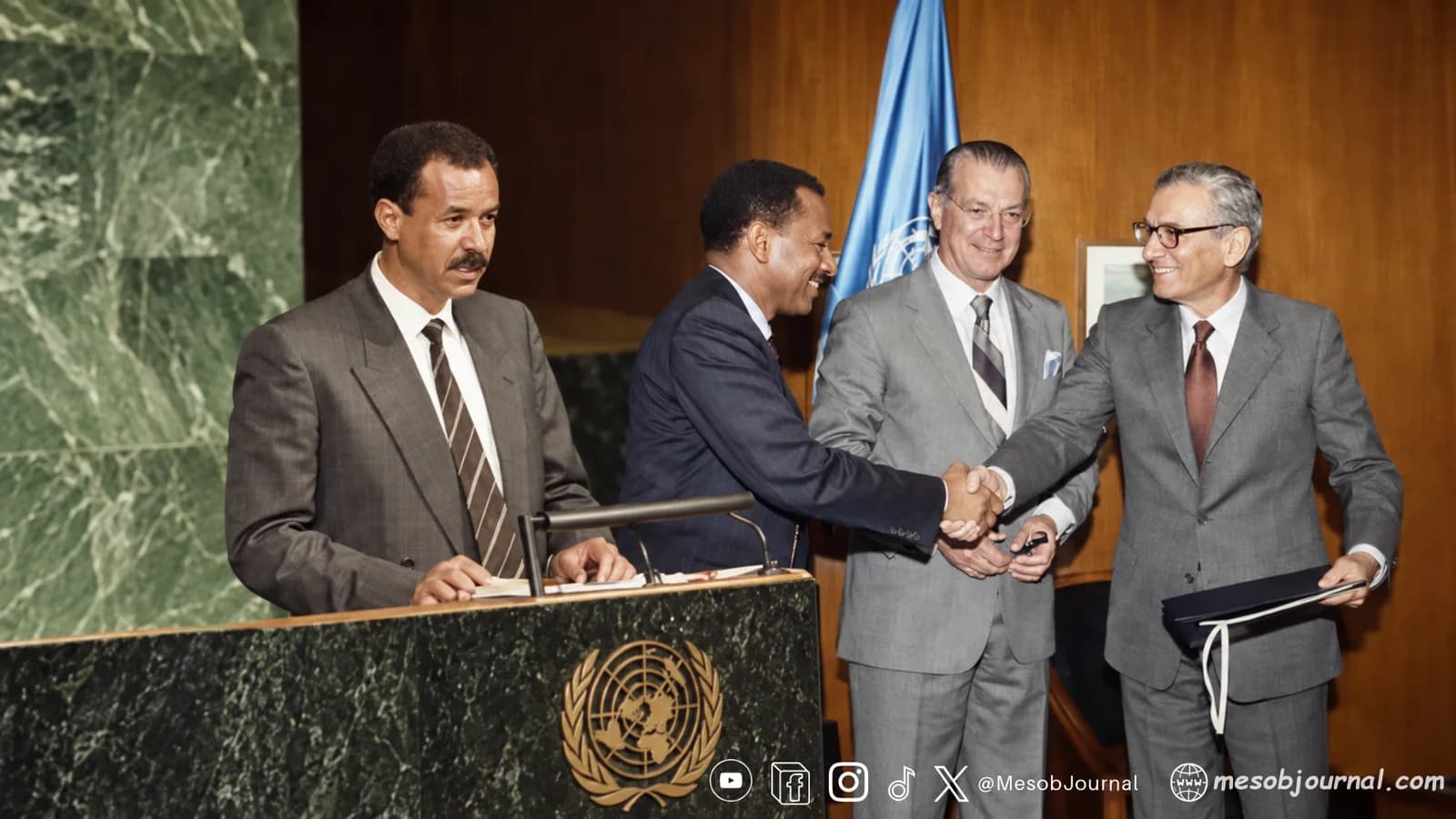

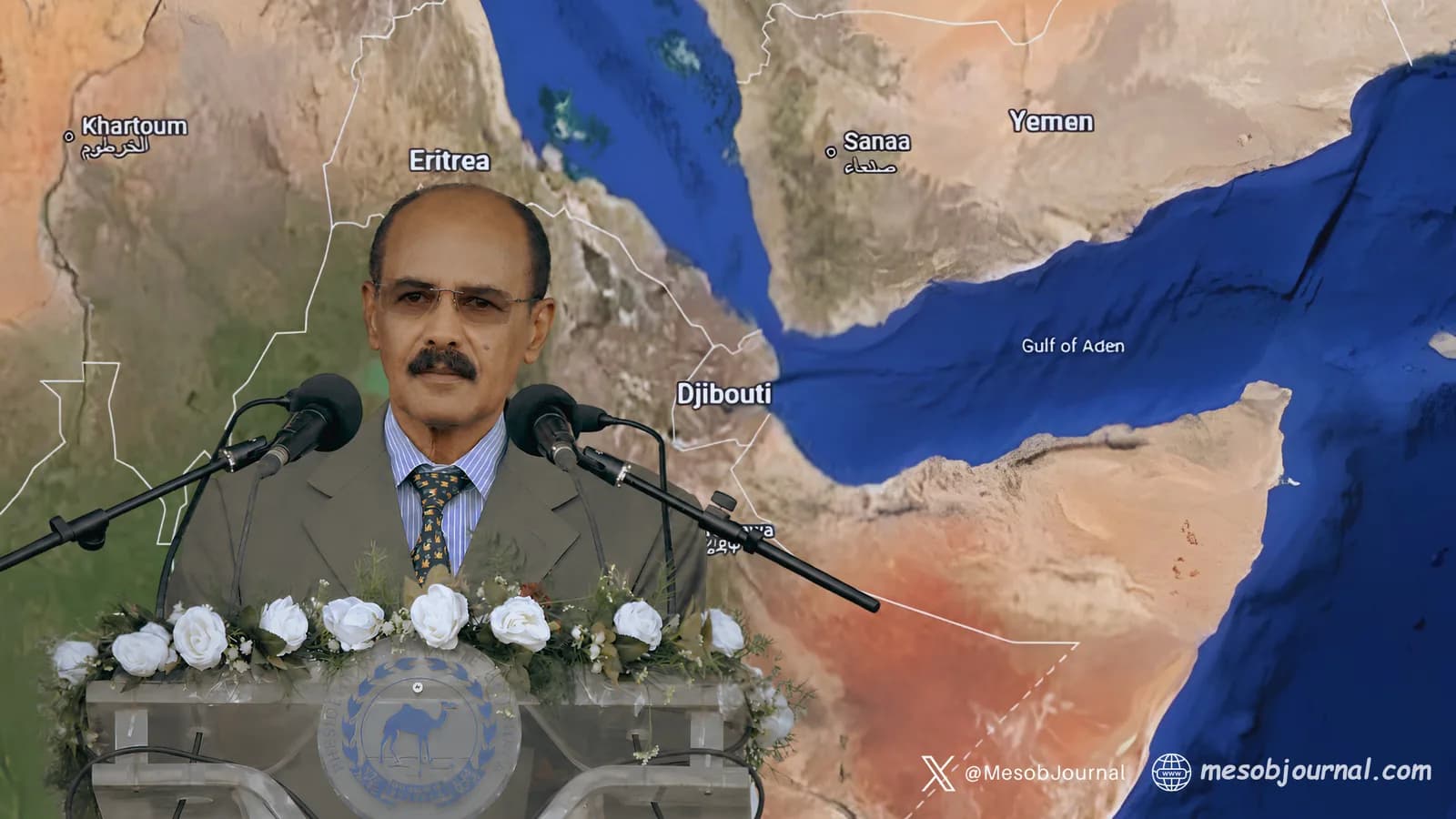
President Isaias Afwerki’s Independence Day address placed the Horn of Africa at the centre of Eritrea’s regional outlook, arguing that the crises in Ethiopia, Sudan, Somalia and South Sudan are rooted less in geography than in the failure to build sovereign, citizen-centred states.
President Isaias Afwerki’s 35th Independence Anniversary address was widely noted for its call for a fairer global order. But one of the speech’s most important passages was regional, not global.
After speaking about the old world order, Africa’s marginalisation and the need for a new framework of justice, he turned to what Eritrea calls its immediate neighbourhood: the Nile Basin, the Horn of Africa, the Red Sea and the Gulf. Then he narrowed the lens further.
The Horn of Africa, he said, is the sub-region Eritrea follows with “close and sustained attention” because of its practical significance.
Eritrea is not looking at the Horn as a distant observer, nor as a state chasing influence for its own sake. It sees the region as a security environment, a historical space, a development corridor and, increasingly, a battlefield of competing external agendas.
The core of the President’s argument was blunt: the Horn’s instability is not accidental. It is rooted in four related failures — the absence of citizen-centred nationhood, the weaponisation of ethnic, clan and religious divisions, the cultivation of warlords against sovereign institutions, and the corrosive role of corruption and foreign intervention.
It is a hard diagnosis. It is also difficult to dismiss.
The unfinished business of nation-building
The phrase “nation-building” is often used lazily in African politics. In President Isaias’ address, it had a sharper meaning.
He contrasted citizen-centred nationhood with societies organised vertically along ethnic, clan or religious lines. That distinction goes to the heart of the region’s crisis.
A citizen-centred state treats people as members of a common political community. It does not deny culture, language, region, religion or local identity. But it refuses to turn those identities into the operating system of the state.
Much of the Horn has moved in the opposite direction.
In Ethiopia, ethnic federalism has not produced a stable civic state. It has normalised political mobilisation through ethnic blocs, territorial competition and historical grievance. The result has been repeated violence, mass displacement, armed movements and a political culture where national questions are too often reduced to communal bargaining.
In Somalia, the state has spent decades struggling against clan fragmentation, armed groups, foreign security templates and externally sponsored political engineering. Sovereignty exists formally, but its practical exercise remains contested by internal fragmentation and outside pressure.
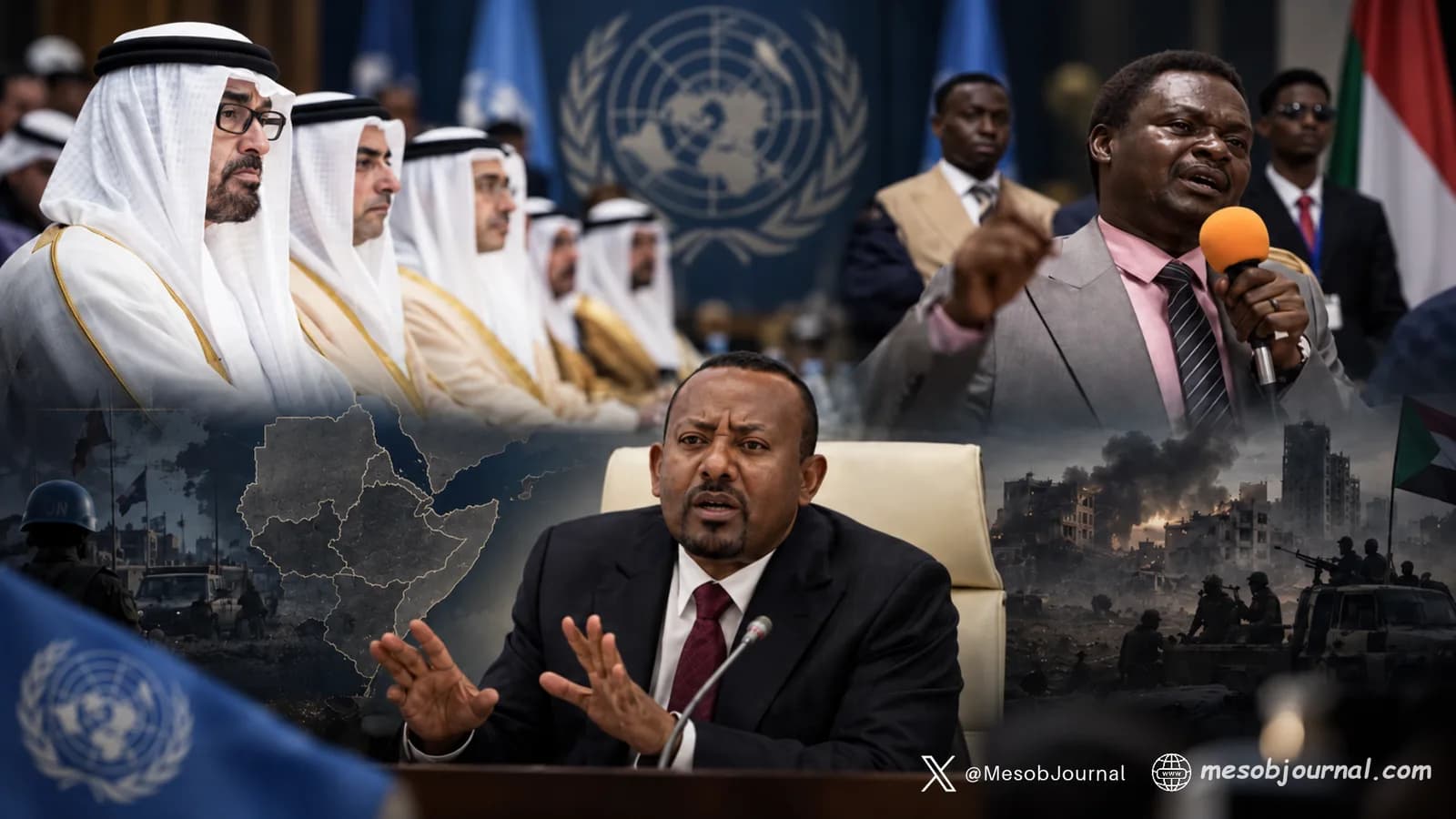
Sudan is being torn apart by the collision between the national army and a paramilitary structure that grew into a state-threatening force. The war is not simply a domestic power struggle. It has become a regional test of whether armed formations, backed or tolerated by outside interests, can override sovereign institutions.
South Sudan, the world’s newest state, remains trapped in factional politics, elite competition and the burden of a liberation movement that became a government before it became a durable national institution.
Different countries. Different histories. Similar disease.
That was the point of the speech.
IGAD’s lost promise
President Isaias also returned to a theme Eritrea has raised for decades: the failure of IGAD to become a serious vehicle for regional development.
IGAD began as IGADD, with a narrow focus on drought and desertification. Eritrea, after independence, supported the idea of transforming it into a broader framework for development, cooperation and stability. That ambition did not materialise.
The reason is not hard to see.
A regional organisation cannot function properly when its member states are internally fractured, externally dependent or willing to use the organisation as a platform for narrow political manoeuvring. Development integration needs states that can make commitments and keep them. Security cooperation needs governments that are not themselves captured by militia politics, donor calculations or rival foreign patrons.
The Horn never lacked regional institutions on paper. It lacked the political conditions that make institutions meaningful.
That is why the President’s criticism of IGAD is not merely administrative. It is structural. Eritrea’s view is that a regional body cannot build stability while the region’s states are being pulled apart from within and manipulated from without.
Warlordism as a political instrument
One of the strongest lines in the address was the reference to the “cultivation of warlords” to replace and undermine sovereign institutions.
This is not abstract language in the Horn of Africa.
The region has seen armed factions treated as political alternatives, militias rebranded as stakeholders, insurgent groups elevated into bargaining instruments and paramilitary forces used to weaken formal state authority. Once this pattern takes root, national institutions become just one actor among many. The army becomes negotiable. Borders become flexible. Ports become leverage. Civilians become collateral.
Sudan is the clearest current example. A paramilitary force did not emerge from nowhere. It was tolerated, expanded, armed and politically accommodated until it became strong enough to challenge the state itself. Once war erupted, external support networks turned the conflict into something larger and more dangerous than an internal Sudanese crisis.
The danger is simple. Once warlordism becomes useful to outside powers, peace becomes less attractive than managed instability.
Foreign intervention is not a side issue
President Isaias described foreign intervention and subservience to external interests as the most detrimental factor in the Horn’s crises.
This is where Eritrea’s regional reading differs sharply from much of the standard commentary.
Outside analysis often treats foreign intervention as a response to instability. Eritrea sees it as one of the engines of instability.
In the Horn, external actors do not simply observe crises. They fund paramilitaries, arm aligned states, design mediation tracks, sponsor political formulas, pressure governments, reward compliance and punish independent positions. Some enter through humanitarian language. Others arrive through counterterrorism, port access, migration control, Red Sea security, commercial investment or “peace processes” that conveniently preserve their influence.
The result is a region where sovereignty is constantly negotiated under pressure.
This is a political management.
And political management rarely produces strong states. It produces dependent elites, fragmented institutions and endless transitional arrangements that never transition into anything solid.
Ethiopia and the danger of vertical politics
Although the 2026 address grouped Ethiopia with Somalia, Sudan and South Sudan, Ethiopia occupies a special place in Eritrea’s strategic thinking.
Ethiopia is large, populous and landlocked. Its internal instability does not remain internal for long. When Addis Ababa turns domestic crisis outward — through sea-access claims, border pressure, regional projection or Red Sea ambition — the danger spreads beyond Ethiopia’s borders.
President Isaias’ wider argument helps explain Eritrea’s concern. A state that fails to build citizen-centred nationhood becomes vulnerable to vertical politics: ethnicity over citizenship, faction over institution, grievance over national cohesion. Ethiopia’s modern political record shows that pattern clearly. When domestic contradictions sharpen, the temptation in Addis Ababa has often been to look outward, using external pressure or regional tension as a tool of distraction. Eritrea knows this history well.
That is why Ethiopia’s Red Sea rhetoric cannot be treated as innocent language. Commercial port access is normal. Every landlocked country needs it. Nobody disputes that. What is disputed — and what must be rejected without hesitation — is the attempt to dress sovereignty claims in the language of trade.
Ethiopia is not being denied commerce. Its deeper crisis is internal: a home-grown political order that has failed to build equal citizenship, failed to respect the dignity of its nationalities, and failed to contain the violence produced by its own ethnicised state structure. Instead of confronting that crisis honestly, sections of the Ethiopian political class keep reaching for the Red Sea as a unifying myth.
That is where the danger begins. A fractured state, armed with historical grievance and false historical nostalgia, can easily turn commercial language into strategic coercion. For Eritrea, this is not theory. It is lived history.
Sudan and the cost of outsourced power
Sudan is the other major warning.
The war there shows what happens when sovereign institutions are weakened, parallel armed power is normalised and external interests treat a country as a strategic prize.
For Eritrea, Sudan is not a distant crisis. It is a neighbouring state whose collapse would affect the entire western Red Sea, the Sahel-Horn interface and the security of communities across borders.
A fractured Sudan would not only be a Sudanese tragedy. It would become a corridor for weapons, trafficking, proxy competition and foreign military positioning. The Red Sea would feel it. Egypt would feel it. Eritrea would feel it. The whole region would feel it.
That is why the President’s reference to warlords and foreign funding lands with such force. Sudan is the case study unfolding in real time.
The Red Sea cannot be separated from the Horn
The speech also linked the Horn to the Red Sea and the wider neighbourhood.
This is important because too much analysis treats the Red Sea as a maritime issue and the Horn as a land issue. In reality, they are one strategic theatre.
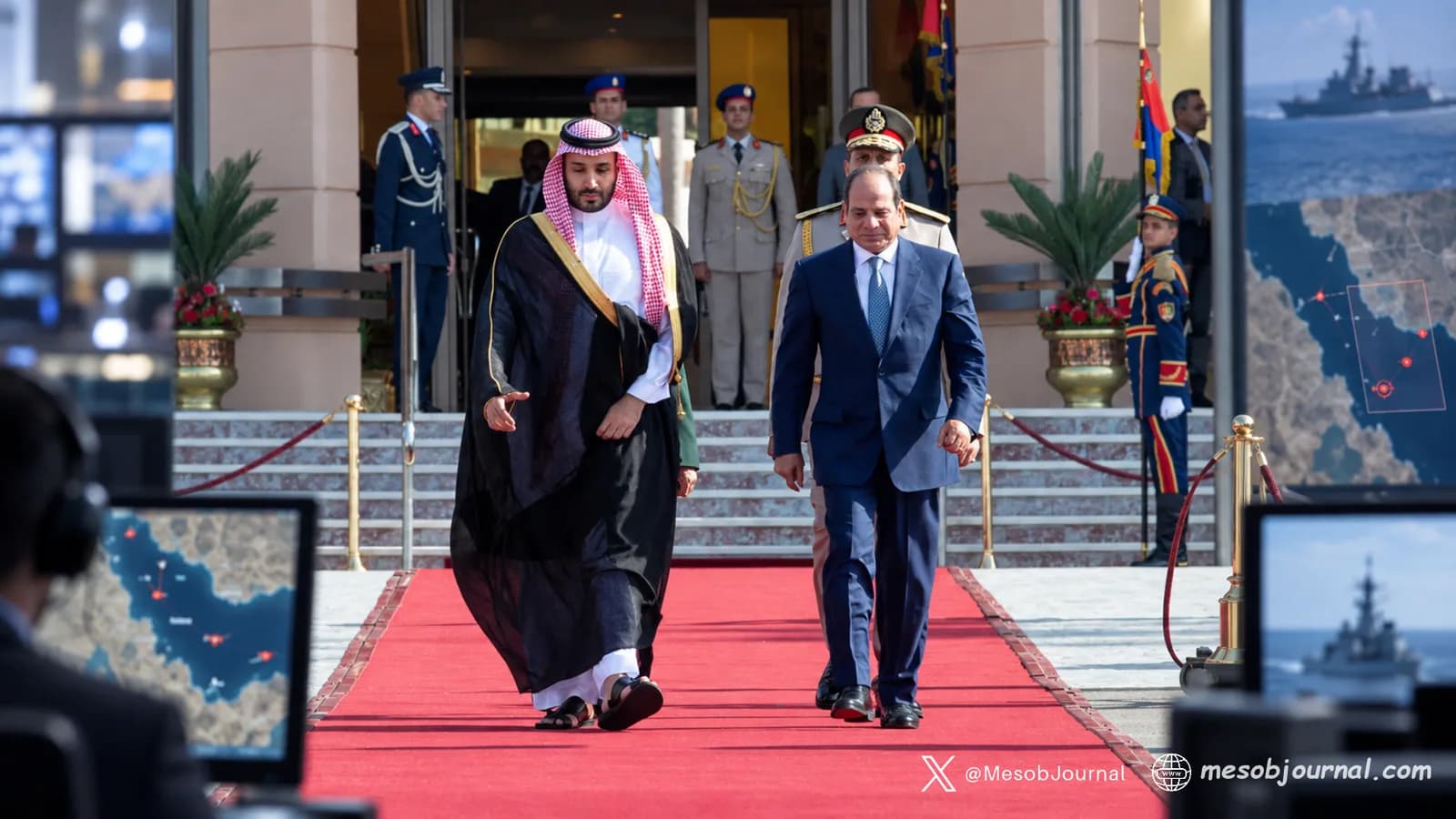
The crisis in Sudan affects the Red Sea. Ethiopia’s dangerious maritime rhetoric affects the Red Sea. Somalia’s sovereignty affects the Red Sea and the Gulf of Aden. Yemen, the Bab el-Mandeb, the Gulf and the Nile Basin all sit inside the same pressure zone.
President Isaias’ point was that collective security must be built by the states directly concerned not imposed by self-appointed regional powers or external actors. That is a direct rejection of imported security formulas.
The logic is clear: those who live with the consequences should design the architecture.
Eritrea’s own model sits behind the critique
There is another layer to the speech. Eritrea’s criticism of the region also clarifies the state-building philosophy that has guided its own independence project.
Eritrea’s political culture was forged in a liberation struggle that deliberately resisted religious division, ethnic fragmentation and externally sponsored dependency. That does not mean Eritrea claims perfection. But it does mean its statehood was built around a hard lesson: sovereignty cannot survive without social cohesion.
This explains why Asmara reacts so strongly to ethnic politics, warlordism, externally funded opposition projects and donor-managed governance models. Eritrea sees these not as democratic corrections, but as pathways to national disintegration.
For critics, that view is too severe. For Eritrea, the region’s record proves the point.
Look around the Horn. States weakened by factional identity politics are more vulnerable. Societies captured by external funding are not more sovereign. They are more dependent. Paramilitaries empowered against national institutions do not produce freedom. They produce permanent insecurity.
The Horn cannot survive managed instability
The 2026 address should not be read as a ceremonial speech with a regional paragraph attached. It is part of a longer Eritrean argument.
In 2024, President Isaias spoke of Africa’s marginalisation, the danger of domination, and the need to resist ethnic and clan agendas that weaken nation-building. In 2025, he focused more directly on Sudan and Ethiopia as examples of subversion, failed transition and ethnic polarisation. In 2026, he condensed the argument into a regional framework: the Horn is trapped by unfinished nation-building, warlordism, corruption and foreign intervention.
That continuity shows that Eritrea’s regional policy is not reactive. It is built around a long-standing reading of the Horn’s central vulnerability: weak sovereignty invites intervention, and intervention deepens weakness.
The way out, in this view, is not another externally sponsored forum, another donor-designed transition or another selective mediation track. It is the restoration of sovereign institutions, the rejection of militia politics, the end of foreign funding for destabilising actors, and the rebuilding of states around citizenship rather than communal mobilisation.
That is not an easy road. But the alternative is visible across the region.
Somalia remains under pressure. Ethiopia is sliding deeper into a home-grown crisis of fragmentation, war and failed nation-building. Sudan is bleeding. South Sudan remains fragile. The Red Sea is more crowded, more militarised and more exposed to outside competition.
President Isaias’ message was therefore less a warning to one country than a warning to the whole neighbourhood.
The Horn of Africa does not need more managers. It needs sovereign states strong enough to cooperate, stable enough to develop, and independent enough to refuse becoming instruments in someone else’s game.