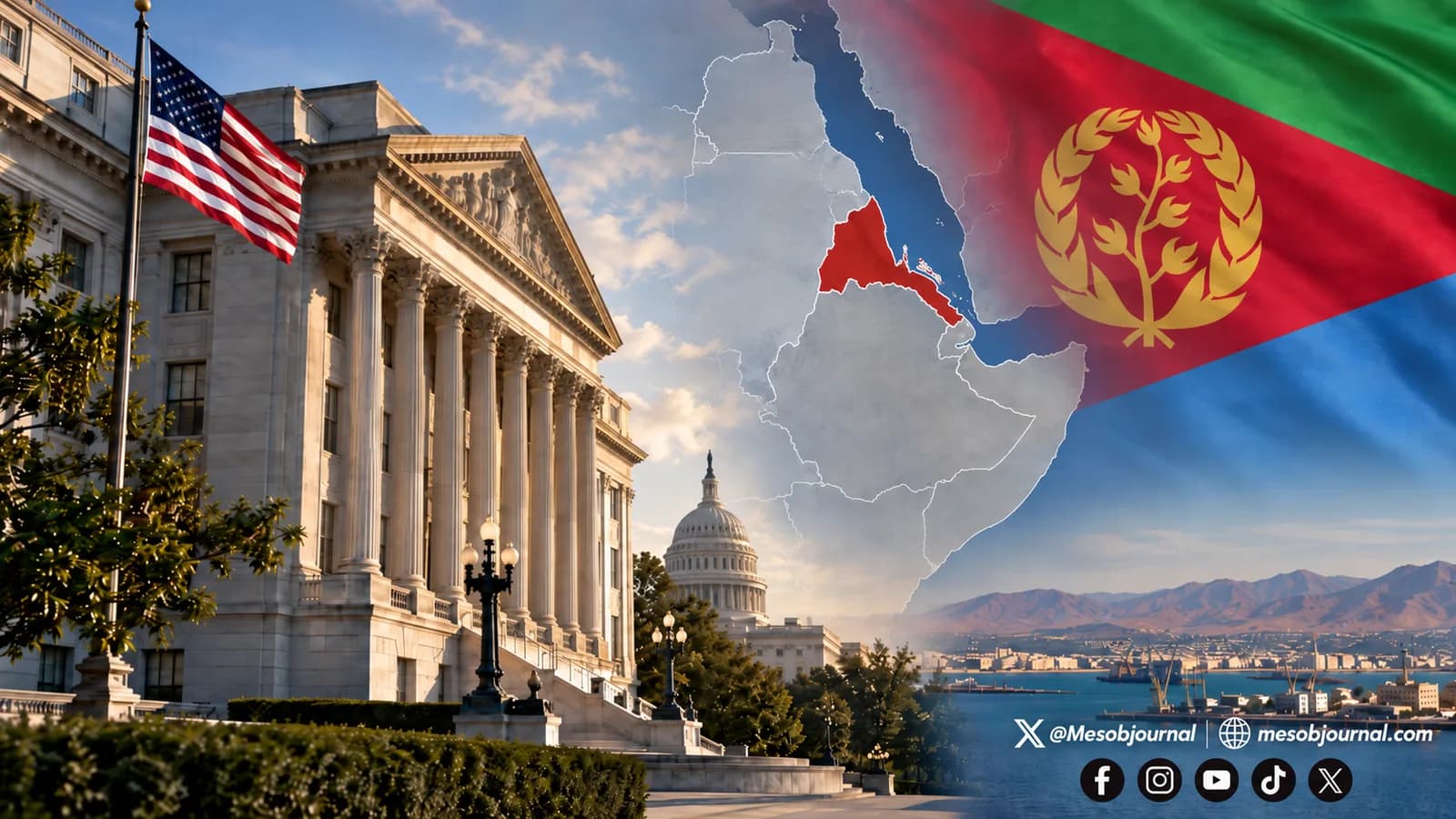

ASMARA — Eritrea has welcomed Washington’s decision to end sanctions imposed during the Biden administration, describing the move as an important step that could strengthen relations and cooperation between the two countries after years of strained ties.
In an official statement published Saturday, Eritrea said the sanctions introduced in 2021 had not been justified and had inflicted what it described as “incalculable damage” on the country.
The statement nevertheless struck a forward-looking tone, saying the decision to remove the measures could become an important step toward more constructive Eritrea-U.S. relations.
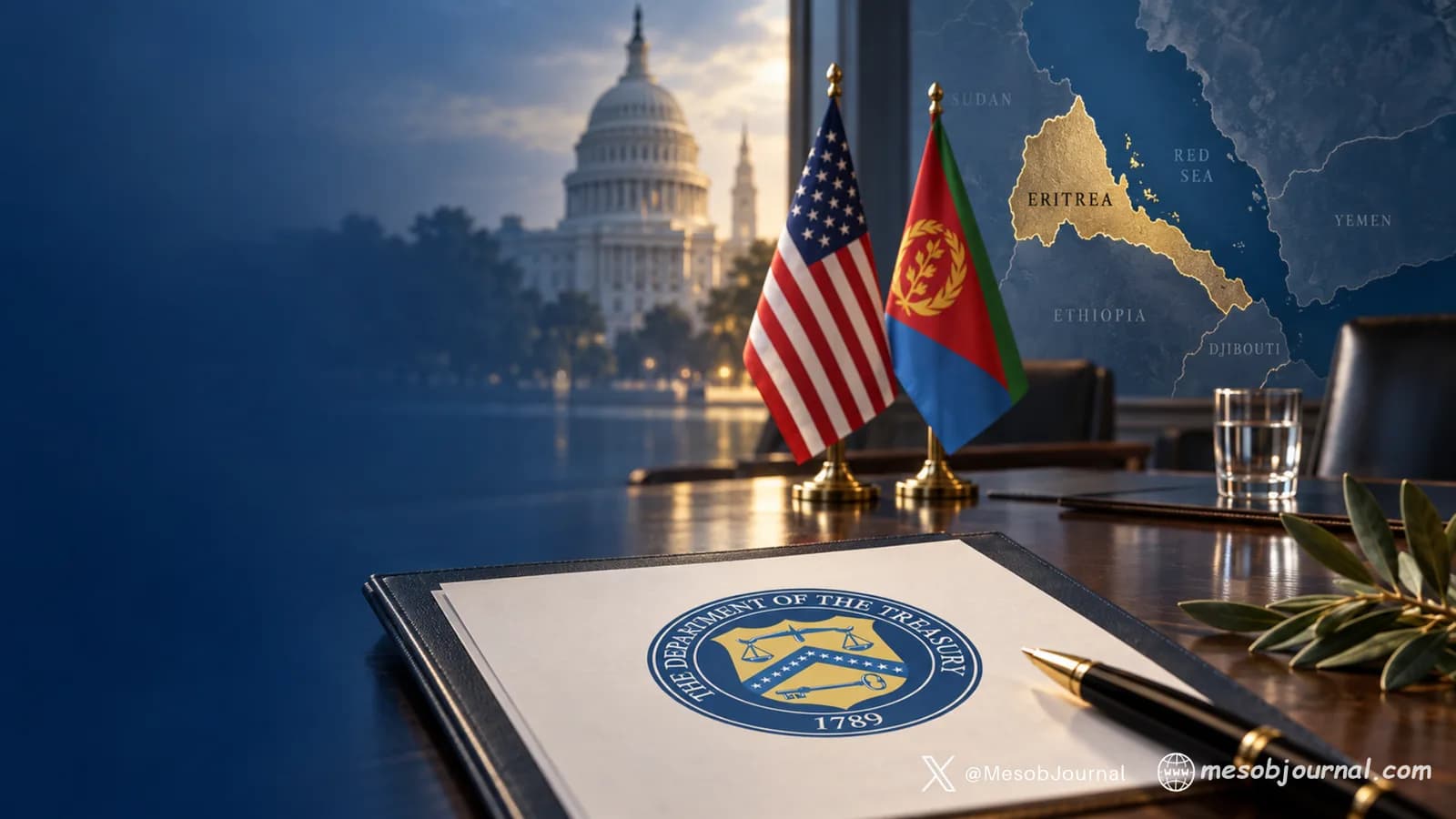
The sanctions were introduced under Executive Order 14046 during the conflict in northern Ethiopia. On September 18, the U.S. Treasury’s Office of Foreign Assets Control confirmed that the national emergency underpinning the program had expired and removed the Eritrean Defense Forces, the People’s Front for Democracy and Justice, Red Sea Trading Corporation, Hidri Trust and two senior Eritrean officials from the sanctions list.
Mesob Journal reported those removals separately when Treasury announced them. The significance of Saturday’s Eritrean statement lies less in the technical lifting of the restrictions than in how Asmara is choosing to respond to Washington’s change of course.
Rather than treating the decision simply as the end of a punitive measure, Eritrea linked it to the possibility of rebuilding bilateral relations.
That language follows signals from both capitals earlier this year.
In May, President Donald Trump sent a message to President Isaias Afwerki and the Eritrean people for the country’s 35th Independence anniversary. According to Eritrea’s Ministry of Information, Trump said the “previous era” was behind the two countries and that the time was right to move forward together on peace and prosperity across the Horn of Africa and Red Sea.
The message was unusual in both tone and substance. It explicitly referred to Eritrean sovereignty and resilience while presenting improved relations as part of a wider American interest in the Horn and Red Sea.
Saturday’s Eritrean response can therefore be read as a direct continuation of that emerging diplomatic language.
There had already been indications that Asmara expected a change.
In May, Eritrea’s Ministry of Information published a commentary on the history of sanctions against the country and said reports that the latest U.S. measures might soon be removed were encouraging. It expressed hope that such a decision would lead to a more lasting correction in relations based on what Eritrea described as justice, legality and fairness.
Four months later, the sanctions framework has expired.
The Trump administration has also offered its own explanation for the change. A U.S. State Department spokesperson said Washington believed it was time to adapt American foreign policy to “current realities” and engage with Eritrea and Ethiopia in pursuit of U.S. regional interests.
Those statements do not amount to a formal diplomatic reset, and neither government has announced a new bilateral agreement.
But the language now being used in Washington and Asmara is markedly different from the sanctions-driven relationship of recent years.
For Eritrea, the official position remains that the 2021 measures should never have been imposed. Saturday’s statement did not retreat from that assessment. Instead, it paired criticism of the sanctions and the damage Eritrea says they caused with an explicit willingness to look ahead.
That distinction may prove important.
The next indication of whether the change develops into something broader will come not from the delisting itself, but from what follows: diplomatic contacts, economic engagement and possible cooperation on issues affecting the Horn of Africa and Red Sea.
For now, Eritrea has publicly signaled that it regards Washington’s decision not merely as the removal of sanctions, but as a potential opening for a different relationship.