
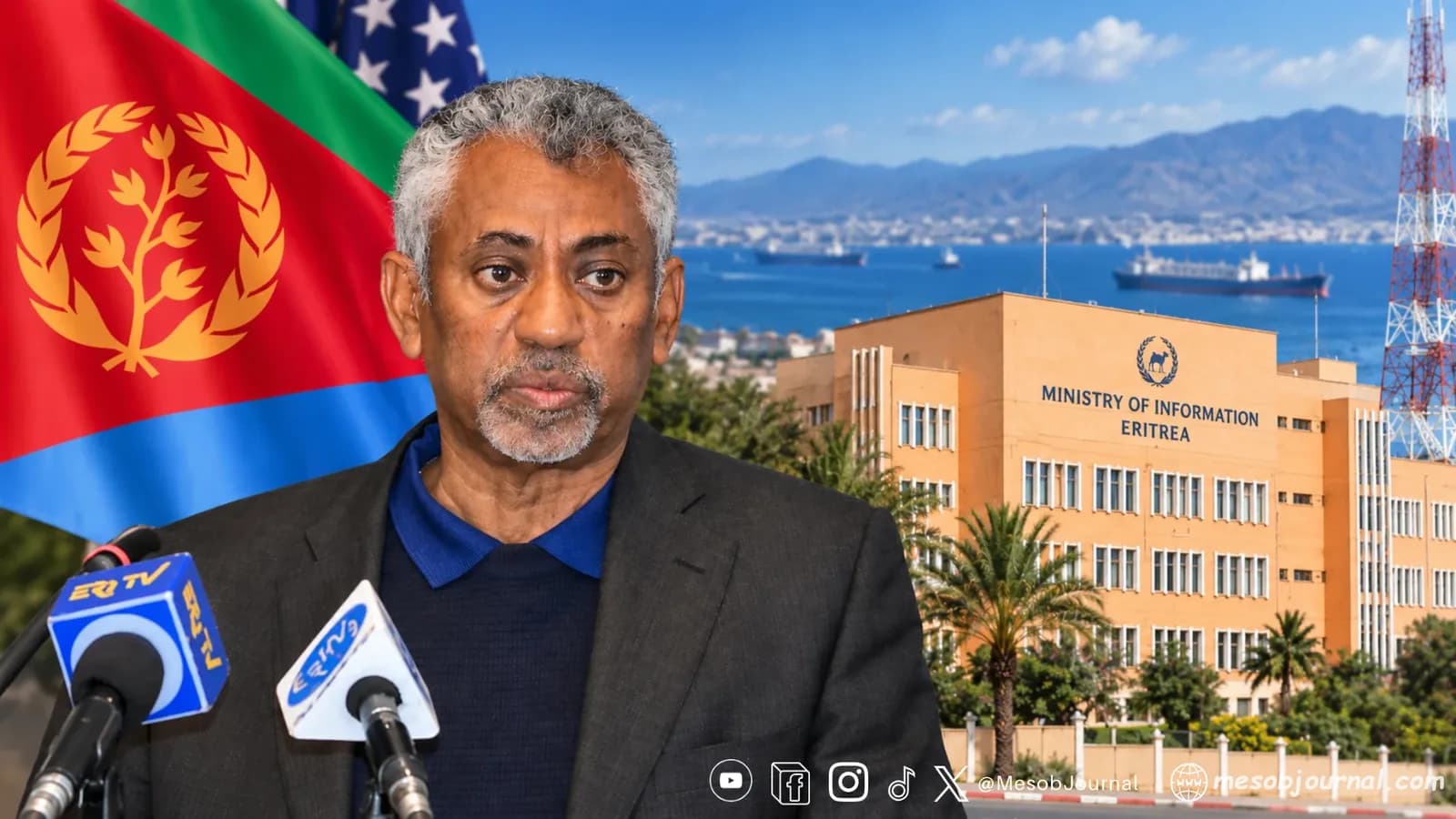
Information Minister Yemane G. Meskel told Asharq Al-Awsat that the U.S. decision reflected a “reservoir of constructive political goodwill” and could open a new phase in relations between Asmara and Washington.
The comments are among the clearest public indications from the Eritrean government of how it views the September 18 sanctions decision and what could follow.
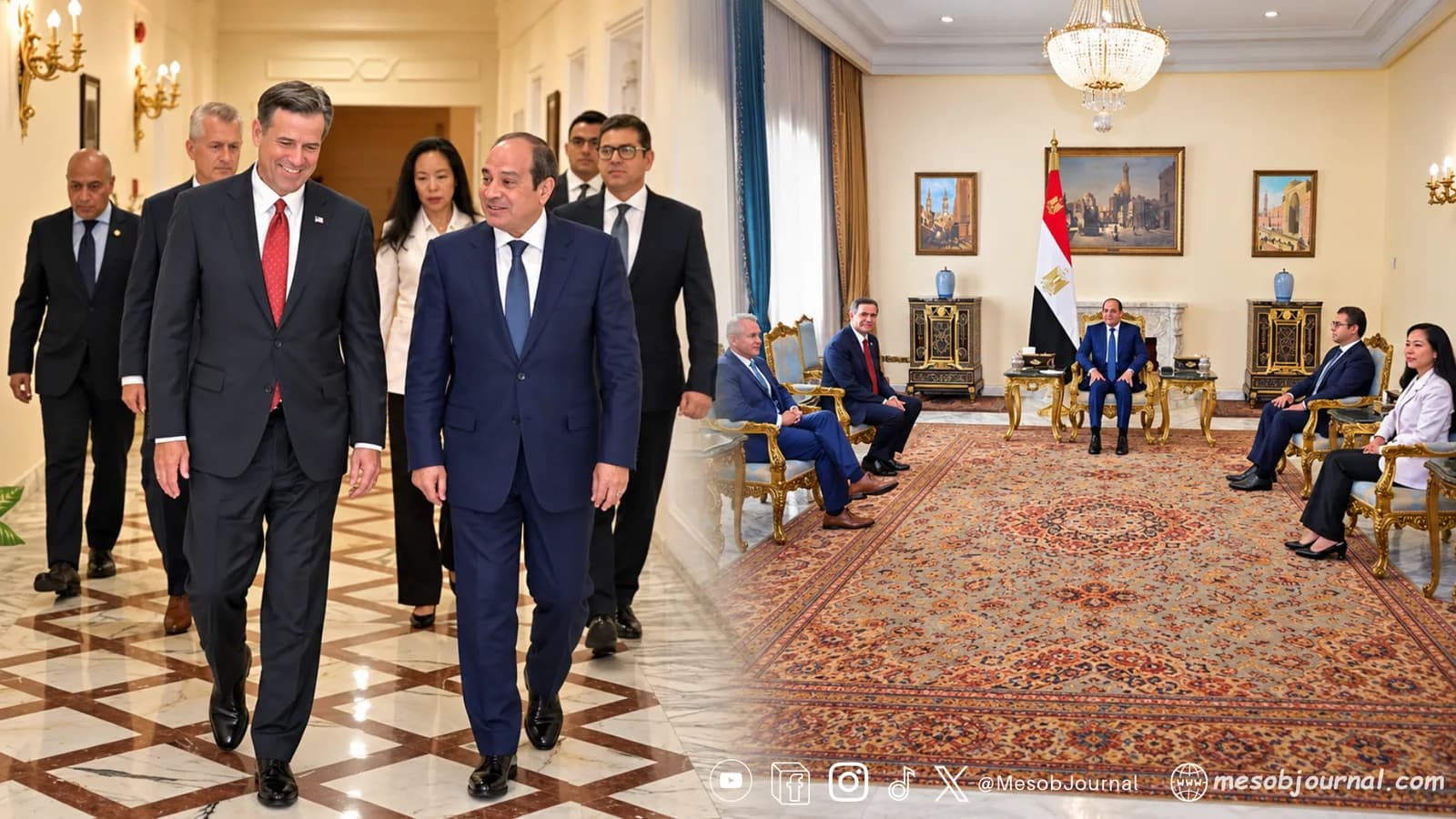
Yemane also disclosed that Massad Boulos, U.S. President Donald Trump’s senior adviser for Arab and African affairs, met Eritrean Foreign Minister Osman Saleh during Saleh’s recent visit to Cairo.
According to Yemane, the contacts were preliminary discussions intended to prepare the ground for broader bilateral talks at appropriate levels, with investment and trade among the areas under consideration. He expressed hope that the sanctions decision would accelerate those contacts.
The disclosure suggests diplomatic engagement was already underway before Washington formally ended the sanctions program.
Eritrean President Isaias Afwerki had earlier spoken publicly about the possibility of constructive engagement with Washington, saying in January that Eritrea was prepared for consultations with the United States while emphasizing that cooperation should be based on mutual interests and regional stability.
What Washington actually lifted
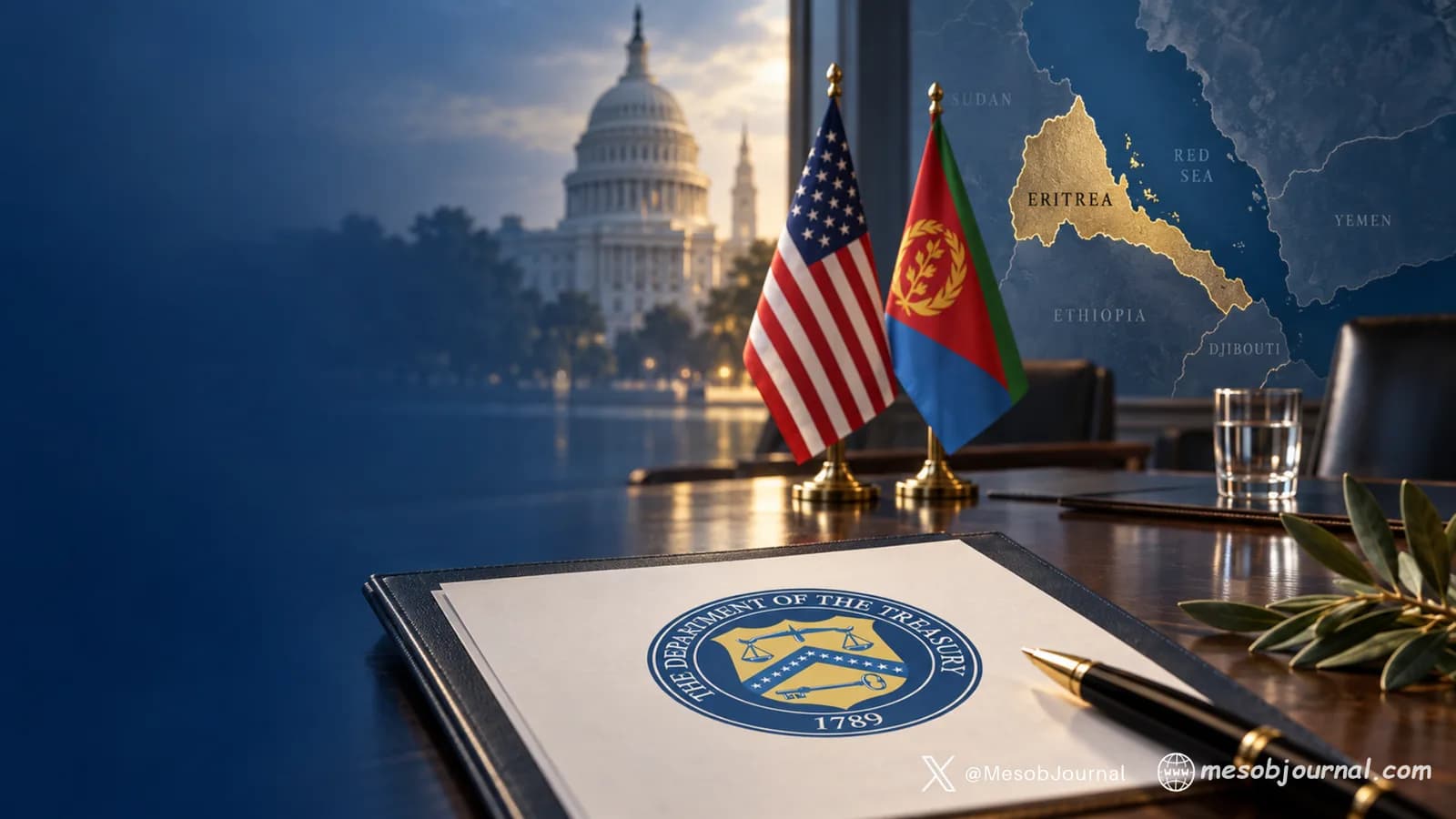
On September 18, the U.S. Treasury Department’s Office of Foreign Assets Control announced that the national emergency established under Executive Order 14046 in September 2021 had expired.
OFAC consequently removed individuals and entities designated under the Ethiopia-related sanctions program from its Specially Designated Nationals list. Those removed included the People’s Front for Democracy and Justice, the Eritrean Defense Forces, Red Sea Trading Corporation, Hidri Trust, Hagos Ghebrehiwet Weldekidan and Abraha Kassa.
Eritrea’s Ministry of Information welcomed the decision a day later, saying the measures imposed under the previous U.S. administration had caused unnecessary damage.
The September 18 action should not, however, be described as the removal of all U.S. restrictions affecting Eritrea.
It specifically ended the sanctions framework linked to Executive Order 14046 and the Ethiopia-related national emergency. Separate U.S. measures remain in force.
Current U.S. policy continues to suspend entry and visa issuance for most Eritrean nationals, subject to specified exceptions. U.S. defense-trade regulations also maintain a policy of denying licenses for defense articles and services destined for Eritrea’s armed forces, police, intelligence or other internal security forces.
That distinction is important as Eritrea and the United States explore whether the latest decision develops into a broader normalization of relations.
Red Sea cooperation moves to the foreground
Yemane’s interview also offered a stronger formulation of Eritrea’s approach to Red Sea security.
He said cooperation between Eritrea, Egypt and other countries sharing similar positions in the Horn of Africa and Red Sea region had moved “beyond slogans toward mechanisms for joint action” aimed at strengthening regional security and stability.
He identified the Council of Arab and African States Bordering the Red Sea and Gulf of Aden as an important platform for that cooperation.
The council was established with the participation of Saudi Arabia, Eritrea, Egypt, Sudan, Djibouti, Somalia, Yemen and Jordan, with the aim of strengthening political, economic and security coordination among states bordering the two waterways.
The Eritrean position closely tracks a broader push by Egypt to give the council a more operational role.
Egyptian Foreign Minister Badr Abdelatty said earlier this year that discussions were underway with Eritrea, Saudi Arabia and other littoral states to activate the council’s mechanisms, including cooperation involving ports, logistics and maritime security. Cairo has repeatedly argued that responsibility for Red Sea governance and security should rest primarily with states bordering the waterway.
Yemane linked that convergence not only to maritime security but also to the conflicts in Sudan, developments in Somalia and wider regional stability.
The combination of the U.S. diplomatic opening and renewed emphasis on littoral-state cooperation places Eritrea’s Red Sea position increasingly at the intersection of two developments: Asmara’s effort to rebuild relations with Washington and a parallel effort among regional states to establish stronger locally driven mechanisms for managing one of the world’s most important maritime corridors.
Whether preliminary U.S.–Eritrea contacts develop into formal higher-level talks has not yet been announced. But the public statements from Asmara indicate that Eritrea sees the September 18 decision not simply as the removal of a past restriction, but as an opening for a wider diplomatic and economic relationship.