
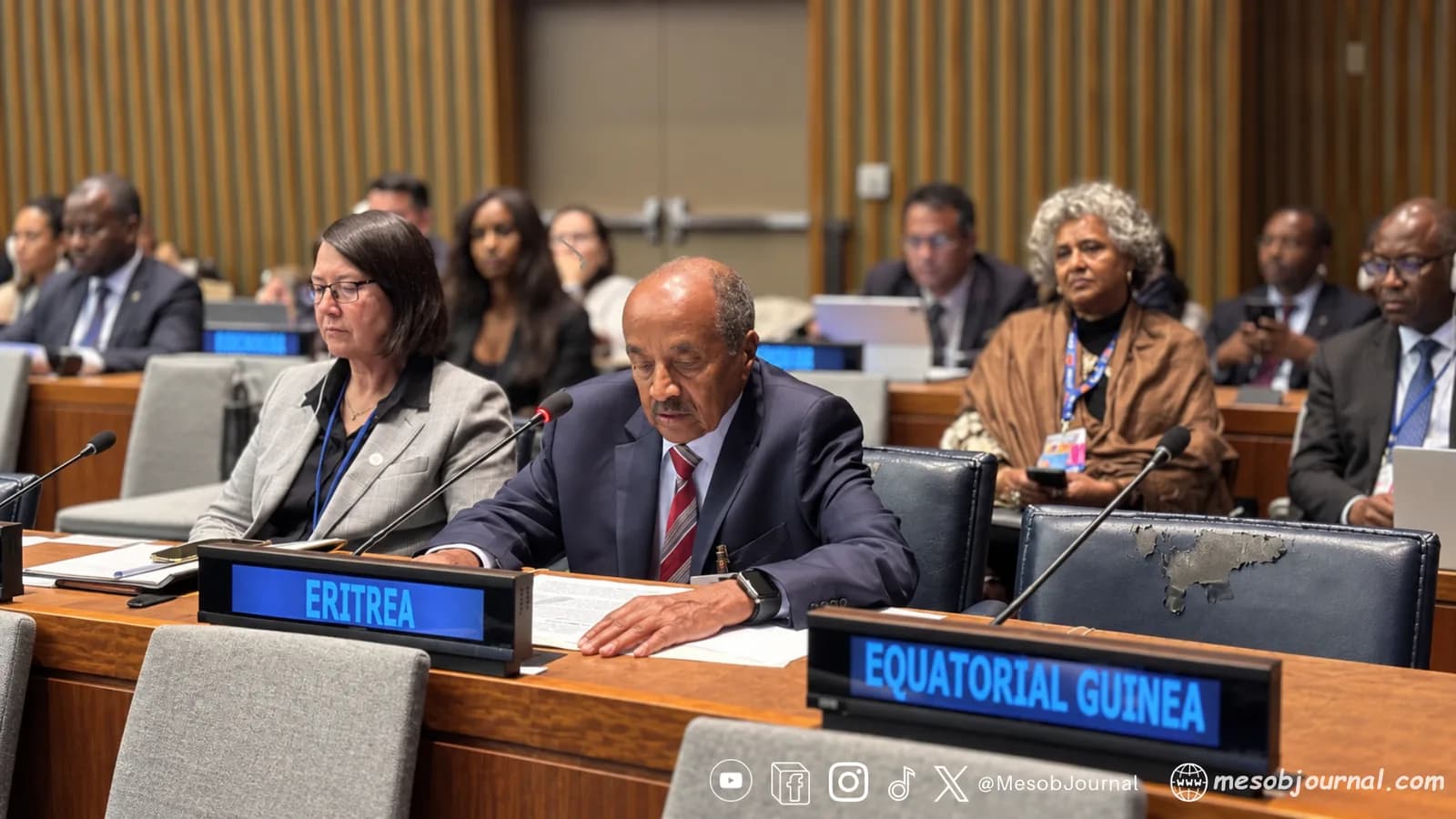
Eritrea has used a United Nations high-level meeting on sea-level rise to reaffirm the protection of established maritime boundaries and coastal states’ sovereign rights, while setting out a broader agenda for the sustainable development and protection of its Red Sea waters.
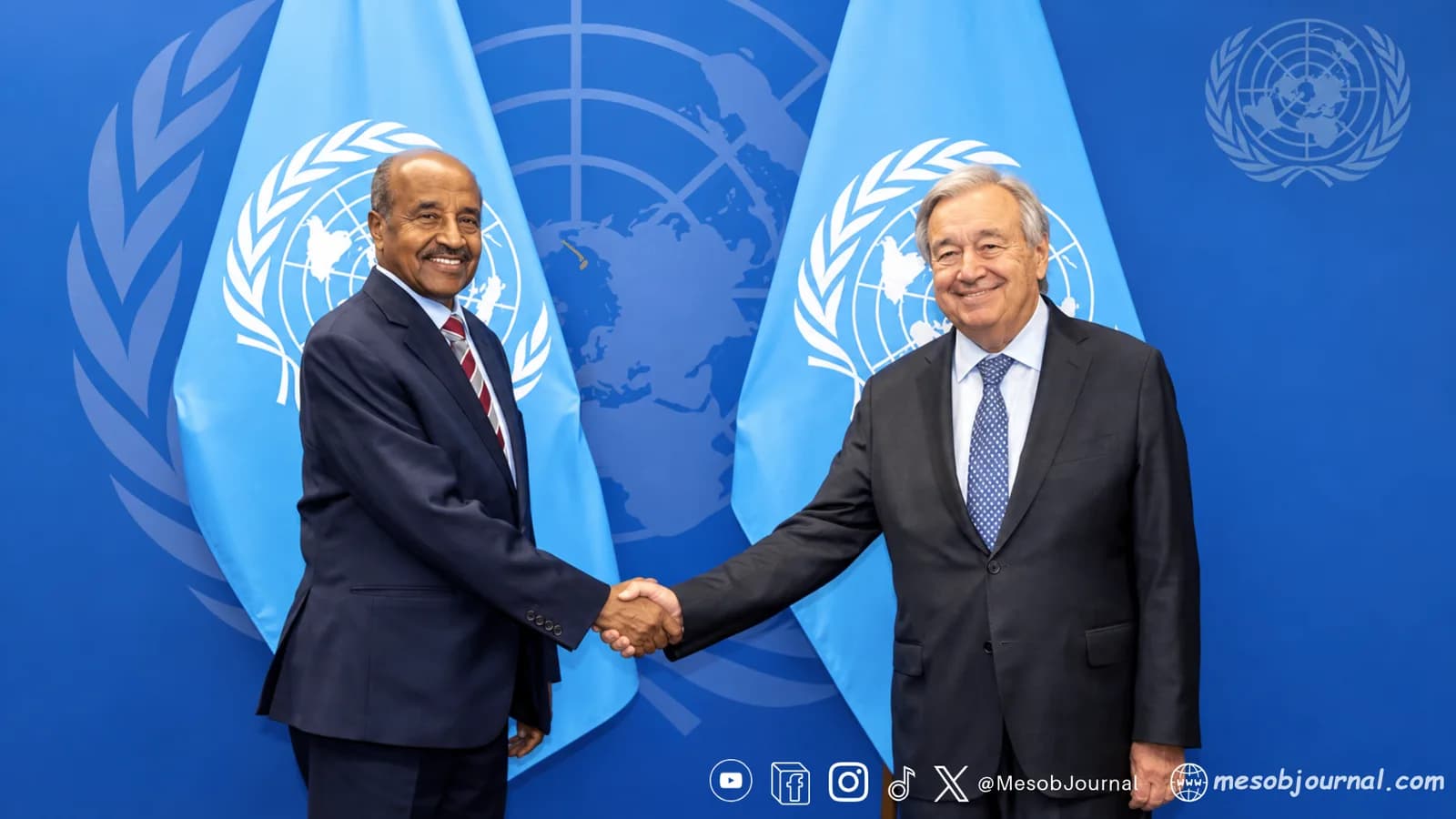
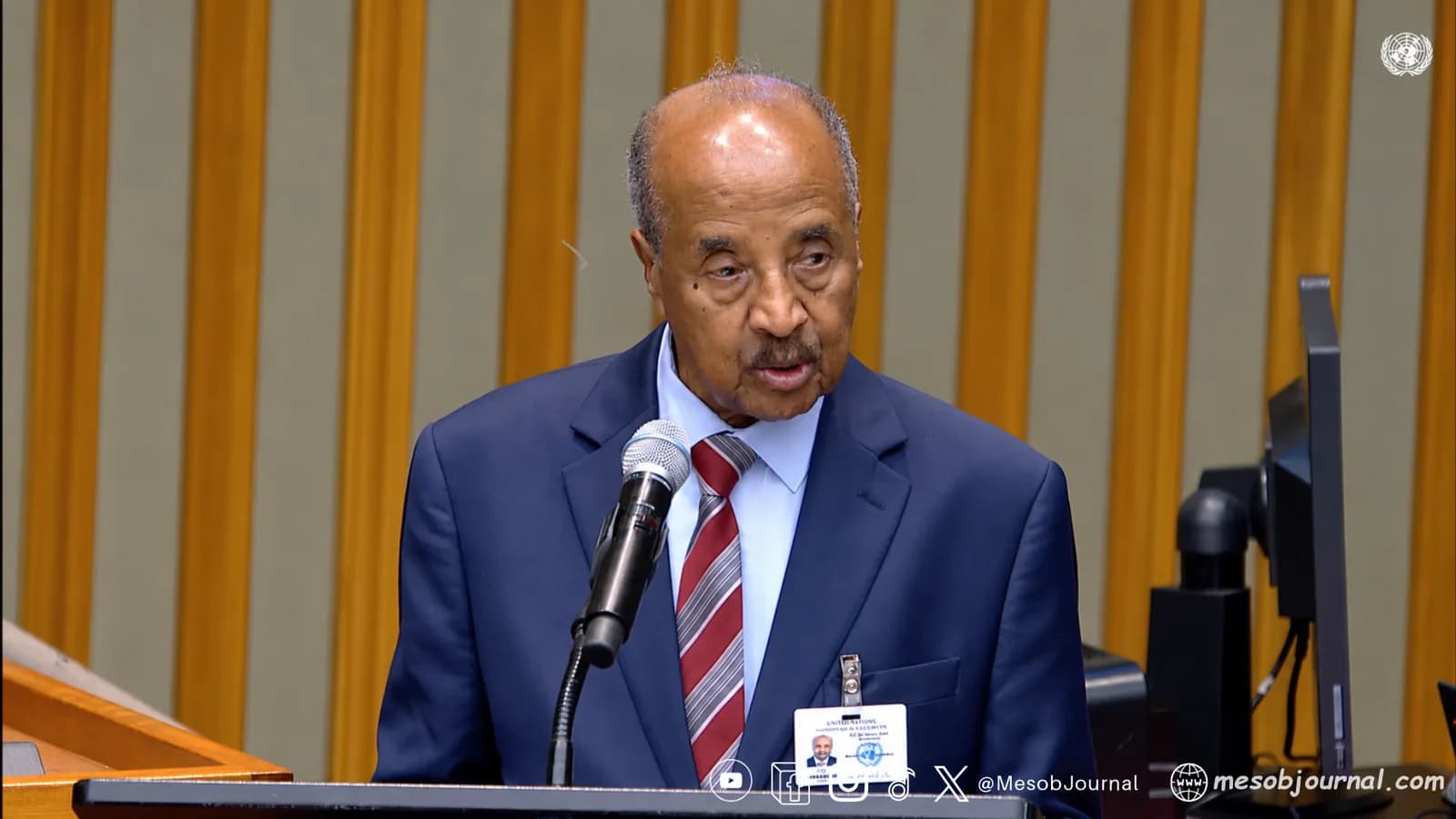
Foreign Minister Osman Saleh delivered Eritrea’s statement at the UN General Assembly’s high-level plenary meeting on sea-level rise in New York on September 24. The one-day meeting formed part of the 81st session of the General Assembly and was convened to strengthen international cooperation on the consequences of rising seas.
In the statement, published by Eritrea’s Ministry of Information on September 26, Saleh stressed the importance of preserving existing baselines and maritime boundaries and protecting the sovereign and jurisdictional rights of coastal states as coastlines face the long-term effects of climate change.
He also placed Red Sea littoral states at the centre of the issue, describing their role in maintaining a sustainable and stable maritime environment as indispensable.
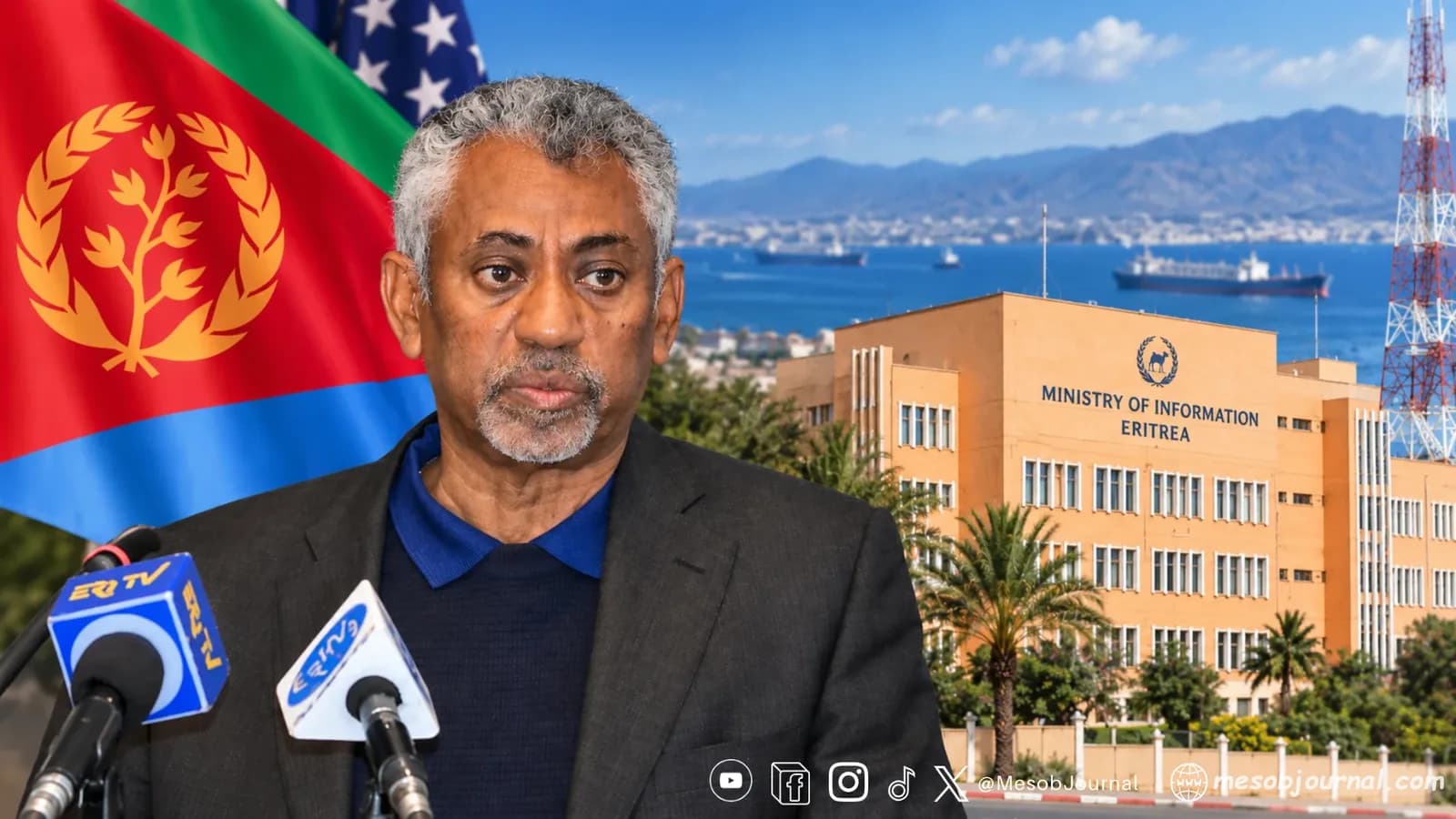
Eritrea Ministry of Information — full September 2026 statement
The position is not new for Eritrea. At the UN’s first high-level meeting on sea-level rise in September 2024, Saleh similarly called for baselines and maritime boundaries to be preserved and for the sovereign and jurisdictional rights of states over their maritime spaces to remain protected. He also said littoral states had a “vital and indispensable role” in securing a stable maritime ecosystem.
The 2026 intervention, however, placed greater emphasis on the scale of Eritrea’s maritime interests and the environmental and economic policies tied to them.
Eritrea has more than 350 islands, most concentrated around the Dahlak Archipelago, while its territorial waters cover roughly 55,000 square kilometres, according to the country’s 2024 Voluntary National Review.
The government has increasingly linked those maritime assets to conservation and economic development. Eritrean officials have outlined plans to expand marine and island protected areas, restore coral reefs, mangroves and coastal vegetation, and pursue a sustainable Blue Economy strategy intended to protect marine resources while supporting coastal livelihoods.
That combination of sovereignty, climate adaptation and economic policy gives the statement a wider significance than the environmental debate alone.
Sea-level rise presents an unusual international-law question because coastlines and the physical points from which maritime zones are measured can change over time.
The UN International Law Commission concluded its multi-year study on sea-level rise and international law in 2025. Its final work noted growing convergence among states that the UN Convention on the Law of the Sea does not prohibit the preservation of established baselines and maritime zones, that states are not necessarily required to redraw them as coastlines retreat, and that established maritime boundaries should retain legal stability.
Eritrea’s position therefore forms part of a broader international effort by coastal and island states to prevent physical changes caused by climate change from producing corresponding losses of maritime rights.
For Eritrea, the issue also carries a distinct Red Sea dimension. Its coastline, islands, fisheries, ports, marine ecosystems and location along one of the world’s major maritime corridors make questions of maritime jurisdiction directly relevant to economic development, environmental protection and regional security.
The September 24 meeting concluded with the General Assembly adopting a political declaration on sea-level rise, as governments sought to move the issue beyond climate adaptation toward questions involving development, security, infrastructure and international law.
Eritrea’s intervention places its Blue Economy and environmental programme within that wider framework while maintaining a position it has repeatedly emphasized at international forums: changes to the physical coastline should not be allowed to unsettle established maritime rights.