
Asmara says Pretoria was an Ethiopian affair and charges Ethiopia’s ruling party with repackaging years of hostility, sea-access rhetoric and military saber-rattling as self-defense.
Eritrea has issued a firm response to a new Al Jazeera opinion article by senior Ethiopian officials Getachew Reda and Redwan Hussein, rejecting what Asmara views as another attempt to blame Eritrea for Ethiopia’s internal political failures and renewed instability.
The article, published on June 11 under the title “Ethiopia must not be dragged back into war,” accused Eritrea of backing forces opposed to the Pretoria Agreement and of seeking to pull Ethiopia back into conflict. Eritrea’s Minister of Information, Yemane G. Meskel, responded by placing the accusations inside what he described as a wider pattern of Ethiopian government propaganda, provocation and disinformation.
In his response, Yemane said the ruling Prosperity Party’s “signature trademark” could be summed up as “lies, deception, delusion, disinformation” and optics. He argued that the Al Jazeera article does not reflect concern for peace, but rather a political effort to rewrite the history of Ethiopia’s war and conceal the Ethiopian government’s own record of hostility toward Eritrea.
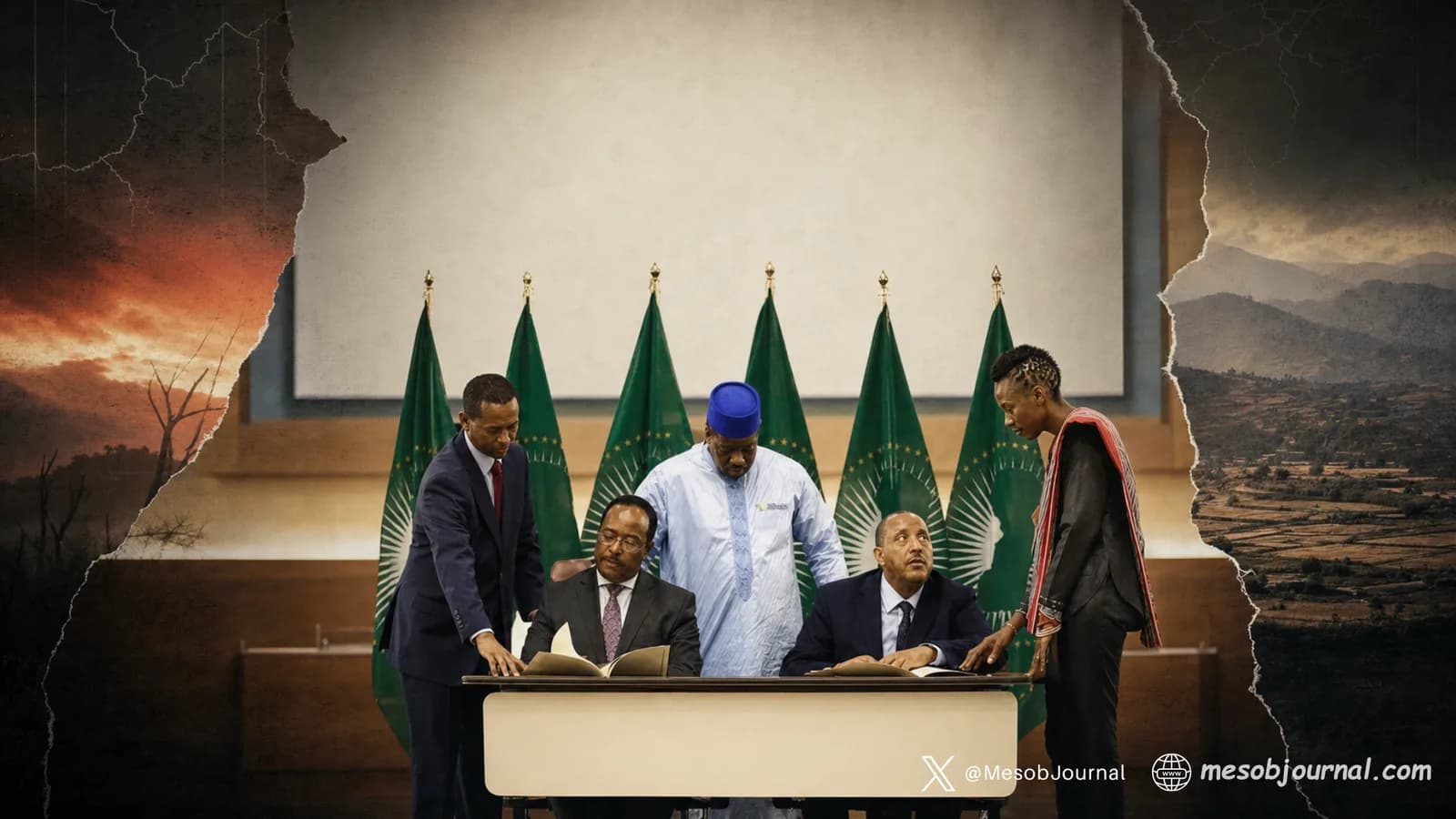
At the center of Eritrea’s response is a simple point: the Pretoria Agreement was an Ethiopian agreement between Ethiopian parties. Eritrea was not a signatory, was not a party to the negotiations, and has no interest in obstructing an internal Ethiopian peace process if those responsible implement it in good faith.
Yemane stated that Eritrea’s position on Pretoria has always been guided by its “principled desire and commitment to promote regional peace and stability.” He also rejected the attempt to portray Eritrea as the source of Ethiopia’s internal crisis, saying the devastating war from November 2020 to November 2022 “stemmed from, and has its roots in, Ethiopia’s internal and perennial ethnic cleavages.”
Eritrea, he said, was dragged into the imposed conflict at the request of Ethiopia’s federal government and because the war agenda itself directly targeted Eritrea. That history, according to Yemane, is not hidden. It is part of the public record.
The response also challenged the version of events presented by Getachew Reda and Redwan Hussein regarding the Pretoria talks. The two Ethiopian officials wrote that the atmosphere in Pretoria was initially so tense that South African hosts feared delegates from the two sides might physically clash. Yemane dismissed that story as theatrical, pointing instead to earlier secret meetings reportedly held in Djibouti and Seychelles under the sponsorship of Western peace facilitators.
According to his account, those contacts took place while the war was still raging in August 2022. He said the two Ethiopian sides had even discussed reconciliation for the purpose of joining forces against Eritrea, which they allegedly viewed as their “ultimate threat.”
For Eritrea, the timing of the latest accusations is not accidental. Asmara sees them as part of a broader Ethiopian campaign that has intensified since late 2023, when Prime Minister Abiy Ahmed’s government began publicly pushing the issue of “sovereign access to the sea.”
That rhetoric has not remained abstract. Eritrean officials and many Eritreans have repeatedly pointed to public statements, military ceremonies, maps and political messaging in Ethiopia that directly place Eritrean territory, including Assab, within Ethiopia’s claimed strategic space.
In his latest response, Yemane also drew attention to earlier warnings he had issued about Ethiopia’s Red Sea agenda. Those posts cited a pattern that included the Hawassa military event, public maps showing Assab as part of Ethiopia, statements about celebrating Irreecha at the Red Sea, and claims about an elite force meant to police maritime security from Somalia to Massawa. Taken together, Eritrea views these moves as direct territorial signaling, not abstract political rhetoric. Yemane’s earlier warning also returned to a long-standing Eritrean principle, quoting President Isaias Afwerki’s words from the seventh Independence Anniversary in 1998: “ናትና ኣይንህብን፥ ዘይናትና ኣይንደልን” — we do not give what is ours, and we do not seek what is not ours.
In the context of Ethiopia’s Red Sea rhetoric, the message is unmistakable: Eritrea is not asking for Ethiopian land or Ethiopian resources. It is asking Ethiopia’s ruling elite to stop manufacturing claims over Eritrean territory and then presenting Eritrea’s refusal as aggression.
The Al Jazeera article attempts to frame Ethiopia as a country at risk of being dragged back into war by outside forces. Eritrea’s response turns that framing on its head. From Asmara’s perspective, the greater danger is a government in Addis Ababa that continues to externalize its domestic crisis, inflame public opinion around the Red Sea, and normalize language that threatens the sovereignty of neighboring states.
Eritrea has largely avoided responding to every provocation. While Ethiopian political figures, media outlets, social media networks and military voices have spoken about Assab, Massawa and “sea access” for years, Eritrean official media has remained measured. That restraint is not uncertainty. It is a deliberate choice in favor of regional de-escalation, grounded in the knowledge that international law is clear and Eritrea’s sovereignty is not open to debate.
For Asmara, engaging every provocation would only serve the purpose of those seeking distraction from Ethiopia’s internal crises. Eritrea’s position has therefore remained firm without becoming reactive: it seeks no one’s territory, and it will not negotiate its own.
The Horn of Africa does not need another war. Its people have already paid too high a price for reckless agendas, imported conflicts and elite political delusions. If peace is truly the goal, Ethiopia’s leaders must stop using Eritrea as a convenient scapegoat and address the crises inside Ethiopia with honesty.
Eritrea’s message is direct: Pretoria belongs to Ethiopia’s internal political process. Assab belongs to Eritrea. Regional peace depends on respecting both facts.