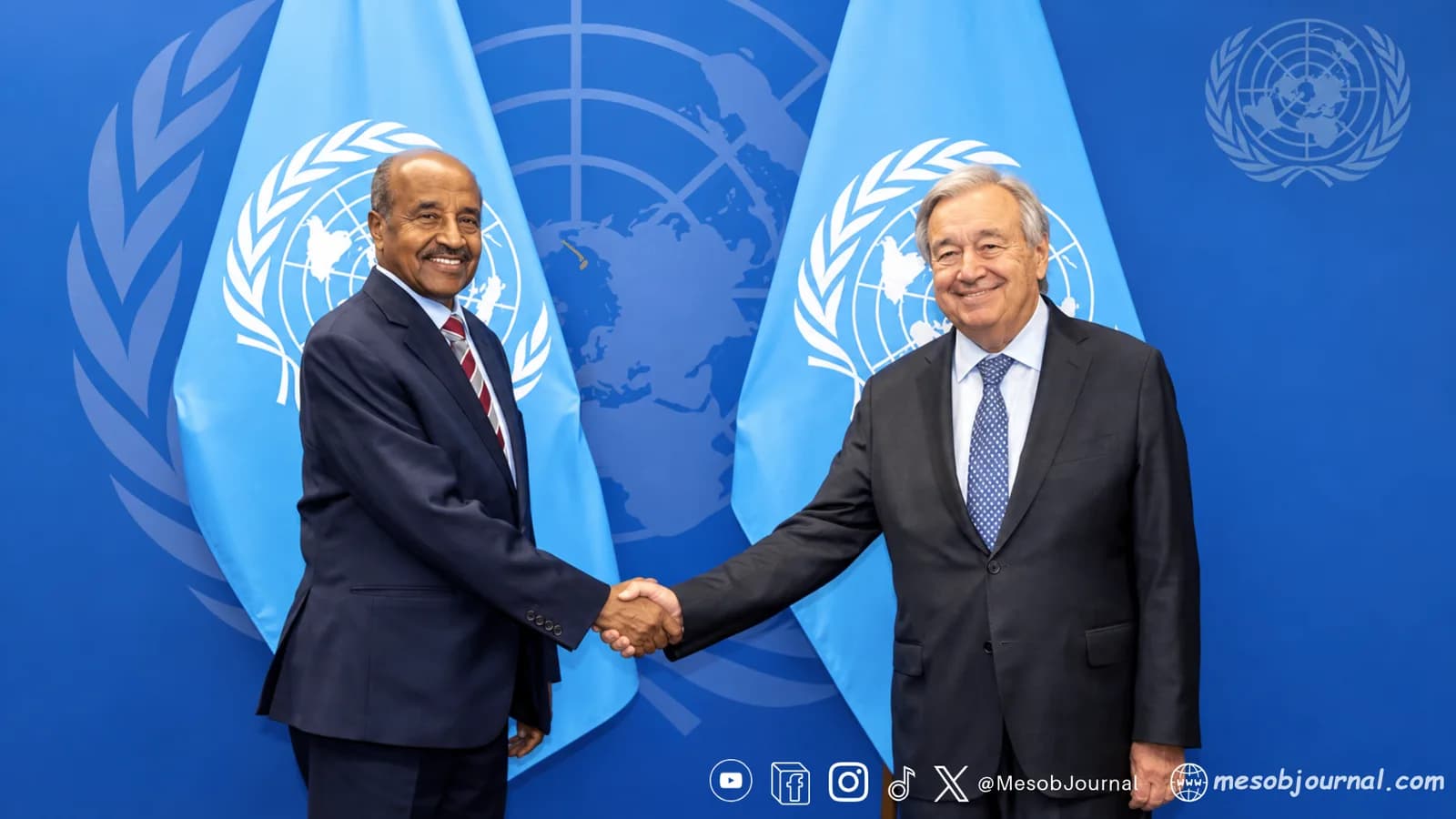

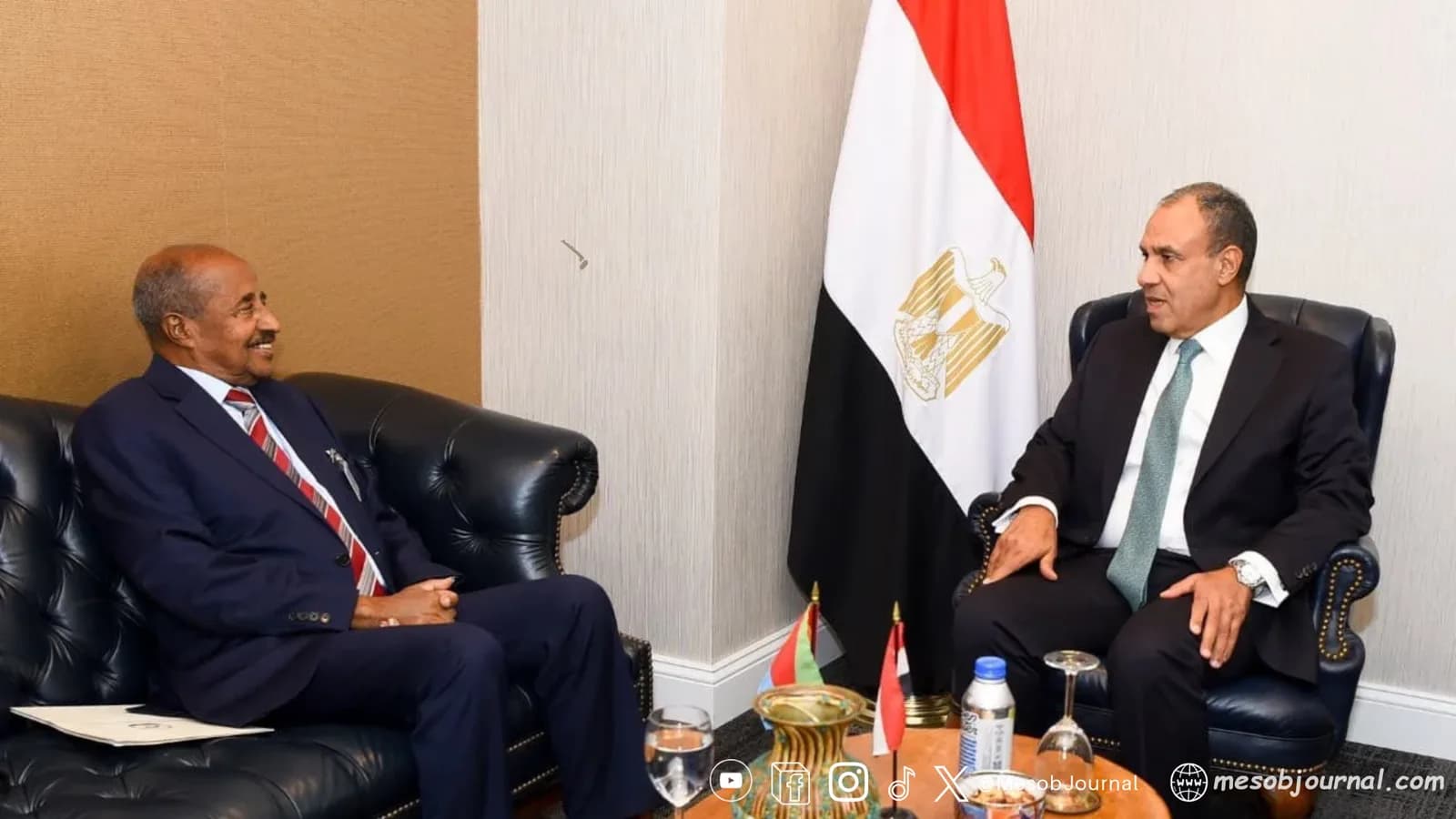
NEW YORK — Eritrea and Egypt have reaffirmed that the security and governance of the Red Sea should remain the exclusive responsibility of the states bordering it, restating a shared position during talks on the sidelines of the 81st United Nations General Assembly in New York.
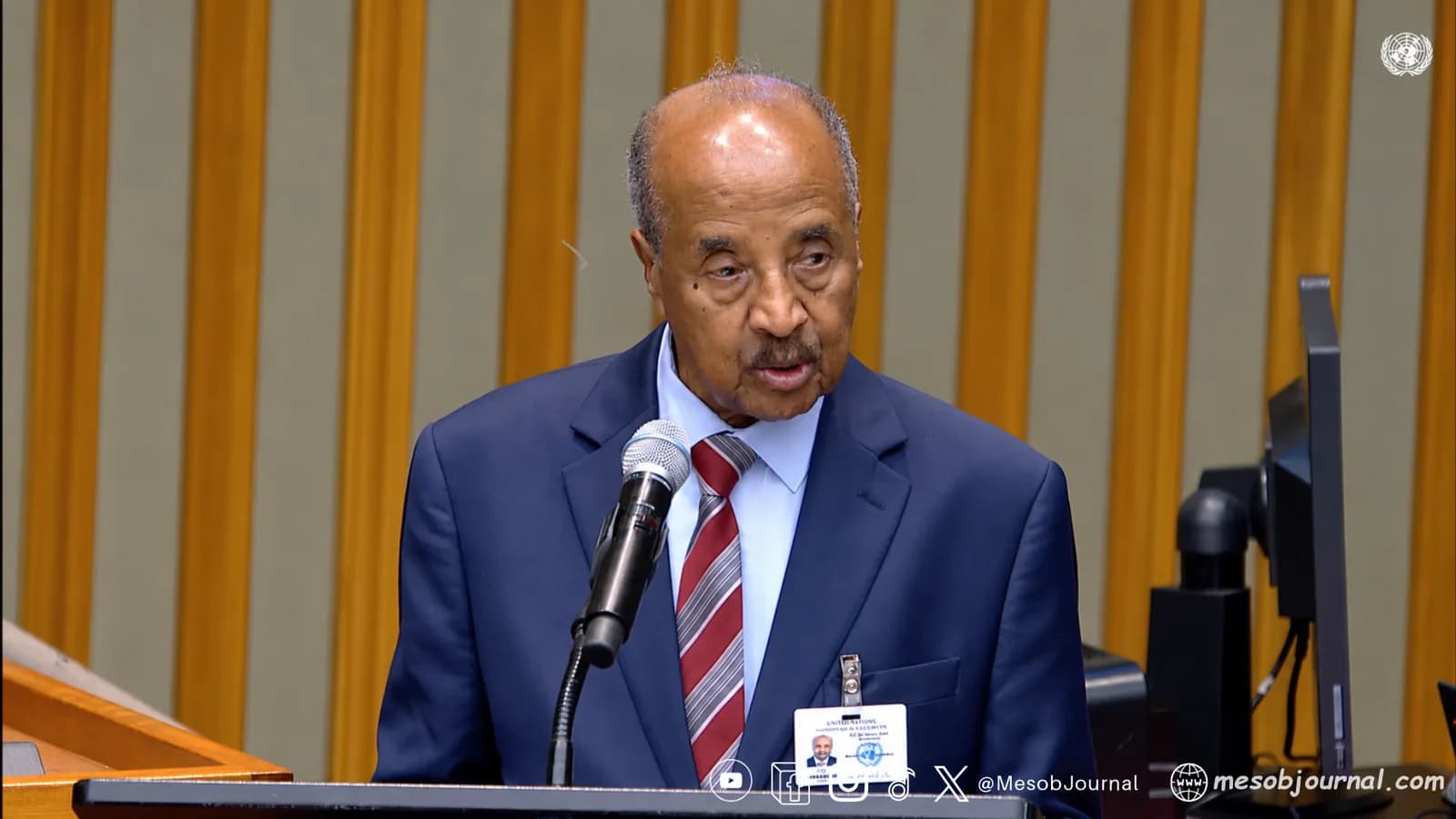
Eritrean Foreign Minister Osman Saleh met his Egyptian counterpart Badr Abdelatty on Thursday, September 24, with discussions covering bilateral relations, economic cooperation and developments across the Horn of Africa.
According to Egypt’s Ministry of Foreign Affairs, the two ministers stressed that “the security and governance of the Red Sea remain the exclusive responsibility of its littoral states.”
The language continues a position that Cairo and Asmara have articulated repeatedly during high-level contacts this year.
During President Isaias Afwerki’s visit to Cairo on June 8, Egyptian President Abdel Fattah el-Sisi emphasized the exclusive responsibility of Red Sea littoral states for the waterway’s governance and security, a position with which the Eritrean president concurred, according to Egypt’s State Information Service.
The latest meeting in New York therefore reinforces an increasingly consistent element of Eritrea-Egypt diplomacy: that countries directly bordering the Red Sea should retain the central role in determining its regional security architecture.
The two foreign ministers also discussed expanding economic relations between Eritrea and Egypt.
Egypt said it was seeking greater trade and joint investment, including increased participation by Egyptian private companies in Eritrea. Areas identified for cooperation included mining, infrastructure, maritime transport, port connectivity and development, pharmaceuticals and fisheries, as well as capacity-building programmes.
Abdelatty also invited Eritrean businesses and companies to participate in the Alamein Africa Business Forum, scheduled for October 2–4.
Egypt reiterated its support for Eritrea’s sovereignty, unity and territorial integrity during the talks.
The ministers also exchanged views on developments in Sudan and Somalia and agreed to maintain coordination and consultations on regional issues of common concern.
Egyptian reporting on Friday similarly highlighted the Red Sea statement as a central outcome of the meeting, alongside plans to strengthen trade, investment and maritime cooperation between Cairo and Asmara.
The New York talks come during a period of heightened diplomatic attention to the Red Sea, the Horn of Africa and international shipping routes connecting the Bab el-Mandeb, the Red Sea and the Suez Canal.
For Eritrea, whose coastline stretches along one of the world’s major maritime corridors, the littoral-state principle has become a recurring element of its regional diplomacy with Egypt.
Cairo has increasingly used similar language in its own regional engagements. Earlier this year, Egypt and Eritrea publicly stated that Red Sea security should not be shaped through arrangements imposed by states without a coastline on the sea.
The September 24 meeting places that position directly into the diplomatic discussions surrounding UNGA81, while expanding the Eritrea-Egypt relationship beyond security into ports, maritime transport, mining, infrastructure and private-sector investment.
Both sides agreed to continue consultations on regional developments.