

Prime Minister Abiy Ahmed has secured another overwhelming parliamentary majority. Ethiopia has not secured a political settlement.
The ruling Prosperity Party’s victory gives Abiy the numbers he needs in parliament. It gives his government a formal mandate, a new five-year cycle, and a result that can be presented to foreign partners as evidence of continuity. But Ethiopia’s deeper crisis is not located inside the vote count. It is located on the map: Tigray outside the process, Amhara partly beyond normal administration, Oromia locked in conflict, and a federal center increasingly dependent on force, finance and spectacle to maintain the appearance of control.
That is why the result is less a surprise than a signal.
A strong state does not only win elections. It governs territory, reconciles opponents, protects civilians, manages dissent, keeps borders calm and persuades its citizens that politics is still possible without war. Ethiopia’s election result shows the strength of the ruling party machine. It says far less about the strength of the Ethiopian state.
The Seats Were Counted. The Country Remains Unsettled.
The Prosperity Party’s 438-seat victory was expected. The opposition was weak, divided, pressured or absent. The election took place in a country where several political questions are no longer being fought mainly through parliament, courts or parties, but through armed confrontation.
That is the real weakness behind the landslide.
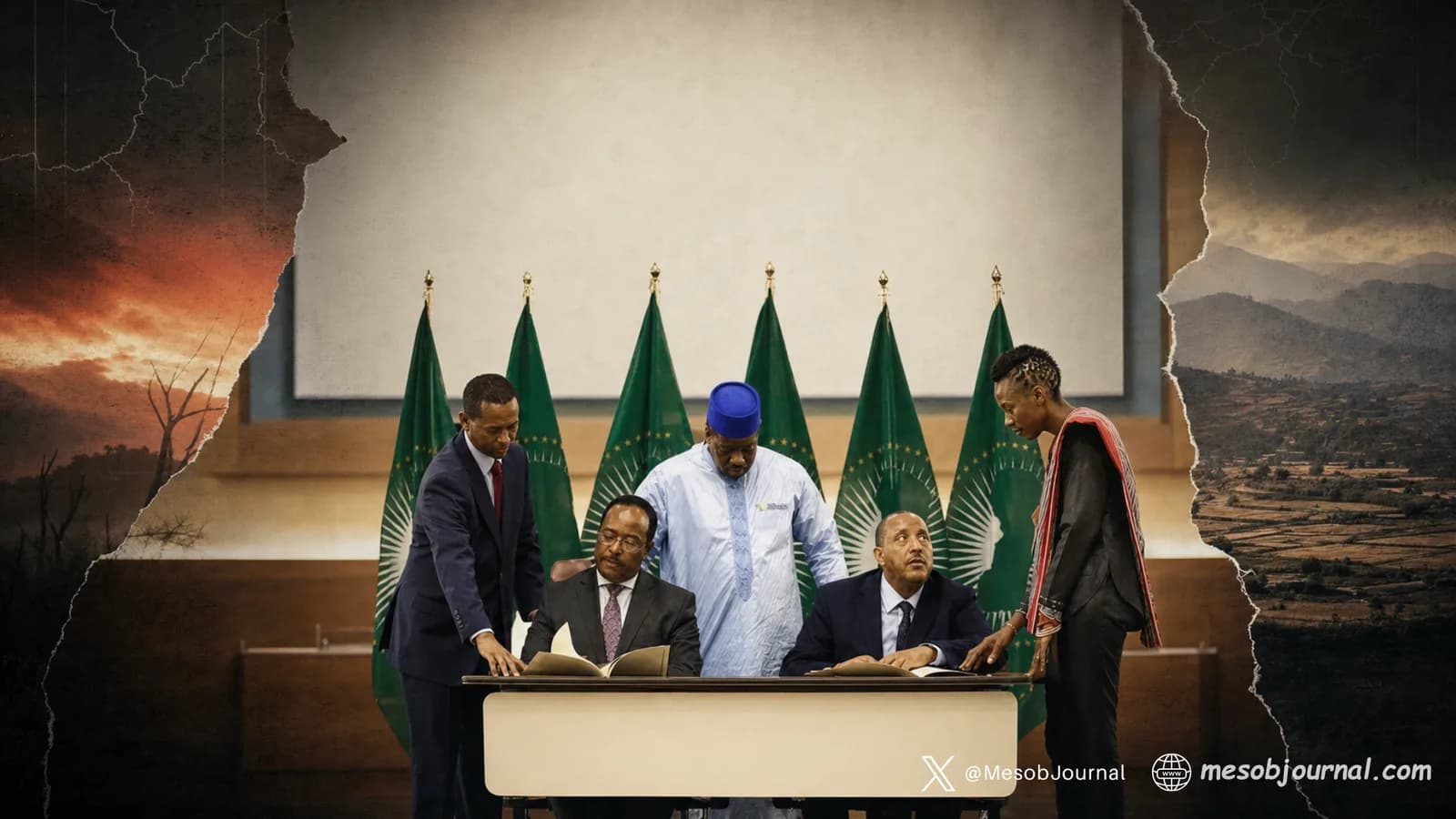
Tigray’s exclusion from the vote is not a technical footnote. It shows that the federal political order still has not absorbed the consequences of the 2020–2022 war. The Pretoria agreement stopped one phase of fighting, but it did not return Ethiopia to a normal constitutional rhythm. Tigray remains politically unresolved, militarily sensitive and institutionally suspended from full national participation.
In Amhara, the problem is different but equally serious. Federal power is contested by Fano forces and by a wider sense of grievance that deepened after the government moved to dismantle regional special forces. The region is not simply experiencing insecurity. It is experiencing a political rupture with the center.
In Oromia, conflict with the Oromo Liberation Army continues to expose another contradiction. Abiy rose from Oromo politics, but his government has not brought lasting stability to Ethiopia’s largest region. The fact that conflict persists in his own political homeland weakens the argument that the crisis is merely ethnic resistance to reform. It points instead to a broader failure of national accommodation.
This is the central problem: the government has renewed its parliamentary dominance while large parts of the federation remain governed through emergency logic.
The Ballot as External Language
Elections in such conditions serve several audiences.
For Ethiopian citizens, they are presented as a continuation of national order. For the ruling party, they confirm internal hierarchy. For outside partners, they provide a familiar diplomatic script: a vote was held, results were announced, observers issued statements, institutions continue.
That script is useful.
It allows governments that value Ethiopia’s strategic position to avoid a harder conversation about political legitimacy. Ethiopia hosts the African Union. It sits at the center of the Horn of Africa. It is tied to Nile Basin politics, Gulf influence, migration routes, counterterrorism priorities and major development finance. Because of that weight, many external actors prefer a stable-looking Ethiopia to an honestly examined Ethiopia.
This creates a dangerous incentive. If a government learns that international recognition depends more on procedure than political substance, then the election becomes less about national trust and more about diplomatic insulation.
The problem is not that Ethiopia held an election. The problem is that the election is being asked to do work it cannot do. It cannot repair Tigray. It cannot end the Amhara conflict. It cannot settle Oromia. It cannot explain away civilian suffering. It cannot transform a heavily armed political environment into a consensual national project.
A ballot can renew a government. It cannot heal a broken compact.
Abiy’s Centralization Problem
Abiy Ahmed entered national politics as a break from the old EPRDF order. That order had ruled Ethiopia through a complex coalition structure dominated for decades by the TPLF. It managed diversity through ethnic federalism, party discipline, security penetration and a carefully balanced distribution of elite power.
Abiy promised something simpler and more national. He spoke the language of unity, reform and prosperity. Many Ethiopians, tired of the old system, were willing to believe that a new chapter was possible.
But the old system was not replaced by a durable national agreement. It was replaced by a more centralized ruling party around Abiy himself.
The Prosperity Party simplified the command structure, but it did not solve the underlying question of Ethiopian politics: how can a deeply diverse state be governed without one center imposing its will on everyone else?
That question has haunted Ethiopia across imperial, military, revolutionary and federal eras. Each system claimed to have found the answer. Each left behind another layer of grievance.
Abiy’s project now faces the same test. It speaks of national unity, but it governs amid widening mistrust. It promotes economic transformation, but it relies increasingly on security force. It claims democratic renewal, but key opposition spaces have narrowed. It presents itself as post-ethnic, but the country’s conflicts remain deeply shaped by regional identity, historical grievance and fear of domination.
This is the core of the Ethiopian state crisis.
War Has Become a Political Instrument
The Tigray war was the turning point. It ended Abiy’s global image as a post-conflict reformer and revealed how quickly Ethiopia’s internal disputes could become catastrophic military campaigns.
The war’s human cost was enormous. Its political cost is still unfolding.
After Tigray came Amhara. Alongside Amhara remains Oromia. Each conflict has its own causes, actors and grievances. They should not be collapsed into one story. But together they show a governing pattern: when political opposition becomes difficult, the state reaches for military resolution.
That approach can win battles. It rarely wins countries.
Drone strikes, mass arrests, emergency measures and military deployments may weaken armed opponents in the short term. They may also convince communities that the federal center no longer sees them as political constituencies, but as security files. Once that perception takes root, the cost of reconciliation rises.
The Ethiopian state is large enough to survive many crises. It has done so before. But survival should not be confused with health. A state can remain standing while trust inside it drains away.
Abiy’s new majority does not reverse that process. It risks concealing it.
Debt, Development and the Politics of Display
Ethiopia’s government has invested heavily in the language of growth. It points to infrastructure, investment, agriculture, liberalization, urban projects and reform. But for many Ethiopians, these words do not describe daily life. They sit beside a harsher reality: poverty, inflation, food insecurity, unemployment, displacement and the daily pressure of survival.
Development cannot carry the entire burden of legitimacy, especially when it is experienced by many citizens as display rather than relief. A government under economic pressure often tries to speak in numbers: growth rates, investment flows, export targets, debt restructuring, foreign exchange reform, food production, corridor projects. These numbers may satisfy lenders, investors and diplomatic partners. But in a country experiencing active conflicts and deep social strain, they do not answer the political question.
Who trusts the state?
That is the missing indicator.
External lenders may look for macroeconomic discipline. Gulf partners may look for investment openings. Western governments may look for security continuity. But ordinary citizens judge the state differently. They judge it by safety, justice, predictability, dignity, freedom from arbitrary violence and the possibility of being heard without being treated as an enemy.
When those conditions are absent, development becomes fragile. It becomes something the state displays, not something society fully owns.
This is where Ethiopia’s current direction becomes risky. The more the government depends on external finance and international confidence, the more it must project success. The more it projects success, the less room it leaves for admitting failure. The less room it leaves for failure, the more likely it becomes to treat dissent as sabotage.
That is a pressure chamber.
From Internal Crisis to Regional Pressure
Ethiopia’s domestic trajectory now intersects directly with Horn of Africa security.
No neighboring state can ignore a country of Ethiopia’s size. When Addis Ababa is stable, the region feels it. When Addis Ababa is unstable, the region also feels it. The concern is not Ethiopia’s legitimate need for trade access, development corridors or economic connectivity. Those are normal interests for a landlocked state.
The concern is the political language around them.
When maritime access is discussed as negotiation, it can support integration. When it is discussed as entitlement, historical correction or national survival, neighbors hear something else. Eritrea, Somalia and Djibouti are not simply port options on Ethiopia’s economic map. They are sovereign states with their own security calculations, histories and territorial rights.
This is where Abiy’s rhetoric has done damage. It has blurred the line between economic need and strategic pressure. It has encouraged a domestic audience to imagine that Ethiopia’s internal frustrations can be solved through access to another country’s coastline.
That is a dangerous illusion.
The Red Sea is already crowded with military bases, Gulf competition, great-power rivalry, Sudan’s war, Yemen’s instability and global shipping anxieties. The last thing the corridor needs is a landlocked state leadership, struggling with internal legitimacy, turning maritime access into a question of national destiny.
Ethiopia needs ports. The region needs rules.
Those two facts can coexist only if sovereignty remains the starting point.
Sudan and the Wider Suspicion
Sudan adds another layer to the problem.
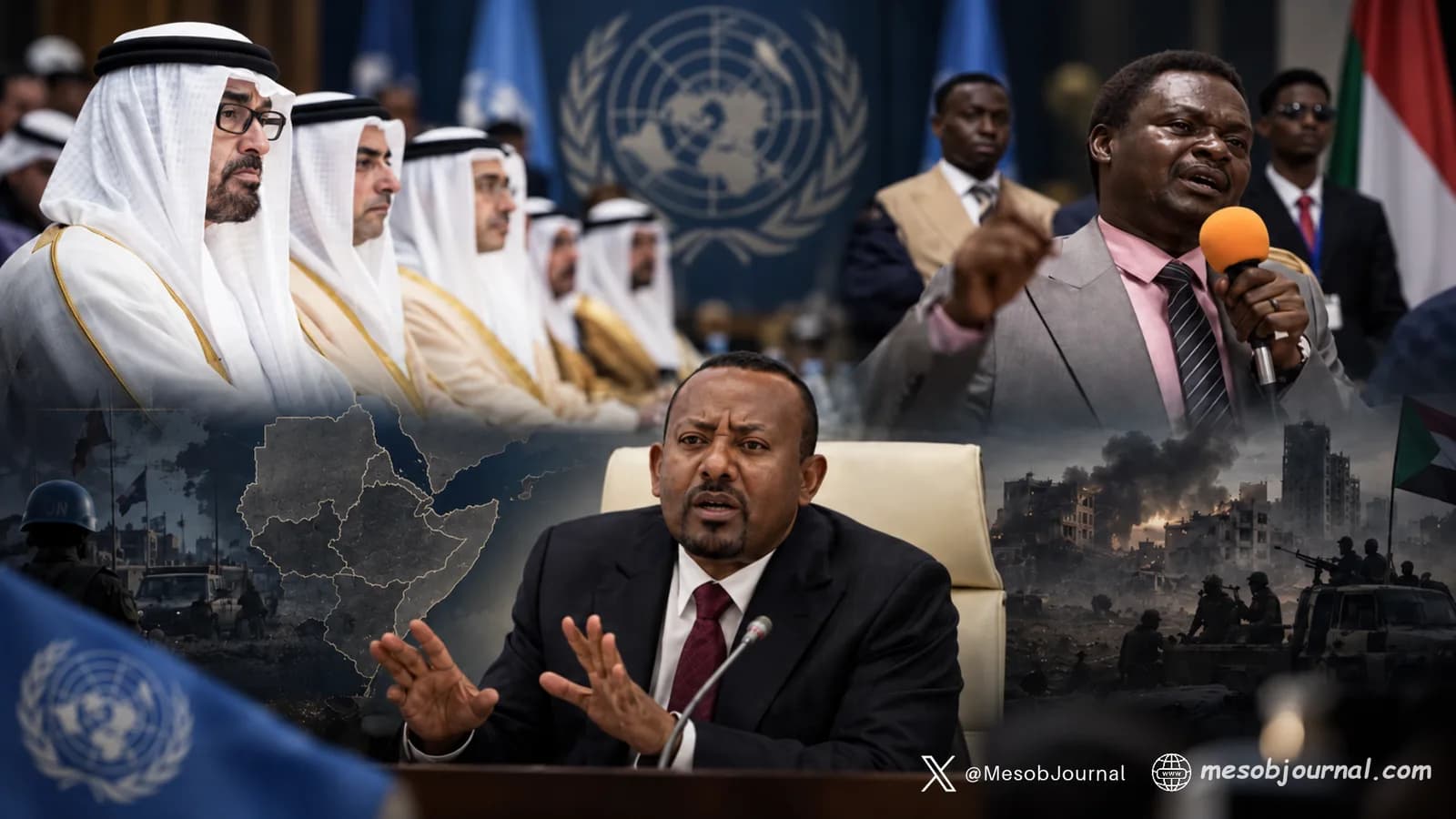
The war between the Sudanese Armed Forces and the Rapid Support Forces has become one of the most destabilizing conflicts in the region. Ethiopia is no longer outside that conflict. Recent reporting and Sudanese official accusations have placed Ethiopian territory, logistics and facilities inside the RSF support network, particularly in relation to the UAE’s wider role in Sudan’s war.
This is a serious regional shift. Sudan’s war is not only a Sudanese crisis; it is becoming a test of the Horn of Africa’s security order. When a neighboring state becomes a corridor, staging ground or facilitator for a paramilitary in a civil war, the consequences do not remain local. Diplomatic trust collapses, border security tightens, and every state in the region begins to treat the conflict as part of its own threat environment.
What Accountability Should Mean
Ethiopia’s citizens have suffered enough from elite failure, war, poverty, displacement and historical misrule. They are the first victims of the country’s recurring political disasters.
The question is how to treat a ruling system that wins elections while failing to reduce the country’s most dangerous tensions.
Accountability should begin with the protection of civilians. Allegations of abuses in Tigray, Amhara and Oromia require credible investigation, not diplomatic avoidance. The use of drones and heavy force in populated areas should face serious scrutiny. Political detention, media pressure and restrictions on civic space should not be excused as internal matters when the same government seeks international legitimacy and external funding.
Accountability should also include regional restraint. Ethiopia’s partners should make clear that maritime access must remain a negotiated economic issue, not a militarized nationalist campaign. They should also make clear that Sudan’s war cannot become another arena for regional games.
This is not anti-Ethiopian. It is pro-stability.
A stable Ethiopia would benefit the entire Horn. It would reduce security pressure on Eritrea, Somalia, Sudan and Djibouti. It would make Red Sea cooperation easier. It would improve Nile Basin diplomacy. It would give the region a stronger economic center. But that Ethiopia cannot be built through election arithmetic, especially when the arithmetic itself is fraudulent.
The Real Result
Abiy Ahmed has "won" parliament. That much is clear.
What remains unclear is whether he can still win back the country.
The 90 percent result may strengthen his hand inside the formal institutions of the state. But Ethiopia’s future will not be decided only in those institutions. It will be decided in the regions where people no longer trust the center, in the communities living under emergency rule, in the borderlands watching Addis Ababa’s regional posture, and in the calculations of neighbors who now measure Ethiopia less by its promises than by its behavior.
That is the meaning of this election.
It gives Abiy Ahmed another mandate. It gives Ethiopia no guarantee of peace.
And in the Horn of Africa, that gap is no longer an Ethiopian issue alone.