
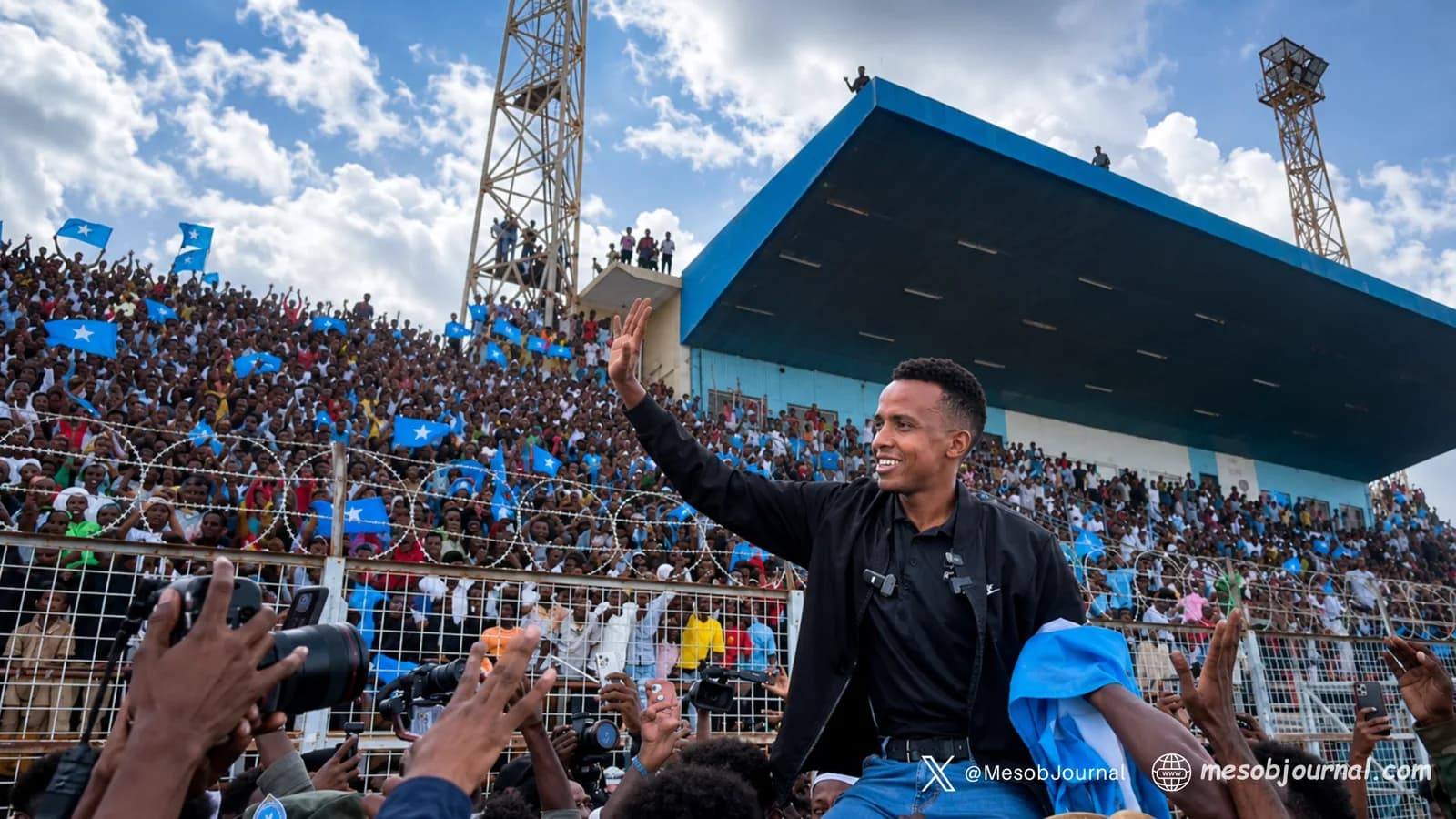
Somalia did not receive Omar Abdulkadir Artan as a defeated man. It received him as a national symbol.
When the 34-year-old Somali referee landed back in Mogadishu after being denied entry into the United States ahead of the 2026 FIFA World Cup, thousands of Somalis welcomed him with flags, cheers, pride and pain. For many, the moment was bigger than football. It was about dignity, belonging and the right of an African professional to stand on the world stage without being reduced to the passport he carries.
Artan had been on the verge of history. He was set to become the first Somali referee to officiate at a FIFA World Cup, a dream built through years of discipline, sacrifice and excellence. His rise from Somalia’s football fields to the highest level of international refereeing had already inspired a generation. But that dream was abruptly blocked at Miami International Airport after U.S. authorities refused him entry.
The decision shocked Somalis and angered many Africans, especially because Artan had reportedly travelled with valid documentation and had already earned his place through football merit. To his supporters, the message was painful: a Somali referee could be good enough for FIFA, good enough for CAF, good enough for the global game — but still not allowed through the gate.
Yet Artan’s response was not bitterness. It was grace.
“Somalia belongs to all of us,” he said after returning home. “Whether things are good or bad, I want to tell our youth not to lose hope in our country.”
He added a sentence that instantly became a statement of national pride: “I will continue loving my country and my passport.”
Those words transformed a painful injustice into a statement of pride. Artan did not bow to bullies. He returned home with his head high, carrying the same Somali passport, the same Somali flag and the same dream that had taken him to the edge of World Cup history.
For young Somalis, his message was clear: never let the world make you feel small for loving your country. Somalia is beautiful, Somalia belongs to its people, and its future will be built by those who refuse to lose hope.
President Hassan Sheikh Mohamud received Artan after his return, while Somali officials and citizens praised him as a symbol of resilience. Across Mogadishu, the reception was emotional. Supporters raised the Somali flag high, celebrating Artan not only as a referee, but as a son of Somalia whose journey reminded young people that their dreams can travel far while remaining rooted in home.
Artan’s career speaks for itself. He has been a FIFA-listed referee since 2018, earned recognition across African football, officiated major CAF competitions and was named CAF Men’s Referee of the Year in 2025. His selection for the World Cup was not charity. It was recognition of excellence.
That is why the anger has been so deep. Many Africans are asking why FIFA could not do more to protect one of its own appointed officials. The World Cup is being hosted across three countries — the United States, Mexico and Canada — and critics have questioned why Artan could not be reassigned to matches outside the U.S. if American authorities refused him entry.
For many, FIFA’s response felt too weak for an institution that speaks so often about unity, inclusion and the global nature of football. If the World Cup belongs to the world, then the people selected to serve it should not be abandoned when politics blocks the path.
But as one door closed, another opened.
UEFA has now appointed Omar Abdulkadir Artan to officiate the 2026 UEFA Super Cup between Paris Saint-Germain and Aston Villa in Salzburg on August 12. The decision, made in cooperation with CAF, is a powerful recognition of Artan’s quality and a public reminder that his career is not defined by one border rejection.
For Somalia, the appointment is more than consolation. It is vindication.
Artan was denied his World Cup moment, but he was not denied his greatness. He was denied entry into the United States, but he was not denied entry into history. His name is now known far beyond football circles — not because he failed, but because he stood tall when the bullies expected him to lower his head.
In Mogadishu, the people understood that immediately. They did not welcome back a referee who had lost his chance. They welcomed back a son of Somalia who had carried the country’s flag with dignity.
Omar Artan’s story is now part of a larger African conversation: about fairness, mobility, representation and respect. It asks whether global institutions will truly defend the people they celebrate, and whether African excellence will continue to be treated as conditional when it reaches the borders of powerful nations.
For Somalis, however, Artan’s message was simple and unforgettable: do not lose hope.
That may be his greatest whistle yet — not one blown on the pitch, but one heard across a nation still fighting to be seen for its talent, courage and future.
Omar Abdulkadir Artan dreamed of officiating at the World Cup. That dream was interrupted. But his journey is not over.
Somalia has already made its decision: Omar Artan is not a rejected referee. He is a national hero.