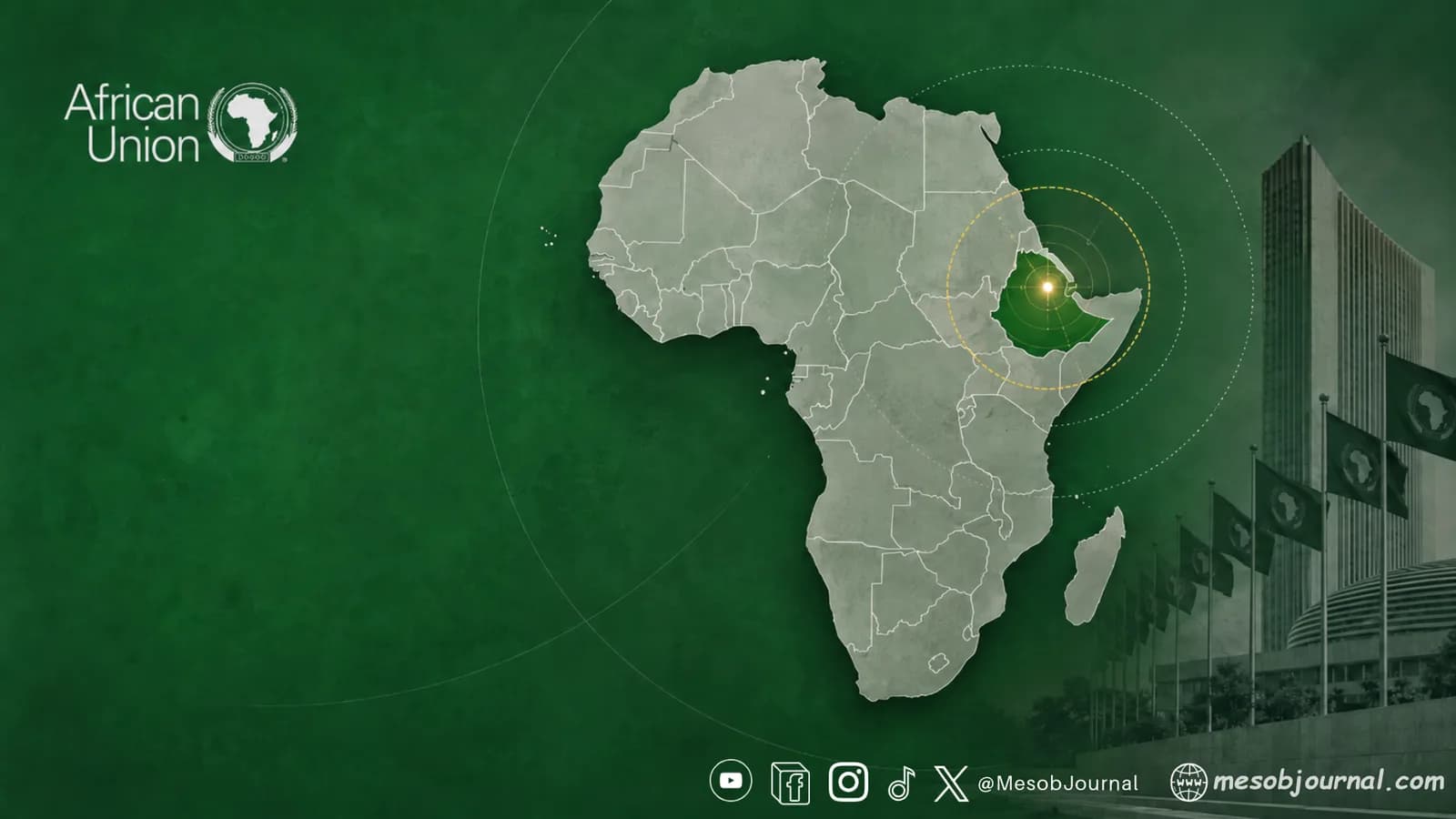

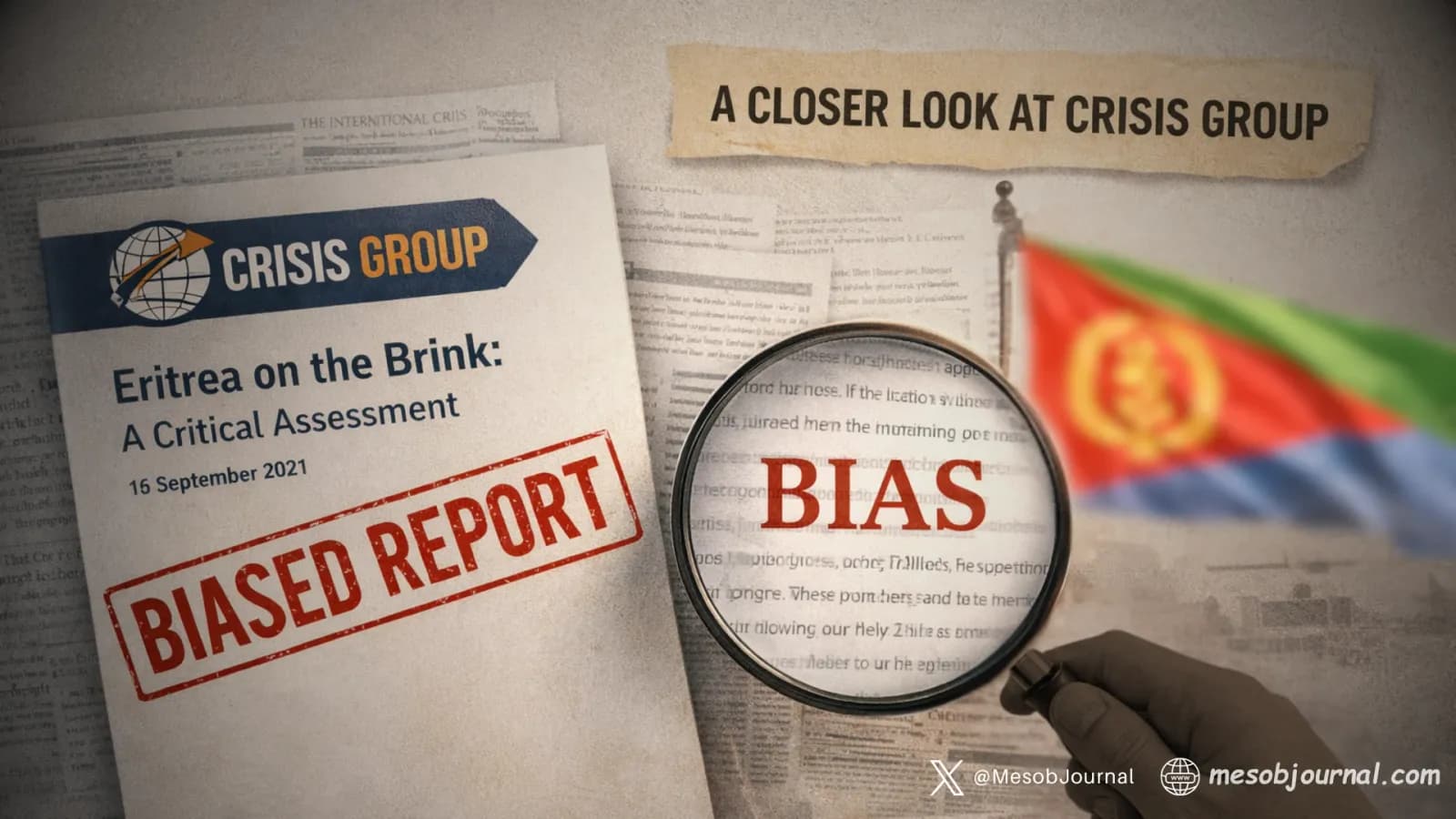
International Crisis Group’s 18 February 2026 briefing advertises itself as conflict prevention. In reality, it performs something closer to narrative management: it repackages Ethiopia’s Red Sea ambition as a “grievance” to be accommodated, while keeping Eritrea boxed into the familiar Western-policy role of the perpetual spoiler.
You can see it in the briefing’s own opening triad. It urges “quiet diplomacy” by “outside powers with interests in the Horn of Africa,” and calls for work to “address each side’s grievances,” explicitly pairing Ethiopia’s desire for reliable sea access with Eritrea’s fears of an attack on its sovereignty.
That pairing is the core analytical flaw.
A commercial question is being smuggled into a sovereignty claim
“Sea access” in a normal sense is commercial: port contracts, transit corridors, diversified routes. Ethiopia already has access to the sea through agreements and usage; what’s being debated here is not whether a landlocked country may trade, but whether it is entitled to “sovereign sea access” — Crisis Group uses that exact framing for Abiy Ahmed’s stated intention.
Once “sovereign” enters the sentence, you’re no longer in the realm of logistics. You’re in the realm of territory.
Crisis Group briefly admits this too, noting that some versions of Ethiopia’s demand amount to “coastal territory.” Yet it still asks neighbours to treat Addis Ababa’s objective as something “legitimate” that should be satisfied, even if only through “improved” access.
That’s the sleight of hand: downgrade a territorial ambition into a reasonable-sounding economic concern, then pressure the neighbour to “discuss solutions.”
The briefing admits where the war talk is coming from — then blurs it
One of the most consequential lines in the entire document is also the one Crisis Group doesn’t build its conclusions around: it states that “all the belligerent noises” about the injustice of Ethiopia lacking its own seaport — and the “veiled threats” to remedy it — have come from Addis Ababa.
If you take that seriously, the “both sides” posture becomes hard to defend. Yet the briefing quickly returns to “provocations” and “bravado on all sides,” the kind of language that turns agency into atmosphere — a “powder keg” that somehow exists on its own.
This matters because the real risk driver is not misunderstanding. It’s normalisation: a steady campaign of rhetoric that trains a domestic audience to see someone else’s coastline as a historical error waiting to be “corrected.” Crisis Group itself recounts Abiy saying the Red Sea loss “will be corrected” and even questioning Eritrea’s secession legitimacy — not small signals in a region where borders are the stabiliser.
It even includes Abiy’s February parliamentary threat in which he implies Ethiopia can cause problems not only at home but in “the land they call theirs.”
Words like “regime” aren’t decoration — they’re instruction
Crisis Group repeatedly labels Eritrea as “the Eritrean regime” and describes it as an “authoritarian regime,” while Ethiopia is consistently “the federal government.”
This isn’t about politeness. It’s about who gets treated as a normal sovereign actor, and who gets treated as an abnormal object to be managed. The effect is predictable: Ethiopia’s ambitions become a policy puzzle; Eritrea’s security posture becomes an attitude problem.
The irony is that the same briefing describes Ethiopia’s state capacity strain in plain terms — its armed forces “stretched thin” by fighting in Amhara and Oromia, while insurgency and internal conflict persist.
Yet Crisis Group still grants Addis Ababa the clean institutional language of “government,” while reserving “regime” for Eritrea.
That’s not neutral analysis; it’s a signal to the intended audience about who deserves empathy and who deserves suspicion.
The legal baseline is settled — and the briefing treats it like background noise
Here’s what should anchor any serious discussion of Eritrea’s “fears of an attack on its sovereignty”: the Ethiopia-Eritrea settlement architecture is built on explicit commitments to borders, territorial integrity and finality.
The Algiers Agreement states that the Boundary Commission’s determinations “shall be final and binding,” and that each party shall respect the border, “as well as territorial integrity and sovereignty.”
The Boundary Commission later reiterated that both parties stipulated precisely that — final and binding determinations, and respect for each other’s sovereignty and territorial integrity.
So when Crisis Group lists Ethiopia’s sea-access drive and Eritrea’s sovereignty fears as parallel “grievances,” it quietly flattens international law into a mood.
A state’s coastline is not a bargaining chip to soothe another state’s domestic politics.
Eritrea’s position isn’t ambiguous — and the record matters
Eritrea’s official line, stated bluntly, is that Ethiopia’s ruling party has spent years floating war logic around ports, including the phrase “legally if possible and militarily if necessary,” while Eritrea chose “maximum restraint” and warned it would not be drawn into manufactured platforms.
You don’t have to agree with Eritrea on every issue to recognise what that statement is doing: it’s drawing a bright line between commercial arrangements (possible) and coercive entitlement (unacceptable).
Crisis Group’s unfair Eritrea record: the pattern is documented
Crisis Group’s Eritrea file has a long-running habit of confident narrative over limited access. In its 2010 report Eritrea: The Siege State, it explicitly acknowledges that no fieldwork was conducted in Eritrea “during the current year,” and says it attempted to fill the gap through interviews with Eritreans who had left, diplomats, aid workers and others.
In its 2014 briefing Eritrea: Ending the Exodus? it states plainly: “Permission to do research in Eritrea was not granted,” and describes relying on interviews with Eritreans residing abroad across many countries, withholding identities and locations.
Limited access doesn’t automatically invalidate analysis. But it should force caution in tone and framing. Instead, Eritrea repeatedly gets the loaded nouns (“regime,” “isolated”), while Ethiopia gets treated as a normal state with “legitimate concerns” — even when the concern being elevated is, in substance, a territorial project.
The bottom line the briefing can’t escape
Crisis Group’s briefing contains the truth in fragments — it notes the belligerent sea-access rhetoric is coming from Addis Ababa.
But it cannot bring itself to follow that truth to its logical conclusion, because the managerial worldview requires symmetry: everyone has “grievances,” outsiders with “interests” must “mediate,” and Eritrea must be urged to stop “meddling” while Ethiopia’s Red Sea ambition is treated as a policy itch that deserves relief.
That’s how you end up normalising an entitlement claim and casting the threatened party as the problem for refusing to negotiate its own sovereignty.
If conflict prevention is the goal, the clearest deterrent message is also the simplest: commercial access can be expanded; sovereign coastline cannot be “corrected.” And anyone repeating “legally if possible and militarily if necessary” isn’t talking about trade.