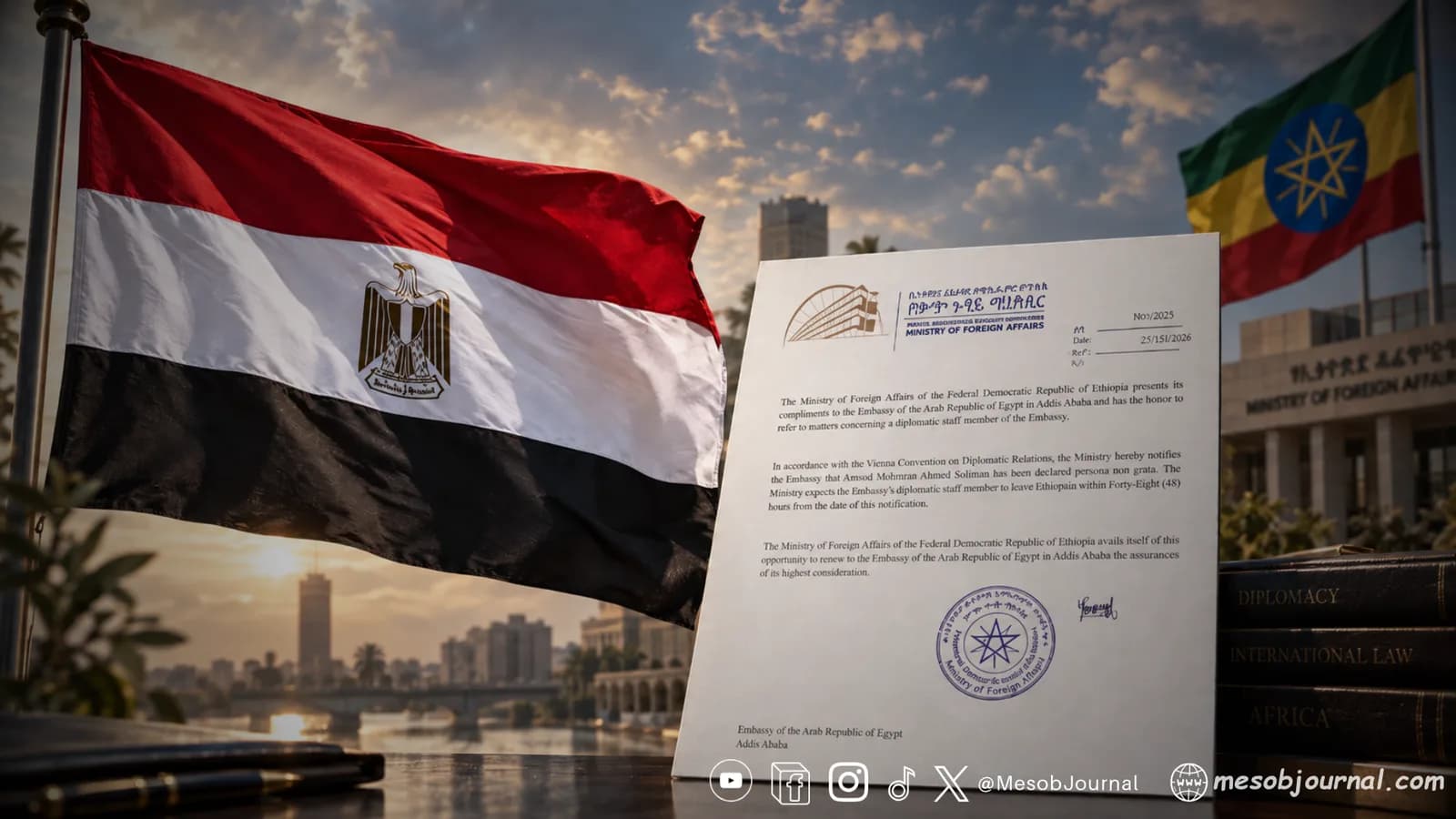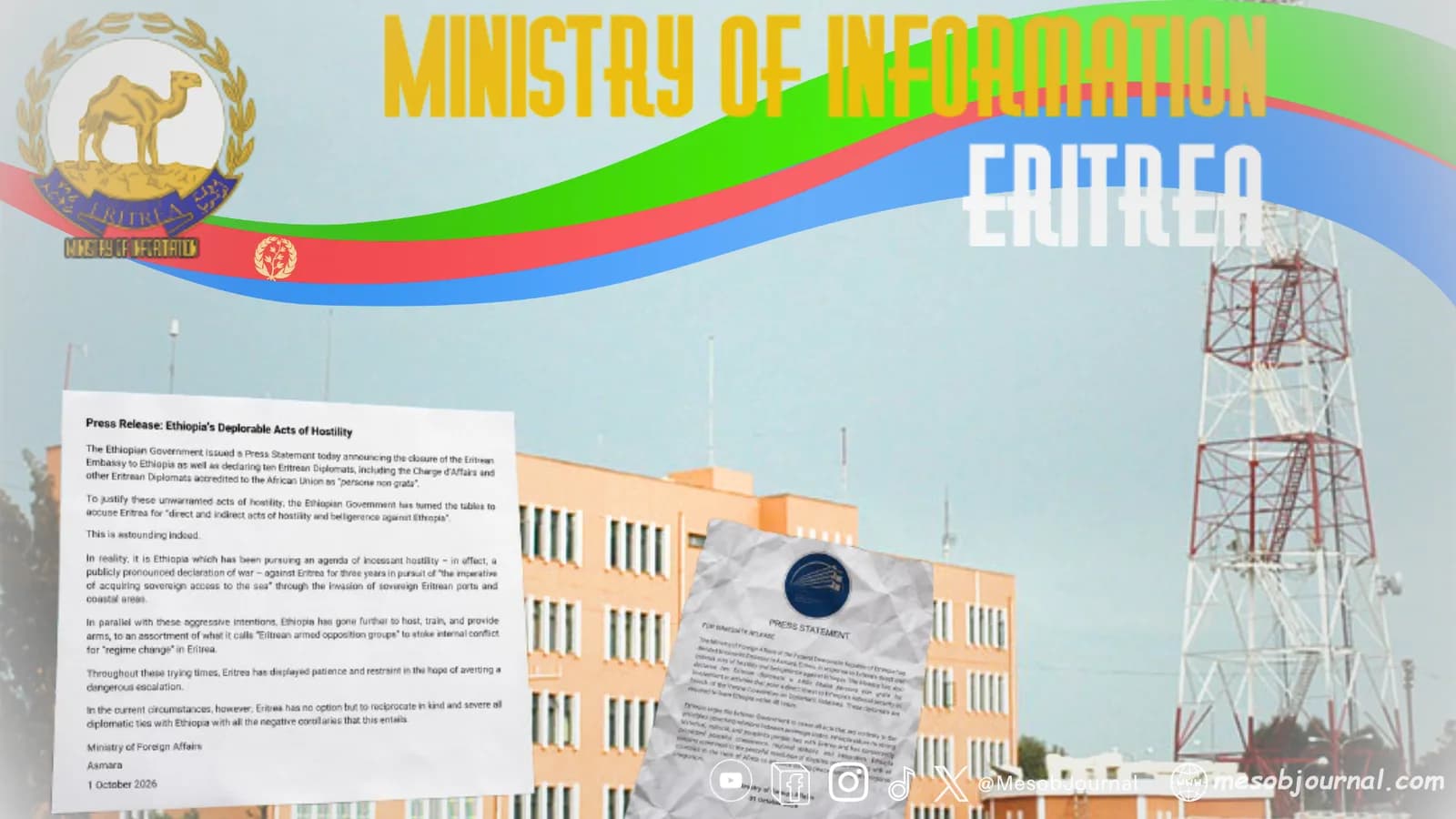


Ethiopia’s Foreign Ministry has sent Eritrea a formal letter dated 7 February 2026 that reads less like a genuine diplomatic outreach and more like a paper trail for escalation. It accuses Eritrea of “occupying Ethiopian territory,” of providing “material assistance” to militant groups, and—most provocatively—of new “incursions” and “joint military manoeuvers” with “rebel groups” in recent days. Then it demands Eritrea “immediately withdraw” and “cease all forms of collaboration.”
That’s the front half of the document. The back half reveals the real political payload: Addis Ababa says it will consider “good faith negotiations” on “maritime affairs” and “the issue of access to the sea through the port of Assab”—but only after Eritrea accepts Ethiopia’s framing of the border and security accusations.
In other words: first sign on to the allegation sheet, then we’ll talk about Assab.
The tell is in the structure
If a government truly believes its territory is being occupied and its sovereignty violated by “outright aggression,” there are standard steps: specific incident reporting, evidence, verification requests, formal recourse through established international mechanisms, and clear de-escalation channels. What this letter provides instead is a broad narrative—no coordinates, no dates, no named incidents, no annexes, no evidentiary trail—followed by a political conditional: cooperate with our demands, and we’ll negotiate on access to the Red Sea.
That’s not how urgent security diplomacy is usually written. It’s how a “we tried” folder gets built.
The language also does something else: it fuses two separate files into one. A border-security accusation becomes the gateway to reopening the strategic question of Assab. The sequencing is not subtle. The letter frames Eritrea as the aggressor, then positions Ethiopia as the reasonable party offering dialogue—so that any Eritrean refusal can later be portrayed as “rejecting peace.”
Why Eritrea isn’t obliged to play along
On maritime access, Eritrea’s legal position is straightforward: UNCLOS does not grant a landlocked state ownership over a neighbor’s coastline or ports. It recognizes access through agreements—commercial transit, port services, negotiated arrangements—without touching the sovereignty of the coastal state. “Access” is a matter of consent and contract, not entitlement.
So when Addis writes “access to the sea through the port of Assab,” Eritrea is not compelled into a discussion that treats Assab as a negotiable political concession. If Ethiopia wants practical sea access, that’s a normal economic conversation—fees, guarantees, investment, logistics, and security protocols—conducted with mutual respect. It is not something to be packaged behind allegations of “occupation” and “outright aggression.”
The accusation pattern
This letter lands right after Addis tried to anchor its rupture with Eritrea in a new storyline, only for key parts of that narrative to be publicly undermined by the very figure Addis itself invoked. In that context, the MoFA note looks like a fast replacement: new document, same direction—Eritrea as villain, Ethiopia as reluctant peacemaker, Assab as the “comprehensive settlement” prize.
Eritrea’s posture—calm, unmoved by serial accusations—is exactly what frustrates this kind of narrative warfare. Because the point isn’t persuasion. It’s pretext.
What a serious response looks like
Eritrea doesn’t need to chase every claim. But it can neutralize the playbook with a disciplined reply:
- Demand specifics: dates, locations, incidents, and independently verifiable claims.
- Reject premise-trading: border allegations are not a down payment for “maritime negotiations.”
- Keep the law central: sovereignty is not negotiable; transit is negotiable.
- Invite verification where appropriate: if Ethiopia insists on “recent escalations,” let it put facts on the table.
The region has seen this movie before: a diplomatic letter designed to be quoted later, not solved now. Eritrea’s advantage is that it doesn’t need theatrics. It needs clarity—and a refusal to let its sovereignty be bartered under manufactured urgency.