

A Regional Security Threat and Potential for Destabilisation of the Horn of Africa, the Red Sea and the Gulf of Aden Regions and Redrawing the Map of the Horn of Africa
On December 26, 2025, the State of Israel announced its formal recognition of the Republic of Somaliland as an independent and sovereign state, becoming the first United Nations member to do so and fracturing a 34-year global consensus. This was not a mere bilateral diplomatic gesture but a deliberate and calculated geopolitical shockwave designed to reshape the strategic terrain of the Horn of Africa and the Red Sea.
Israel's decision functions as a multi-dimensional strategy with ambitions that extend far beyond its immediate partnership with Hargeisa. At its core, the move is an ambitious gambit aimed at securing a permanent strategic foothold on a critical maritime chokepoint, fragmenting diplomatic cohesion among its adversaries, and cultivating a new regional axis of influence.
In achieving these goals, however, Israel has unleashed a cascade of instability that challenges the fundamental principles of the African post-colonial order, intensifies great power competition, and risks transforming a region of relative stability into a flashpoint for broader conflict.
To comprehend the magnitude of Israel's decision, one must first understand Somaliland's unique and unresolved place in international politics. Its quest for recognition is rooted in a distinct colonial history and a traumatic post-colonial experience.
The territory originated as the British Somaliland Protectorate, which achieved brief, internationally recognized independence for five days in June 1960—a status notably recognized by Israel and 34 other countries at the time. It then voluntarily united with the former Italian Somalia to form the Somali Republic, a union that dissolved into repression and civil war.
Following the collapse of the Somali state in 1991, Somaliland declared unilateral independence, citing the historical legitimacy of its pre-1960 borders and the atrocities committed against its people by President Siad Barre's regime. However, the African Union and the wider international community of nations didn't see the legitimacy of secession by Somaliland and refused it any form of recognition.
For the subsequent three decades, Somaliland established a regional government, issued its own currency, held a series of elections including a notable peaceful transfer of power in 2024—all while existing in a state of diplomatic limbo without formal recognition.
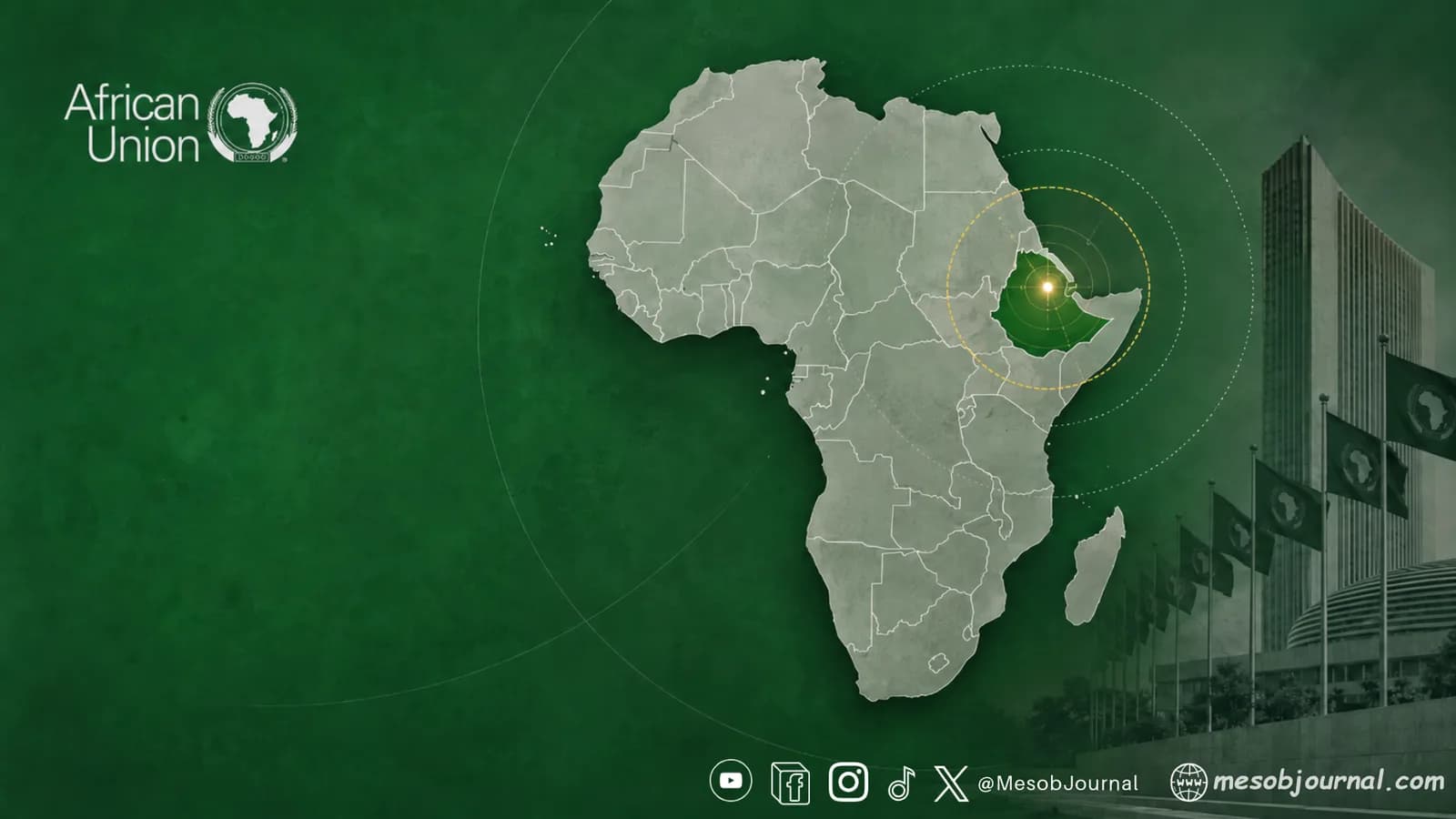
The primary challenge has been the African Union's (AU) sacrosanct principle of uti possidetis, which upholds the inviolability of colonial-era borders as a bulwark against continental chaos. The AU's steadfast position, immediately reaffirmed after Israel's move, is that Somaliland "remains an integral part of the Federal Republic of Somalia" and that external recognition "risks setting a dangerous precedent" for Africa.
Thus, Somaliland became trapped between its singular desire for statehood and an international legal norm, a paradox that Israel has now explosively intervened 'to resolve'.
Israel's decision to become the first country to formally recognize the Republic of Somaliland is a calculated geopolitical move with deep strategic motives and the potential to significantly destabilize an already volatile region.
In this preliminary analysis I will try to identify Israel's overt and covert reasons for this decision. I will also look into some of the key potentially immediate and long-term scenarios, and assess the wide-ranging impacts on the Horn of Africa and Red Sea/Gulf of Aden security.
Israel's recognition is driven by a combination of immediate security objectives and calculated long-term strategic goals. Its stated overt reasons are clearly presented as:
Expansion of Diplomatic Ties: Framed within the spirit of the Abraham Accords, Israel seeks to normalize relations with a new partner in Africa and the Muslim world, aiming to expand cooperation in agriculture, health, and technology. This security objective is seamlessly woven into a broader diplomatic gambit to extend the Abraham Accords. By framing the recognition as being "in the spirit" of these normalization agreements and signing a joint declaration to that effect, Israel aims to transform the Accords from an Arab-Israeli framework into a flexible tool for building coalitions across the Muslim world. Recognizing a Muslim-majority, African entity like Somaliland is a deliberate effort to break diplomatic isolation and create a fissure within monolithic opposition blocs like the Arab League and the Organisation of Islamic Cooperation, both of which swiftly condemned the move.
Support for a "Stable Democracy": Israel publicly aligns itself with Somaliland, which it described as an 'oasis of relative stability and democratic governance' in contrast to the larger State of Somalia.
The above objectives are a clear sign to draw attention away from the real hidden motives and also to demonstrate possible US backing of this decision. There is no popularity that could be added to the Abraham Accords, with the already fluctuated public enthusiasm in the Arab world.
Only the few signatory governments of Bahrain, Kazakhstan, Morocco, Sudan and UAE have stayed in the accord while the rest of the Arab world kept away. This was mainly due to the oft-stated agenda of encirclement of Iran using the framework and making Israel become the leader in the region.
However, Israel's strategic & security interests in the entire Red Sea Basin and the Horn of Africa constitute the following key covert reasons behind the sudden recognition of Somaliland as an independent state:
Countering the Houthi Threat: A primary motivation is gaining a strategic vantage point near the Bab al-Mandeb Strait. Israel's recognition stems from a complex interplay of immediate security imperatives and long-term strategic ambitions, each layer reinforcing the other. The most immediate driver is geostrategic positioning for Red Sea security. Somaliland's coastline along the Gulf of Aden positions it directly adjacent to the Bab el-Mandeb Strait, a chokepoint for global shipping that has become a frontline in Israel's conflict with Iranian-backed Houthi forces in Yemen. Recognition paves the way for potential intelligence-gathering posts and logistical facilities, offering Israel a vantage point to monitor and counter maritime threats.
Securing Red Sea Access: Recognition is a pathway to potential future security and commercial arrangements at the Port of Berbera, enhancing Israel's presence along a critical global shipping chokepoint and supply chain to its Eilat port on the Red Sea (Gulf of Aqaba).
Undermining a Unified African/Arab/Islamic Bloc: By creating a new diplomatic fissure, Israel challenges the consensus of the Arab League, the Organisation of Islamic Cooperation, and the African Union, which uniformly support Somalia's territorial integrity.
Strengthening a Regional Ally: Ethiopia, a key Israeli ally, has its own strategic interest in accessing Berbera's port. Israel's move indirectly bolsters Ethiopia's position despite its recent diplomatic tensions with Somalia over the same issue and rising tension with its northern neighbour, Eritrea on the Red Sea. Furthermore, the recognition actively cultivates an architecture of a new regional alliance. It solidifies a tacit but powerful Israel-Ethiopia-Somaliland axis directly countering a rival bloc comprising Eritrea, Egypt, and Somalia.
Aligning military and security positions: Joining the heavy presence of UAE on the Gulf of Aden and given the UAE's use of the Horn of Africa positions as a springboard in its involvement in the conflicts of Yemen and Sudan will present an opportunity for Israel to reinforce the strategic destabilisation of the two regions to its benefit.
Domestic political considerations for Israeli leadership: Seeking tangible foreign policy achievements, likely played a role in timing this high-stakes announcement after the public humiliation it faced post the Gaza and Iran wars.
Given the above covert objectives of Israel's recognition of Somaliland, there is no doubt that it will trigger a complex chain of events with high stakes for regional stability and devastating political, economic and social impacts on countries of the Red Sea and the Horn of Africa.
The immediate reactions and escalation of risks can already be felt by the unanimous, instantaneous, severe, and illustrative diplomatic condemnation by Somalia, the Arab League, the African Union (AU), and the Organisation of Islamic Cooperation (OIC).
The reaction from continental and regional bodies was unequivocal. The African Union Chairperson "firmly" rejected the recognition, grounding its stance in the foundational principles of its Constitutive Act.
The Intergovernmental Authority on Development (IGAD) – even though a highly wasted regional organisation that seems to miraculously find its voice now, stated that the move ran "contrary to the Charter of the United Nations" and the AU's founding act.
The collective condemnation from Arab powers like Saudi Arabia, Qatar, and Kuwait underscores how the move has unified Israel's traditional adversaries in defence of the regional status quo.
Further afield, Türkiye, with major investments and a military base in Somalia, could see its significant regional influence being directly challenged.
Perceptions of encroachment and threat by neighbouring states are also an important indicator to measure the gravity of the early impact of the Israeli decision.
Neighbouring states expressed profound anxiety. These regional backlashes were indicative of the new geopolitical fault lines Israel has activated.
For the Federal Government of Somalia, this was declared an "unlawful" and "grave violation" of its sovereignty and territorial integrity. Mogadishu is now compelled to pursue all political and legal countermeasures, potentially including invoking a mutual defence pact with Egypt and deepening its strategic reliance on the Arab League and Türkiye.
Egypt views this as a direct national security threat. It sees an Israeli (and by extension, Ethiopian) presence near the Bab-el-Mandeb as "southern encirclement," endangering the Suez Canal and potentially strengthening Ethiopia's hand in Nile River disputes.
Djibouti fears the economic and strategic diminishment of its role as the primary regional port and military hosting hub if Berbera rises as an alternative and views the development as an existential threat to its economic and strategic relevance.
Eritrea, despite its pivotal role in the Southern Red Sea zone, will definitely see this as an affront to its position against any potential annexation of its coastal territories by Ethiopia.
If recognition remains limited to Israel, Somaliland may face renewed diplomatic isolation rather than the breakthrough it sought.
Mogadishu has vowed to use all political and legal means to defend its sovereignty. This could include appealing to the UN, severing ties with countries that follow Israel's lead.
Somalia will view any engagement with Hargeisa as a hostile act, making reconciliation far more difficult and potentially supporting opposition within Somaliland.
Groups like Al-Shabaab could also use this opportunity to fuel extremist propaganda by pledging to fight the move, using it to recruit members by framing it as a foreign invasion and an attack on Somali and Islamic sovereignty.
Traditional mediators like Djibouti and Egypt feel threatened. Djibouti sees a rival port gaining an advantage, while Egypt views any new Israeli presence in the Red Sea as a national security concern.
Some of the longer-term impacts could also include precedence for secessionism in Africa against the AU's foundational principle of upholding colonial borders.
This direct challenge could embolden other separatist movements across Africa, causing anxiety for many governments.
The Red Sea and Gulf of Aden could become a more active theatre for the proxy conflict between Israel/UAE and Iran, Israel and Türkiye and Israel and Egypt with Somaliland as a potential base for intelligence or operations against the Houthis and Sudan.
The U.S. and EU, which support Somalia's sovereignty, now face a dilemma. The move complicates counterterrorism cooperation in Somalia and forces a balance between a key ally (Israel) and regional stability.
The long-term impacts are profound and will reshape regional alliances and conflicts. The new front in Iran-Israel rivalry, the region is already crowded with foreign military bases (U.S., China, France etc in Djibouti) and Israel's entry adds another layer of complexity to this competition for influence.
Israel's decision has forced great and middle powers into a complex recalculation of their interests in the Horn, a region already crowded with strategic competition.
The decision will also force major global powers to reassess their positions in a newly contested strategic space.
• It's in the public domain that the United States administration is internally divided as it faces a pronounced policy dilemma. While some factions see strategic value in countering Chinese influence and accessing Berbera, others fear destabilizing the fight against al-Shabaab and pushing Somalia toward rivals. President Trump has publicly expressed scepticism about recognition. This internal division may result in cautious neutrality, but it complicates Washington's position immensely.
• China firmly supports Somalia's "One Somalia" policy, opposing recognition to protect its investments and counter Western influence.
• Russia has shown interest in engaging with Somaliland, particularly for port access at Berbera, challenging Western influence.
• The crisis presents a strategic opportunity for both Russia and China. By reaffirming strong support for Somalia's sovereignty and territorial integrity, they could align themselves with the AU's principled stance and position themselves as defenders of international law and the post-colonial order against Western-backed unilateralism.
• Meanwhile, middle powers with vested interests are watching closely.
• The UAE, which already operates a chain of military bases from Berbera to Socotra, also an Abraham Accords signatory, is a particularly watched potential "follow-on" recognizer. Israel likely hopes its move will trigger a cascade.
The long-term consequences will depend on whether Israel's recognition remains isolated or sparks a broader diplomatic shift.
If recognition remains isolated or only a few states follow Israel's lead, Somaliland may gain symbolic legitimacy but remain practically isolated by the region and it is highly possible that it will soon start to host several disruptions and deterioration of its internal security, especially with the rise of internal divisions and stepped-up counter action by Al-Shabaab.
The regional rivalry between the two emerging blocs would intensify, leading to increased diplomatic friction and proxy competition and the AU would face a stress test of its unity principles.
However, if other states, especially a major power like the U.S. or a Middle Eastern partner (other than UAE), extend recognition, it would trigger a fundamental realignment and a complete collapse of the security of both the Red Sea and Horn of Africa.
Somaliland's integration into international partnerships will be a difficult and chaotic road to travel.
This would likely formalize the regional split into competing alliances, potentially accelerating militarization.
The precedent could embolden other separatist movements in Africa, creating widespread instability.
Red Sea security would become a more congested and contested military arena.
An Israeli/Ethiopian/Somaliland axis would directly counter an Eritrean/Egyptian/Somali bloc (with high likelihood that Türkiye, Saudi Arabia and Yemen would join this bloc), thus complicating maritime trade security cooperation and further militarisation of the Red Sea and Gulf of Aden Council.
The Horn of Africa stability will be guided by the militarisation of the region into separate blocs with failed attempts of reconciliation between Somalia and Somaliland, shifting focus of regional politics from internal state-building to external alliance formation, and high likelihood of balkanisation as a result of state collapse in Ethiopia.
The Horn of Africa transforms into a more explicit proxy battleground for Middle Eastern and great power (U.S. vs. China/Russia) competition.
Israel's recognition of Somaliland is a high-risk, high-reward strategic gamble.
While it offers Israel a potential security foothold near a critical maritime choke point and a chance to break diplomatic isolation, it has immediately triggered a severe regional crisis.
The decision fundamentally undermines the African Union's sacrosanct principle of border integrity, risks escalating conflict in Somalia by empowering extremist groups, and draws the Horn of Africa deeper into the tumultuous geopolitics of the Middle East.
Israel's recognition of Somaliland is a bold attempt to redraw the strategic map of a critical region.
Its success hinges on whether it can trigger a diplomatic cascade.
Regardless, the move has already successfully polarized the Horn of Africa, setting in motion a new and volatile chapter of geopolitical competition centred on the shores of the Red Sea and state collapse in Ethiopia, Sudan and South Sudan.
The coming months will reveal whether this move grants Israel its sought-after strategic depth or becomes a source of prolonged instability, fracturing international counterterrorism efforts and setting a dangerous precedent for secessionist conflicts across Africa.