
Sudan’s war has entered a more dangerous political phase.
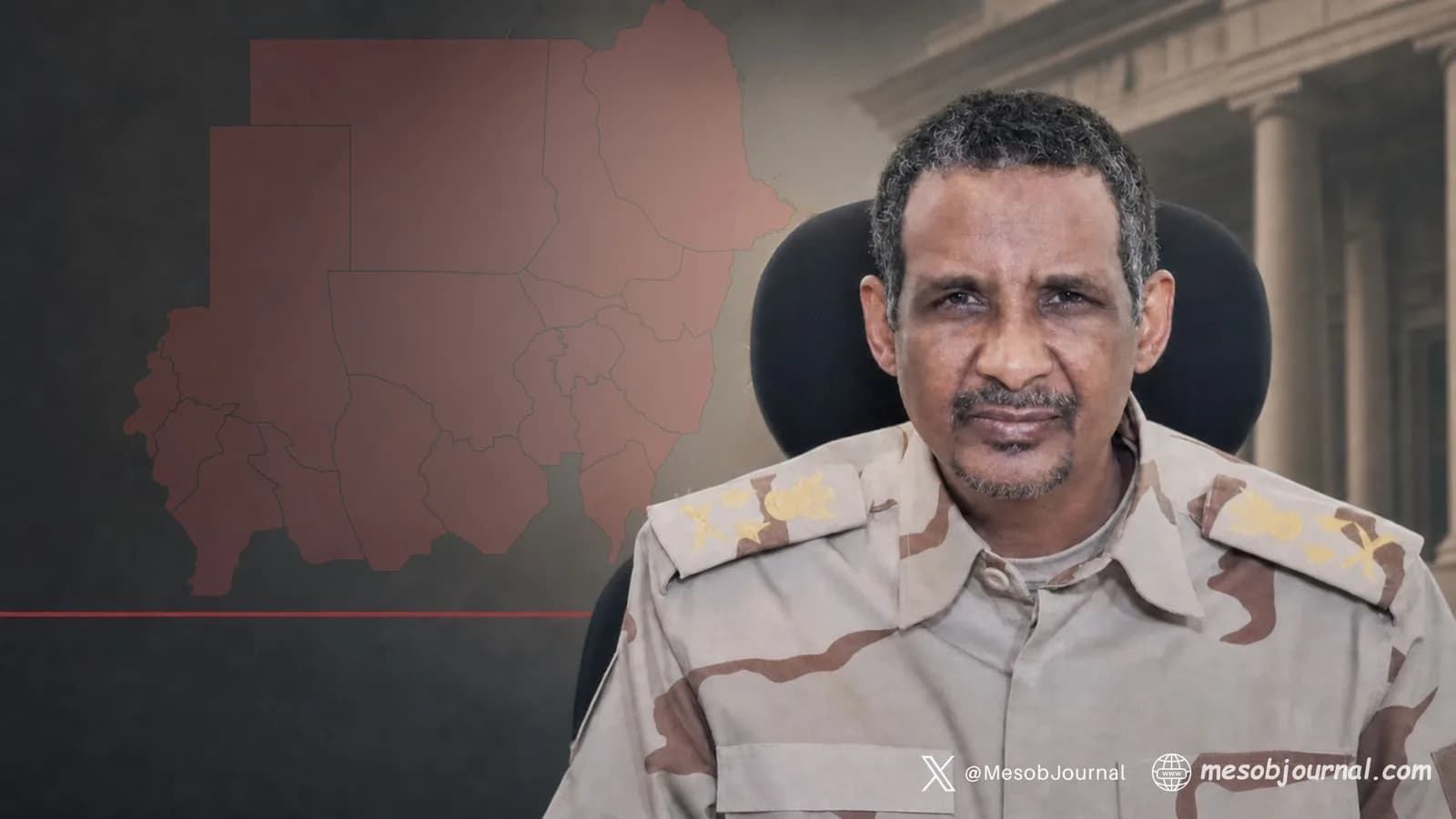
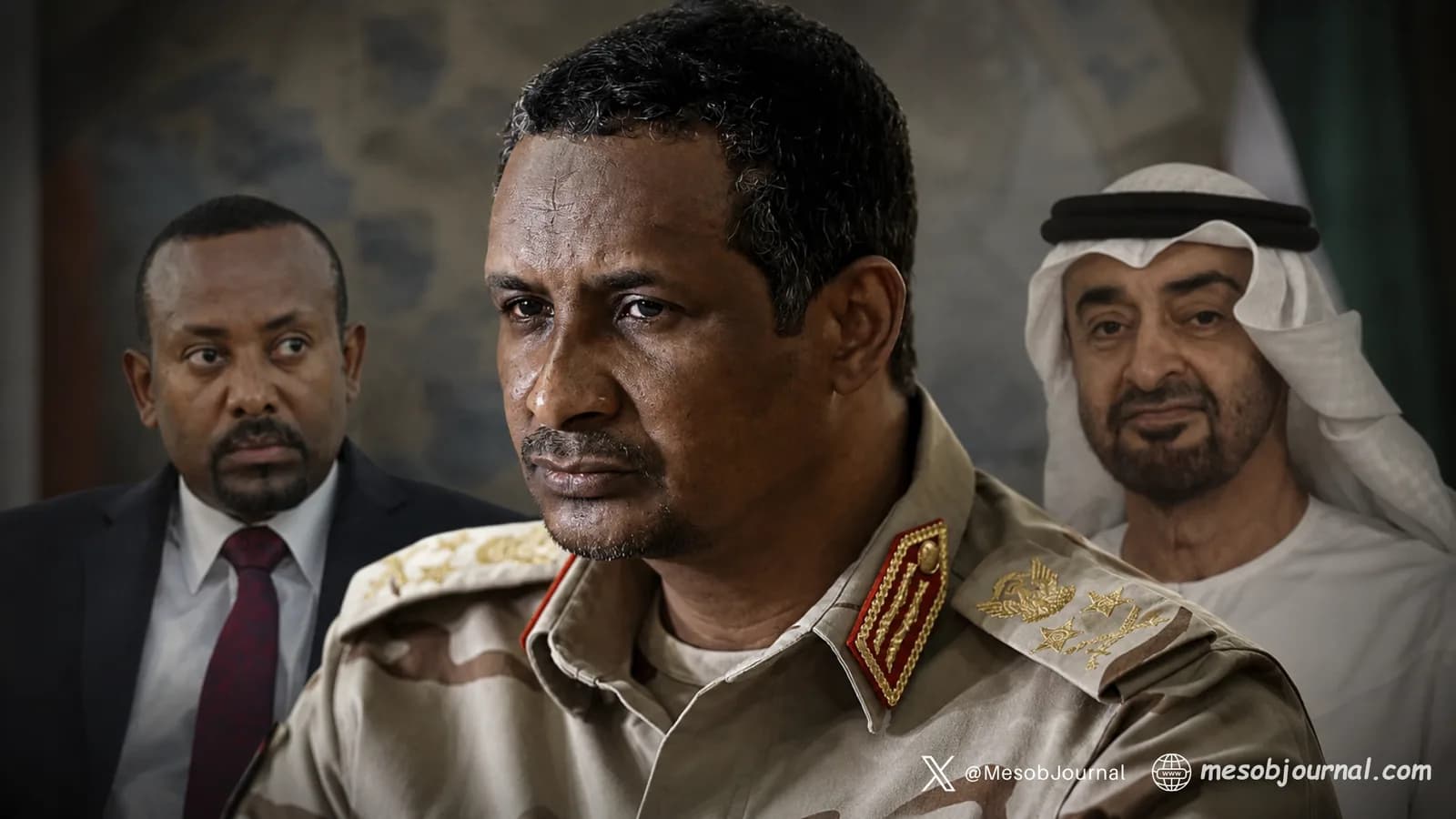
Mohamed Hamdan Dagalo, known as Hemetti, is no longer only fighting the Sudanese state with guns. He is trying to build a rival state structure around the Rapid Support Forces, turning a military rebellion into a political project that risks hardening Sudan’s division.
The move comes as the RSF and its allies continue efforts to consolidate a parallel authority in areas under their control. Its backers present the project as an alternative administration. For Sudan’s government, it is a direct attack on the country’s sovereignty and territorial integrity.
Hemetti’s political camp has already moved to build institutions around RSF-held areas, including a presidential-style structure and administrative bodies. The latest step — forming a security council and planning a new army — points to a deeper ambition: not only to survive the war, but to create a rival centre of power inside Sudan.
Khartoum has repeatedly accused the United Arab Emirates and Ethiopia of supporting the RSF war effort. In May, the Sudanese Armed Forces spokesperson said documented evidence showed drone operations launched from Bahir Dar Airport in Ethiopia, including drones identified as belonging to the UAE and operated from Ethiopian territory. The same briefing said those operations targeted areas in White Nile, Blue Nile, North Kordofan, South Kordofan and Khartoum.
That places the RSF project inside a wider geopolitical frame. Hemetti is not acting in isolation. His parallel-government move is being built in a war environment shaped by external power, regional calculations and the willingness of outside actors to treat Sudan’s unity as negotiable.
For the UAE, the RSF has long been viewed through the lens of influence, logistics, gold and Red Sea politics.
For Ethiopia, the RSF offers a strategic opening. Addis Ababa does not see Sudan only through Sudan’s internal war. It also sees the conflict through its rivalry with Egypt, whose ties with Sudan’s recognised government have grown stronger as the war has dragged on.
A Sudan weakened by the RSF — or worse, a Sudan partially captured by the RSF — would reduce Egypt’s strategic depth on the Nile and give Ethiopia more room to manoeuvre. That calculation fits neatly with the UAE’s own interest in expanding influence across Sudan, the Red Sea and the wider Horn of Africa.
In that sense, the RSF project is not only a Sudanese rebellion. It is part of a wider regional contest in which the UAE, Ethiopia and an RSF-led Sudan would seek to shape the balance of power from the Nile corridor to the Red Sea.
The danger is not only that Sudan could have two governments. The deeper danger is that two governments could become two realities: separate armies, separate financial systems and separate diplomatic channels. Once those structures mature, reversing them becomes far harder than condemning them.
Sudan has seen partition before. South Sudan’s independence came after decades of war, failed political settlements and international mediation. The current crisis is different, but the warning is familiar: when armed geography becomes political geography, the state begins to break.
Hemetti’s parallel authority also complicates any future peace process. If the RSF builds a rival army and administrative system, negotiations may no longer be about ending a rebellion. They may become talks between competing state-like entities, each claiming legitimacy, territory and external recognition.
That is why the response of regional and international bodies matters. Statements supporting Sudan’s unity are no longer enough. The test is whether the African Union, the United Nations, Arab states and neighbouring countries will reject any pathway that rewards militia rule with political recognition.
For Sudan, the issue is existential. A country already battered by mass displacement, economic collapse and civilian killings now faces the possibility that warlords will redraw its political map from the battlefield.
Hemetti’s move is not merely another announcement from a militia leader. It is a warning that Sudan’s war is drifting from a struggle for power into a struggle over whether the Sudanese state survives in one piece.