
Sudan’s war is often described as a domestic power struggle between two armed camps. That description is no longer enough. The conflict has become a regional test of sovereignty, state survival and Red Sea balance.
At the center of the tragedy are Sudanese civilians. Families have been uprooted from Khartoum, Darfur, Kordofan, Gezira and beyond. Cities have been emptied, homes looted, hospitals wrecked, farms abandoned and communities pushed into hunger. A country that should be rebuilding its institutions has instead been forced into a war economy where armed power decides who eats, who moves and who survives.
This is the human cost. It must remain the starting point.
But Sudan’s suffering is not happening in a vacuum. The war has opened a strategic marketplace around one of Africa’s most important states. Ports, gold, air routes, borderlands, agricultural land and armed factions have all become part of a wider contest.
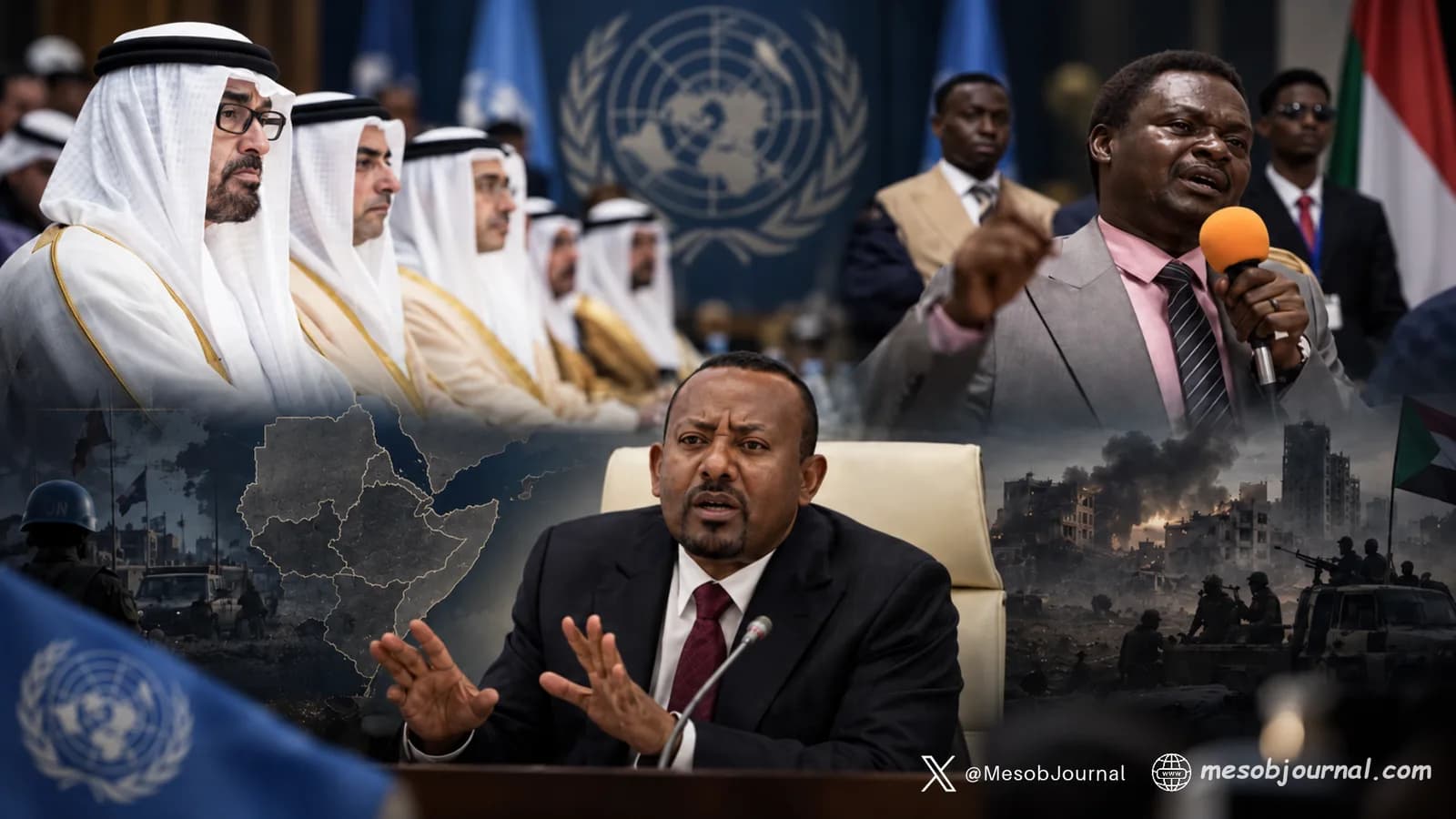
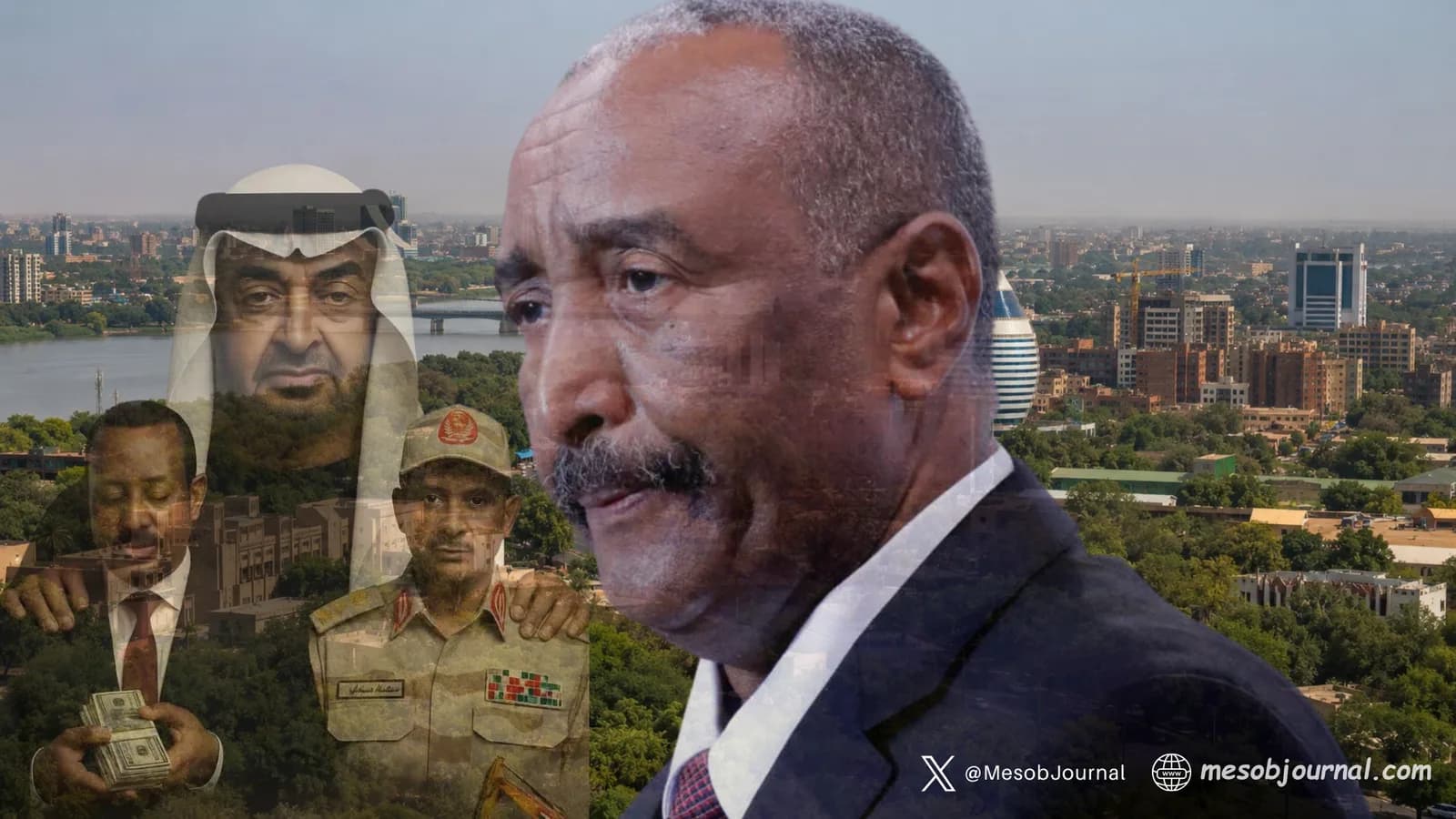
The dangerous triangle is now clear: Ethiopia’s Red Sea ambition, UAE-linked paramilitary influence, and the RSF war economy.
That triangle is shaping Sudan’s battlefield, weakening the state, and threatening the wider Horn of Africa.
The RSF war economy
The Rapid Support Forces are not a normal political movement. They are a paramilitary-commercial structure built around coercion, mobility, resource capture and external access. Their power does not come only from fighters. It comes from the economic and logistical system around them.
That system needs money. It needs weapons. It needs routes. It needs political cover. It needs outside actors willing to treat Sudan’s collapse as an opportunity.
This is why Sudan’s war cannot be understood only through the language of “two generals.” The deeper issue is the rise of a force that has challenged the state while operating through commercial networks, cross-border supply lines and external relationships.
A paramilitary force of this nature does not simply fight a war. It converts war into a business model.
Gold, looting, smuggling routes, foreign recruitment, arms markets and territorial control all feed the same machine. The longer the war continues, the more that machine becomes embedded. The result is not just battlefield destruction. It is the hollowing out of Sudan itself.
The UAE’s strategic reach
The UAE’s role in Sudan has drawn repeated accusations from Sudanese officials, who have accused Abu Dhabi of supporting the RSF. The UAE denies the allegations. Sudan also brought a case against the UAE at the International Court of Justice under the Genocide Convention; the court dismissed it on jurisdictional grounds, without ruling on the factual substance of Sudan’s claims.
That legal detail matters, but the wider political question is even larger.
Across the Red Sea, the Horn of Africa and the western Indian Ocean, the UAE has built influence through ports, logistics, security relationships, investment channels and ties to local power brokers. It does not need old-style occupation to shape outcomes. It works through networks.
Sudan fits that map. It has gold. It has ports. It has agricultural depth. It sits between the Sahel, the Nile Valley, the Horn and the Red Sea. Whoever shapes Sudan’s future gains leverage far beyond Sudan.
That is why the RSF file cannot be treated as a Sudanese internal matter alone. A paramilitary force with access to foreign money, weapons channels and political protection becomes a regional instrument.
For Sudanese civilians, this is catastrophic. For external actors, chaos can be useful.
Ethiopia enters the Sudan file
Ethiopia’s role is increasingly difficult to separate from Sudan’s war.
Sudan’s military leadership has publicly accused Ethiopia and the UAE of involvement in recent drone attacks, saying attacks were launched from Ethiopian territory using UAE-supplied drones. Ethiopia and the UAE deny involvement. But the accusation itself is strategically significant because it places Addis Ababa and Abu Dhabi inside the same theatre of pressure.
That pressure does not appear in isolation.
Since late 2023, Ethiopia’s leadership has pushed sea access as an existential national issue. The language has gone far beyond ordinary trade access. It has entered the territory of strategic entitlement, national destiny and maritime correction.
Then came the January 2024 Ethiopia-Somaliland memorandum, which involved access to Somaliland’s coast and a reported naval dimension. Somalia rejected it as a violation of its sovereignty.
This is the pattern regional states are watching: Ethiopia tests the legal edges of sovereignty, searches for weak points, and frames the pursuit of maritime leverage as a national necessity.
Sudan’s collapse creates another opening.
Eastern Sudan, Port Sudan and the Red Sea coast are not peripheral spaces. They are strategic geography. A weakened Sudan gives ambitious neighbors and external powers more room to maneuver. It creates bargaining conditions that would not exist if Sudan were stable, united and fully sovereign.
The Ethiopia-UAE overlap
The most important development is not Ethiopia alone or the UAE alone. It is the overlap.
The UAE brings capital, logistics, weapons networks, port interests and relationships with armed actors. Ethiopia brings geography, military ambition, demographic weight and a leadership openly seeking maritime leverage.
Their interests are not identical, but they can converge around instability.
A strong Sudan controls its ports.
A strong Somalia rejects illegal maritime arrangements.
A stable Red Sea order limits adventurism.
A coherent regional system protects sovereignty.
A broken Sudan changes the calculation.
It allows paramilitary actors to survive. It allows foreign sponsors to bargain with fragments. It allows Ethiopia’s maritime pressure to advance indirectly through regional weakness. It allows ports and corridors to become negotiable under crisis conditions.
This is why the war in Sudan is no longer just about Khartoum. It is about the future rules of the Horn of Africa.
Eritrea and Egypt stand for state continuity
In this environment, Eritrea and Egypt have taken positions rooted in a simple principle: Sudan must remain a sovereign, unified state. Its institutions must not be replaced by a paramilitary project. Its territory must not become a marketplace for outside ambitions.
Egypt’s position is shaped by geography, history and national security. Sudan is directly tied to Egypt’s southern depth, Nile security and Red Sea stability. Cairo understands that the collapse of the Sudanese state would not remain inside Sudanese borders.
Eritrea’s position is equally clear. Sudan is a neighbor with deep social, historical and border connections. Instability in Sudan threatens communities, trade, security and the wider Red Sea balance. Eritrea’s interest is not fragmentation. It is a stable Sudan, secure borders and a regional order based on sovereignty rather than coercion.
That is why both Eritrea and Egypt matter in this crisis. They are not treating Sudan as a chessboard for paramilitary experiments. They are dealing with Sudan as a state whose collapse would endanger the entire region.
Their role should be understood in that context: support for Sudanese sovereignty, rejection of militia rule, and resistance to the normalization of externally sponsored fragmentation.
Sudanese civilians are paying the price
Behind every strategic map is a human disaster.
Millions of Sudanese have been displaced. Cities that once held families, markets, universities and hospitals have become zones of fear. Women and children carry the worst burden. Communities are trapped between armed factions, hunger, disease and displacement.
The RSF war economy feeds on this breakdown. Foreign sponsors and regional opportunists may speak in the language of stability, but the lived reality for Sudanese civilians is ruin.
A war sustained by outside money and paramilitary ambition does not produce liberation. It produces checkpoints, looting, hunger, rape, displacement, trauma and a generation of children growing up around armed men instead of schools.
This is why Sudan’s sovereignty is not an abstract diplomatic phrase. For ordinary Sudanese, sovereignty means the difference between a state that can protect them and a battlefield where armed groups decide their fate.
The wider regional danger
If Sudan fragments, the consequences will not stop at Sudan.
The Red Sea will become more unstable. The Horn of Africa will face deeper militarization. Ethiopia’s maritime campaign will become more dangerous. Gulf actors will gain more leverage over broken political spaces. Smuggling networks will expand. Armed groups will multiply. Extremist organizations will search for openings.
The region has seen this before. Once a state’s monopoly on force collapses, rebuilding it becomes extraordinarily difficult. Militias become political actors. War economies become local administrations. Foreign sponsors become kingmakers. Peace agreements become bargaining documents between armed entrepreneurs.
That is the future Sudan must avoid.
It is also the future the region must refuse.
The real destabilizing triangle
The Sudan crisis now turns on three connected forces:
Ethiopia’s maritime ambition — a campaign to turn sea access from a commercial issue into a strategic and sovereignty question.
UAE-linked regional influence — a networked approach using money, ports, logistics, political relationships and alleged paramilitary support.
The RSF war economy — a violent commercial-military structure that profits from state collapse and survives through external access.
Together, these forces threaten Sudan’s unity and the wider Red Sea order.
They also expose the central question facing the Horn: will the region be governed by sovereign states and recognized borders, or by armed networks, external patrons and pressure campaigns dressed up as strategy?
Sudan’s State Test
Sudan is not merely suffering from war. It is being tested as a state.
The people of Sudan need peace, security, food, homes, hospitals and a future beyond armed rule. The region needs a united Sudan that controls its territory, protects its people and resists becoming a platform for outside ambition.
Eritrea and Egypt understand that reality. A Sudan handed to paramilitary power would not stabilize the Horn. It would turn the Red Sea corridor into a chain of bargaining zones.
The danger is not difficult to see.
Ethiopia wants maritime leverage. The UAE wants strategic reach. The RSF wants power without state accountability. Sudanese civilians are paying the price.
And if this triangle is not confronted honestly, Sudan’s war will not remain Sudan’s war. It will become the organizing crisis of the entire Horn of Africa.