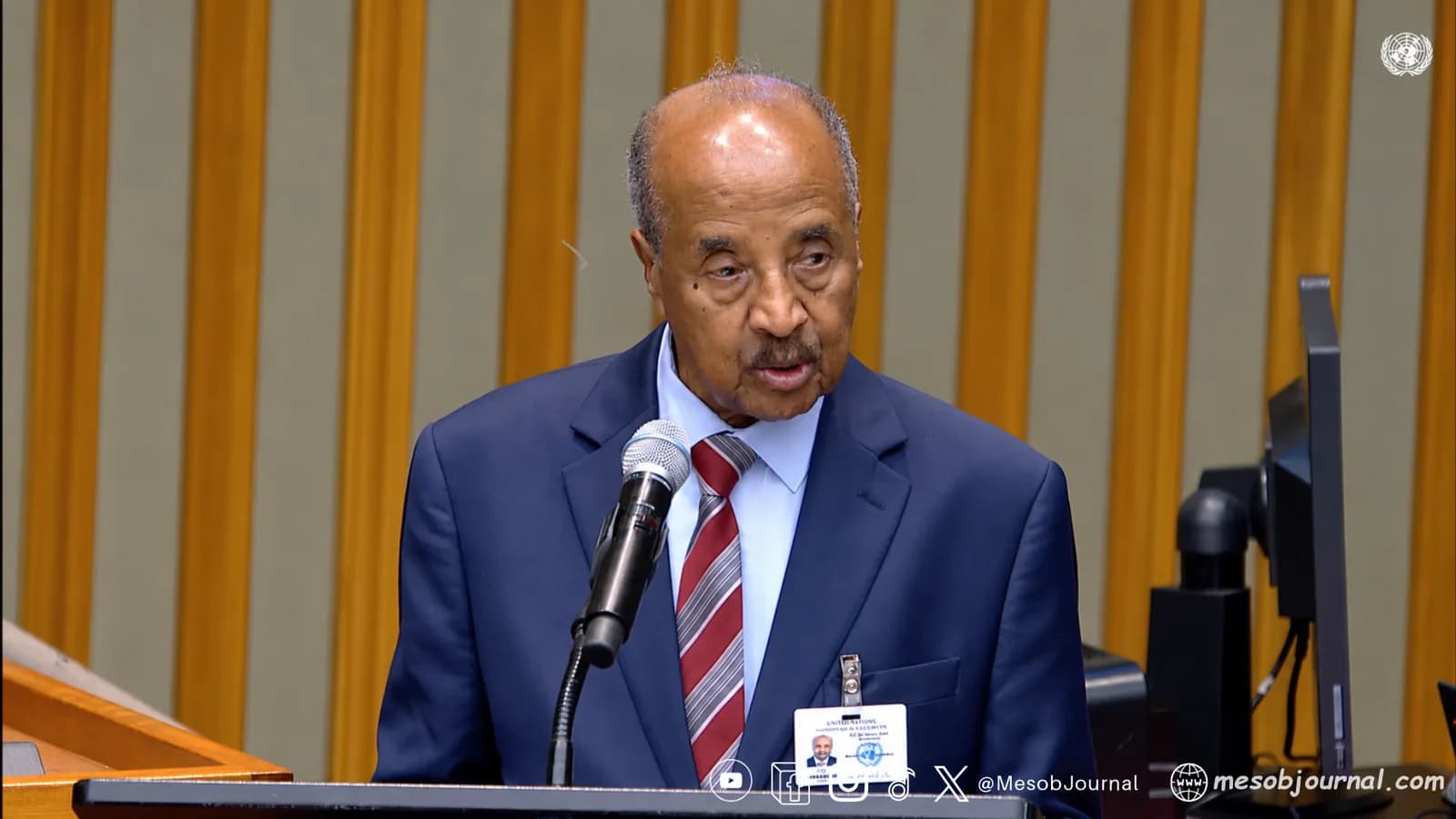

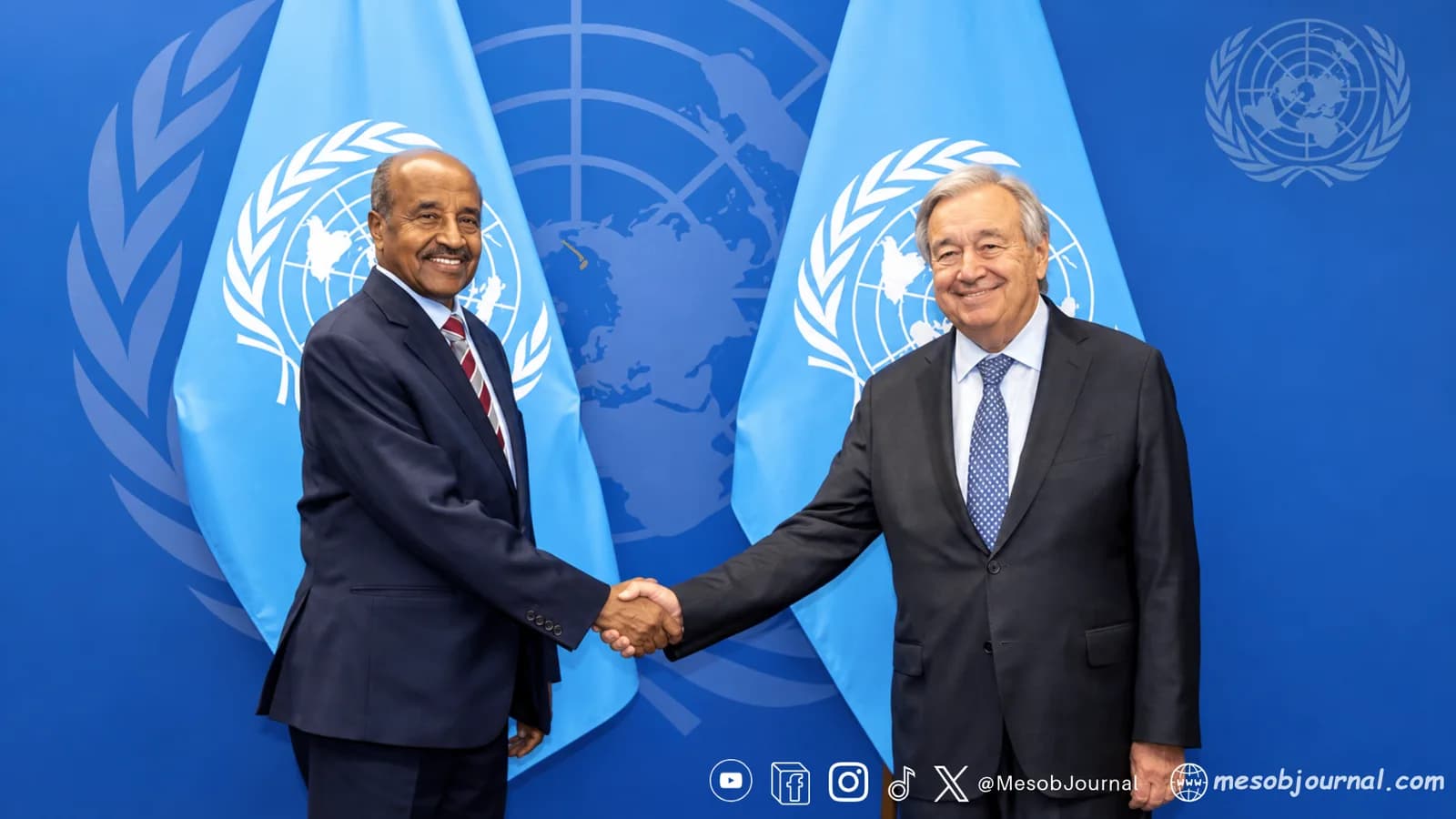
NEW YORK — Eritrean Foreign Minister Osman Saleh raised Ethiopia’s regional conduct and the governance of the Red Sea and Bab el-Mandeb during talks with United Nations Secretary-General António Guterres in New York, according to an Eritrean government readout released Thursday.
The meeting took place on September 23 on the sidelines of the 81st session of the United Nations General Assembly.
Eritrea’s Ministry of Information said Osman emphasized the principles of sovereign equality, territorial integrity, political independence, non-interference and the peaceful settlement of disputes during his discussions with the UN chief.
He also raised what Eritrea described as the “provocative acts of Ethiopia’s Prosperity Party towards its neighbours,” saying such actions were in breach of foundational principles of the UN Charter and international law.
The remarks place deteriorating Eritrea-Ethiopia relations directly on the agenda of a meeting with the UN Secretary-General during the General Assembly’s high-level week.
Relations between Asmara and Addis Ababa have become increasingly strained amid repeated Ethiopian government statements concerning access to the Red Sea. Eritrea has rejected rhetoric or policies that it views as challenging the sovereignty and territorial integrity of neighbouring coastal states.
Red Sea security featured prominently in Osman’s discussions with Guterres.
According to the Eritrean statement, Osman stressed his government’s support for safe maritime navigation and international cooperation in the Red Sea and Bab el-Mandeb while saying such cooperation must respect the “sovereignty and legitimate interests of the Littoral States.”
The position reflects Eritrea’s longstanding argument that countries bordering the Red Sea should retain a central role in decisions affecting the waterway, even as international powers maintain significant security and naval interests across the wider Red Sea and Gulf of Aden.
The Bab el-Mandeb, which connects the Red Sea with the Gulf of Aden and the Indian Ocean, is one of the world’s most important maritime chokepoints and has become an increasingly prominent issue in regional and international diplomacy.
Sudan was also discussed.
Osman outlined Eritrea’s support for a united, sovereign and stable Sudan, according to the Ministry of Information, and backed what Asmara described as a Sudanese-owned and inclusive political process supported by regional and international mechanisms.
Eritrea shares a long border with Sudan and has repeatedly stressed Sudanese sovereignty and national unity as central to its position on the conflict.
The United Nations separately confirmed that Guterres met Osman in New York on Wednesday.
The talks came as Eritrea assumes an additional role during the current General Assembly session.
Eritrea was elected in June as one of the vice-presidents of the 81st session of the General Assembly, alongside five other African states — Cabo Verde, Egypt, Gabon, Guinea-Bissau and Zimbabwe — as well as representatives from other regional groups and the five permanent members of the Security Council.
Eritrea’s Permanent Representative to the UN, Ambassador Sophia Tesfamariam, presided over part of the evening plenary debate on the opening day of the General Assembly in that capacity, according to the Eritrean government.
The vice-presidency gives Eritrea a formal procedural role in the work of the General Assembly during its 81st session.
For Asmara, however, the meeting with Guterres also provided an opportunity to place several of its principal regional concerns before the UN leadership at the same time: relations with Ethiopia, the future of Sudan and the role of coastal states in shaping security arrangements across the Red Sea and Bab el-Mandeb.