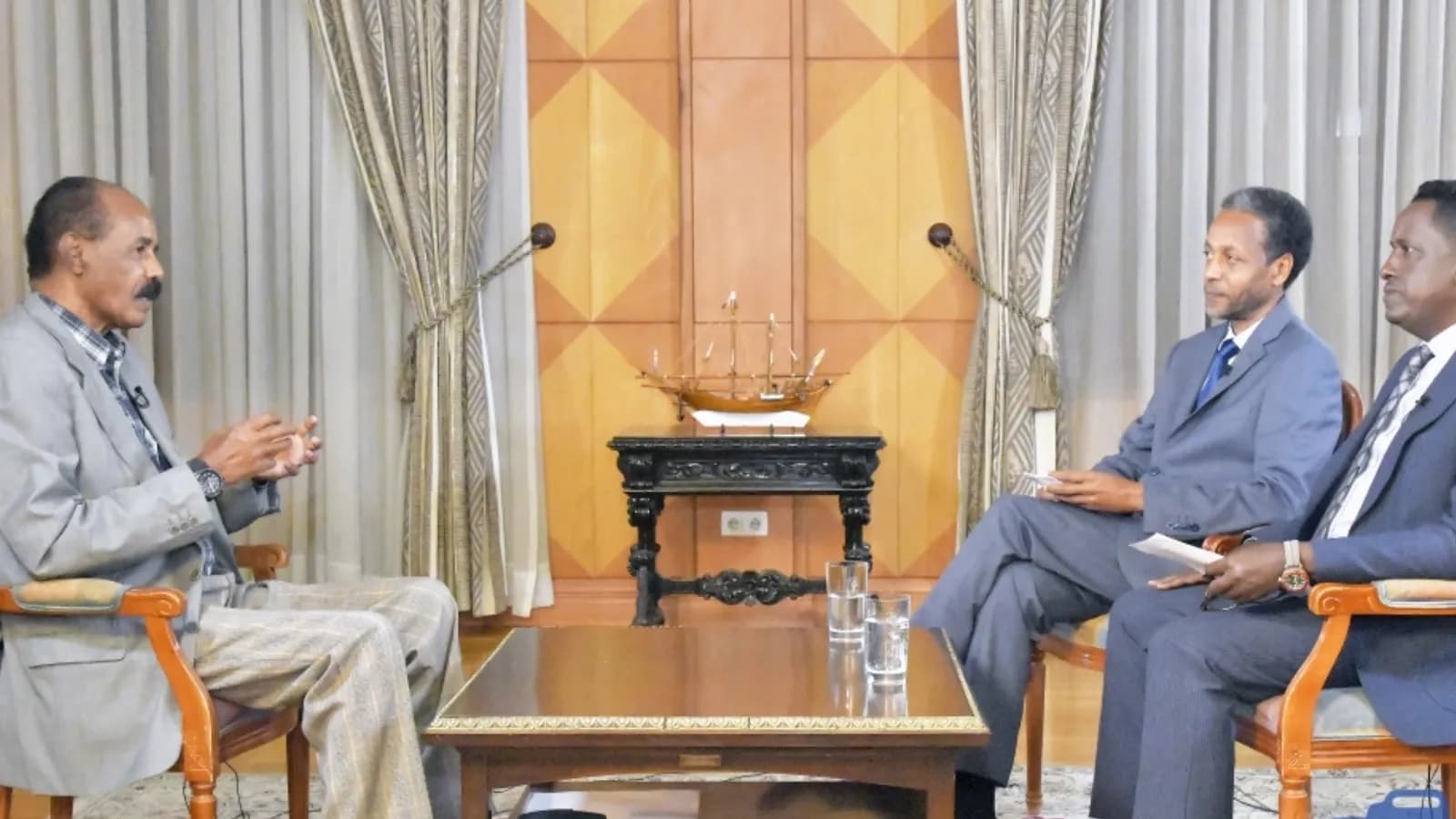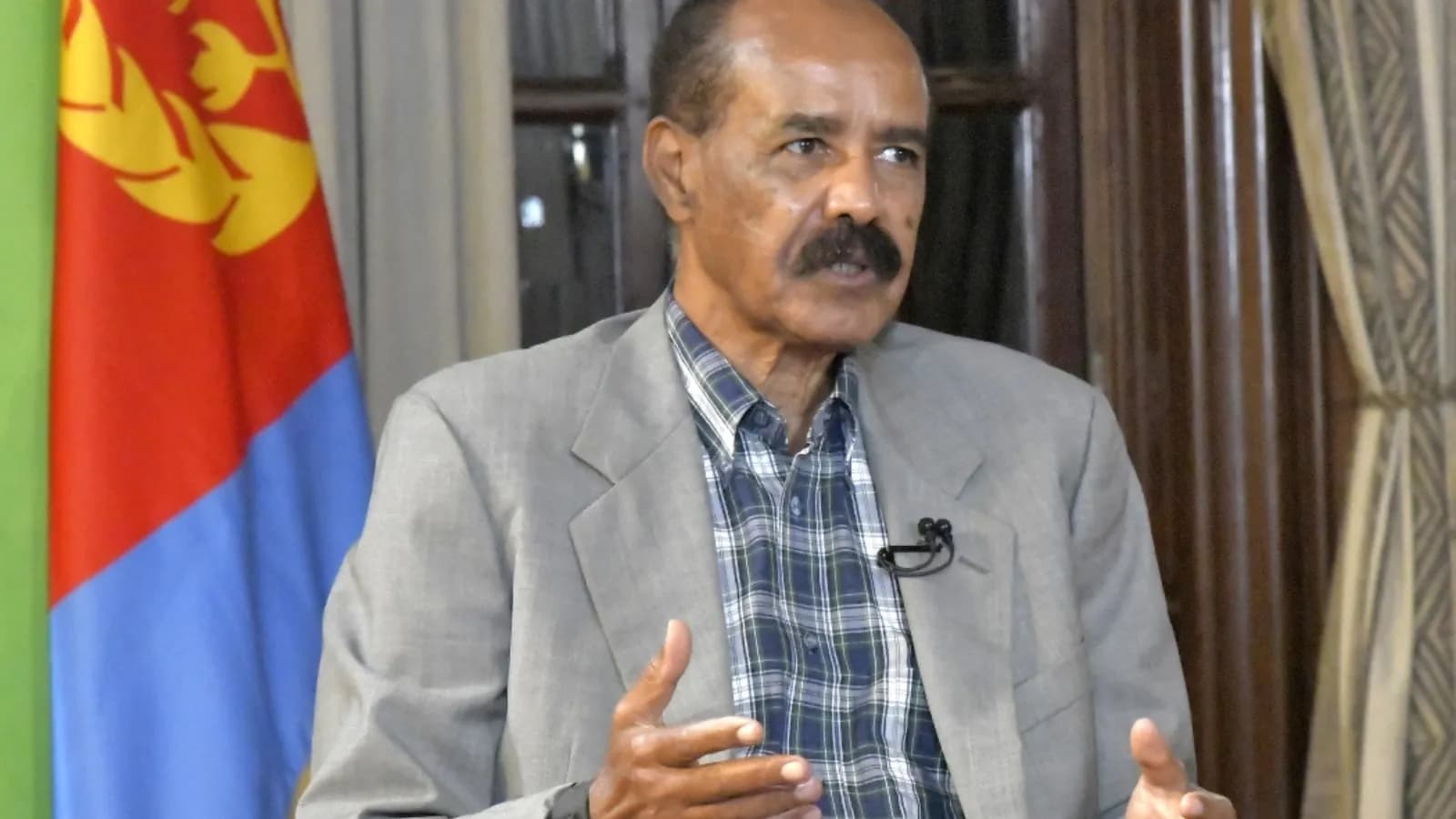


When President Isaias Afwerki was asked about Ethiopia’s “Two Waters” rhetoric and escalating war language on January 12, 2026, his response was unusually curt. The question, he said, should not even have been asked.
That dismissal wasn’t evasion. It was diagnosis.
Afwerki reduced Ethiopia’s current leadership under Abiy Ahmed and the Prosperity Party to four defining attributes: ineptness, bankruptcy, cowardice, and greed. Read together, they form a coherent explanation for why Ethiopia appears locked in perpetual crisis — and why external war talk keeps resurfacing as internal collapse deepens.
Ineptness: A War Without Logic
Afwerki’s first charge is strategic incoherence. The “Two Waters” agenda, framed by Addis Ababa as a national project, is described instead as fabrication — detached from geography, law, logistics, or reality.
Wars are usually declared with objectives, routes, and identifiable adversaries. What Ethiopia presents, Afwerki argues, is none of that. A war proclaimed in abstraction is not strength; it is confusion. Worse, he notes, the first war decree is not aimed outward, but inward — against Ethiopia’s own population.
Bankruptcy: When Slogans Replace Governance
Bankruptcy, in Afwerki’s framing, is not only financial. It is political exhaustion.
Since the Pretoria Agreement, Ethiopia has cycled through wars against Amhara forces under the banner of FANO, then against Tigray, Oromia, Afar, and Somali regions. Each campaign arrives with a new justification. None resolve the underlying fracture.
“Access to the Red Sea” becomes the latest slogan — not because it solves anything, but because previous narratives have collapsed. For Afwerki, this is the hallmark of a state that has run out of solutions and now survives on recycled pretexts.
Cowardice: Loud Rhetoric, Avoided Reality
Perhaps the most stinging accusation is cowardice. Despite constant war talk, Afwerki sees avoidance rather than resolve.
Ethiopia’s leadership, he argues, refuses to confront its real crises: displacement, economic strain, regional fragmentation, and eroding legitimacy. Instead, it amplifies external threats, hoping spectacle will substitute for authority.
This is where optics enter the picture.
Addis Ababa’s illuminated boulevards, drone shows, influencer campaigns, and curated social-media feeds project normalcy — even progress. Yet they coexist with debt distress, inflation, and insecurity beyond the camera frame. Image management becomes governance. Algorithms replace accountability.
Greed: The Illusion Economy and External Patrons
Afwerki’s final point ties the others together. The agenda, he insists, is not even Ethiopia’s own.
Weapons procurement, drone acquisitions, and the funding of spectacle raise unavoidable questions: Who pays? Who supplies? Who benefits? He leaves the answer implicit but unmistakable — external patrons, particularly the United Arab Emirates, whose money fuels both military hardware and the illusion of stability.
That’s not development taking shape. It’s a performance meant to distract from what’s falling apart underneath. A single polished street does not offset a collapsing core. And foreign cash does not equal sovereignty.
Eritrea’s Position: Ignore the Noise, Guard the Line
Afwerki’s message to Eritreans is measured, not reactive. Eritrea will not chase delusions or be baited by slogans. It will stay focused, grounded, and restrained.
But restraint should not be misread.
Self-defense, he reminds, requires no permission. Eritrea does not need to relearn war from manuals or consultants; its experience is lived, not theoretical. If conflict is imposed, Eritrea knows how to respond — but it will not allow bankrupt actors to dictate the regional agenda.
The warning, then, is not theatrical. It is practical.
Ignore the glitter.
Watch the fundamentals.
And don’t mistake noise for power.
That, more than any slogan, explains where Ethiopia is heading — and why Eritrea refuses to be dragged along.