
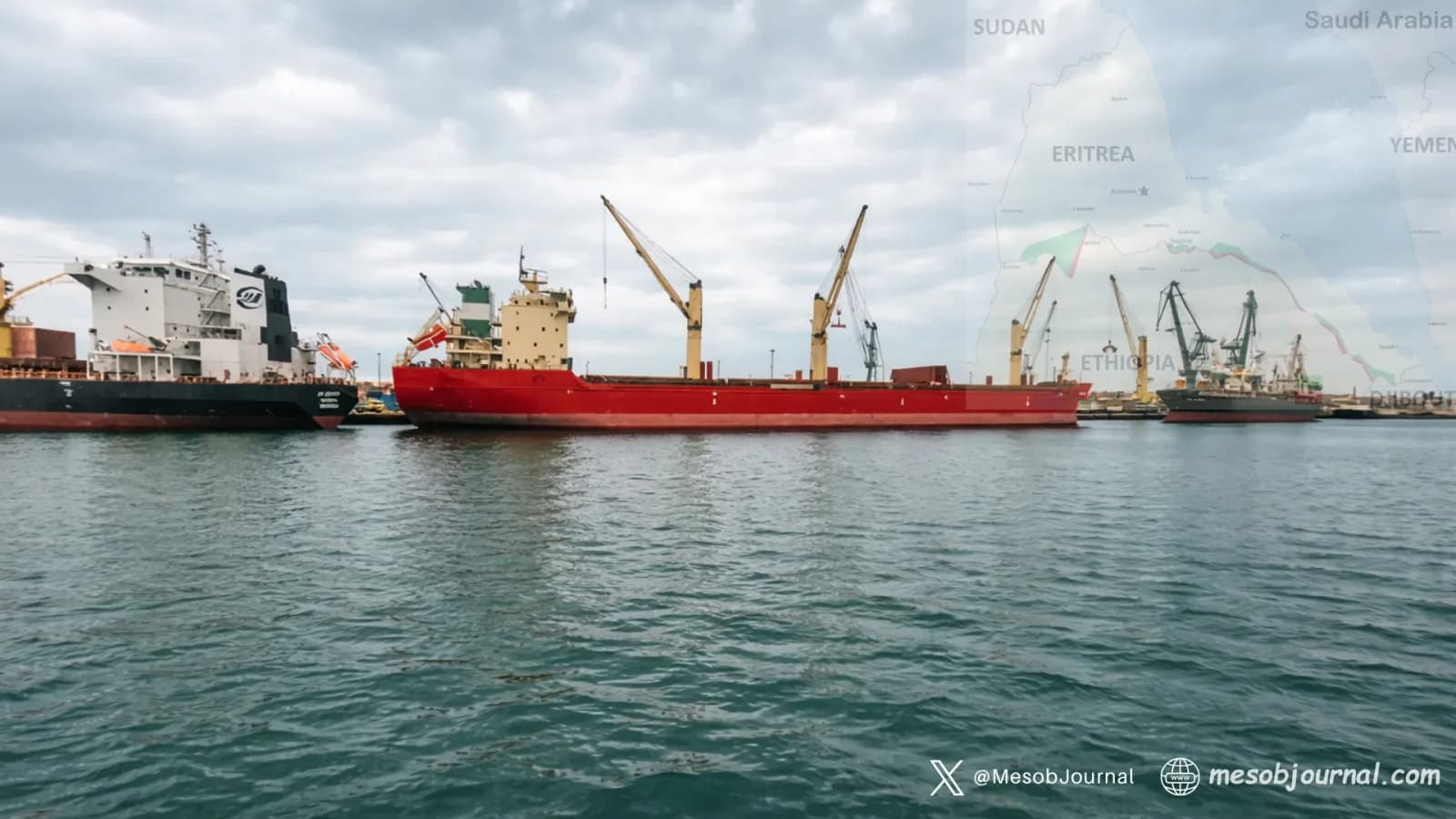
Economic language is being used to normalize a far more dangerous idea: that sovereign Eritrean ports can be folded into Ethiopia’s national future as if law, borders and regional peace do not matter.
The latest wave of Ethiopian regime-aligned messaging about the Red Sea follows a familiar pattern. It doesn’t only demand war in every post. It does sometimes something more calculated. It wraps strategic ambition in the language of trade, logistics, growth and “regional prosperity,” then quietly invites audiences to accept a poisonous premise: that Eritrea’s ports are somehow available for Ethiopian planning. That is not harmless economic commentary. It is the slow normalization of a claim against the sovereignty of another state.
This is how dangerous narratives are built. First, the legal owner disappears from the conversation. Then the territory is reframed as an underused asset. Then access becomes “necessary.” Then necessity becomes destiny. By the time the threat is obvious, the groundwork has already been laid. The line between commerce and coercion has been deliberately blurred.
That line matters because international law is not vague on this question. The U.N. Charter bars the threat or use of force against the territorial integrity or political independence of any state. The law of the sea recognizes that landlocked states have a right of access to and from the sea, but through freedom of transit and agreement with transit states, not through entitlement to another country’s port, coastline or sovereign territory. The African Union goes even further, grounding interstate order in respect for borders existing at independence and prohibiting the use or threat of force among member states. Eritrea’s ports are Eritrean. That is not rhetoric. It is the legal baseline.
That is why these propaganda lines are so dangerous. They present seizure as modernization. They market strategic pressure as economic wisdom. They try to make people forget that a port is not just infrastructure. It is sovereign territory. It belongs to a nation, not to the fantasies of a neighboring political class.
There is nothing illegitimate about a landlocked country seeking commercial access to the sea. That happens across the world. But lawful access is negotiated. It is contractual. It respects sovereignty. Even the Ankara Declaration between Ethiopia and Somalia reaffirmed sovereignty, unity, independence and territorial integrity, while discussing sea access in a cooperative framework. In other words, the accepted regional and diplomatic path is agreement under the authority of the sovereign state concerned, not a public campaign of insinuation, entitlement and pressure.
That is where the Ethiopian propaganda machine is playing a double game. One side of the message sells a gleaming image of future prosperity. The other side keeps suggesting that prosperity requires Assab, or “corridors,” or strategic control over the Red Sea space next door. Some accounts flatter Ethiopia as an emerging power. Others mock Eritrea as weak, backward or isolated. Put together, the message is obvious: Ethiopia deserves more, Eritrea has less, and therefore Eritrean sovereignty should be treated as negotiable. It is an evil campaign to make aggression sound reasonable.
The irony is hard to miss. The same state whose ecosystem pushes daily fantasies about ports is still struggling with overlapping crises at home. OCHA says Ethiopia continues to face conflict, climate shocks, disease outbreaks and economic hardship. IOM’s 2026 crisis planning says displacement remains a major national emergency. WFP says it urgently needed more funding to sustain life-saving assistance into early 2026. A government facing internal fragility, displacement and humanitarian strain should not be lecturing the region about strategic destiny.
Nor is this propaganda coming from a state acting with great sovereign confidence. Reuters reported in February that Ethiopia was hosting a secret camp to train RSF fighters from Sudan, with multiple sources saying the UAE financed and backed the effort. Reuters then reported in March that Sudan formally accused Ethiopia of allowing drones to be launched from its territory into Sudan. Another Reuters report described the UAE as exercising strong military, financial and diplomatic influence across the Horn. That is not the profile of a country serenely charting an independent national course. It is the profile of a state entangled in external agendas while trying to project power outward.
The people of the Horn have already seen enough war, enough displacement and enough elite recklessness dressed up as national vision. What they do not need is a fresh round of port propaganda designed to turn another sovereign border into an argument. Eritrea’s coastline is not a bargaining chip for Ethiopian domestic politics. Assab is not a pressure valve for Addis Ababa’s crises. Massawa is not an inheritance claim waiting to be redeemed.
The core principle is straightforward and serious. Trade is possible. Transit is possible. Regional cooperation is possible. But none of it begins with intimidation, entitlement or a media campaign that conditions the public to believe another nation’s territory is somehow available for strategic redesign. If Ethiopia wants access, the lawful road exists. It runs through consent, treaty, mutual benefit and respect for sovereignty. Anything else is not economics. It is escalation.
And that is the real danger of this propaganda. It is not just false. It is preparatory. It trains audiences to see Eritrean sovereignty as an obstacle instead of a fact. The Horn of Africa cannot afford that deception. Peace in the region starts with one non-negotiable principle: Eritrea is sovereign, its borders are sovereign, and its ports are not up for ideological auction.