
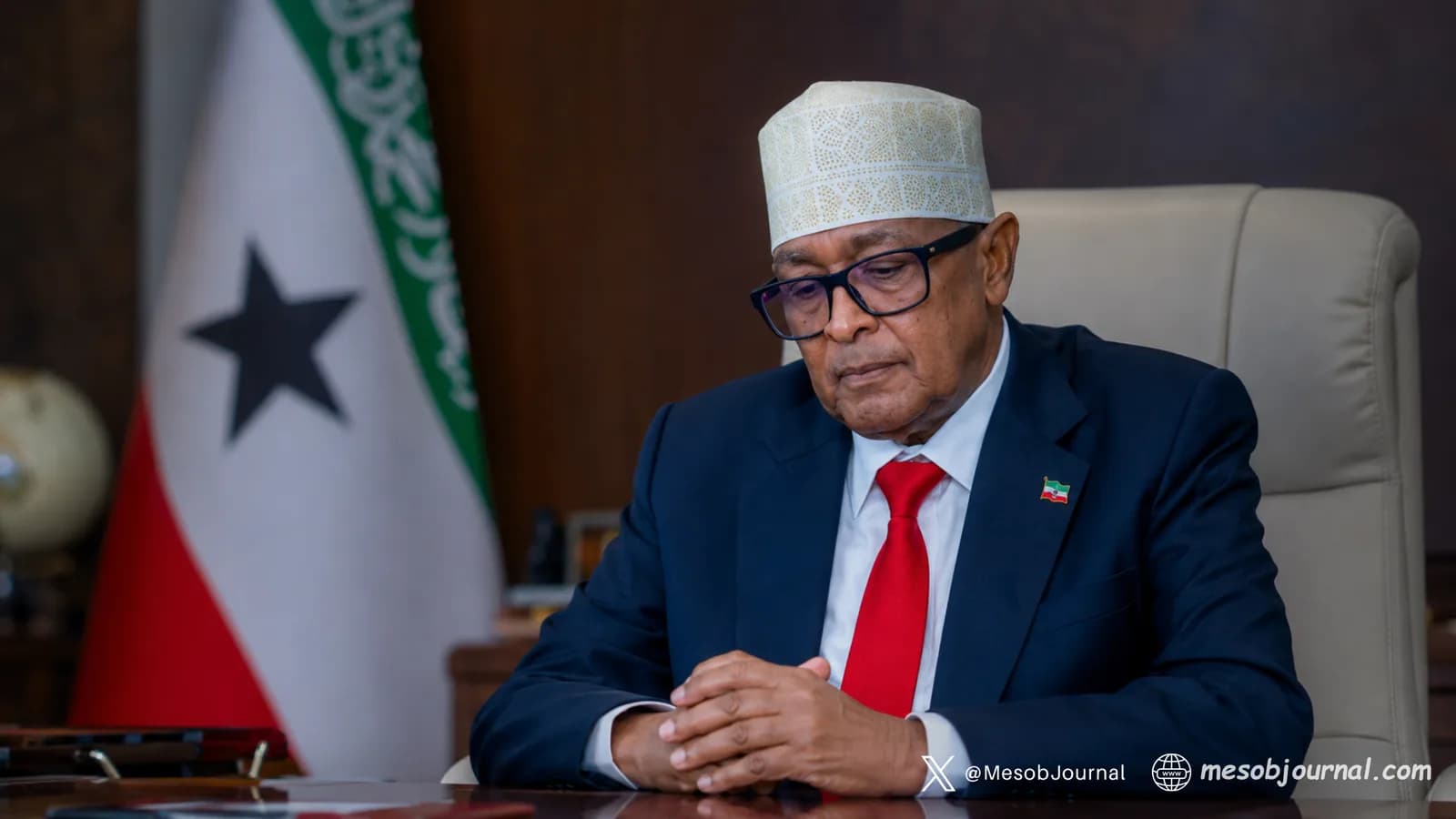
The United States has sent a quiet but important message to the Horn of Africa: engagement with Somaliland does not mean recognition, and cooperation with local authorities does not override Somalia’s sovereignty.
In a newly released report to Congress titled Potential Areas for Improved United States Engagement with Somaliland, the State Department says Washington continues to explore practical areas of engagement with Somaliland authorities. But the report places that engagement inside an unmistakable legal and diplomatic frame: the United States recognizes the sovereignty and territorial integrity of the Federal Republic of Somalia, including Somaliland.
For months, recognition advocates have tried to present Somaliland’s case as if international law were simply waiting for Washington to catch up. Lobby campaigns, think-tank arguments and social media pressure have pushed the idea that Somaliland should be treated as a separate state because of geography, security value, port access and Red Sea politics.
The U.S. report does not follow that script.
Instead, it separates practical engagement from political recognition. Washington can speak with Somaliland authorities. It can discuss security cooperation, humanitarian assistance, infrastructure, trade and regional stability. It can examine Berbera’s commercial potential and Somaliland’s position near the Bab al-Mandab. But none of that changes the central framework: Somaliland remains within Somalia under U.S. policy.
This is good news for the region because the Horn of Africa does not need another externally encouraged territorial dispute. It needs restraint, law and respect for sovereign borders.
The report is especially significant because it comes after Israel’s illegal recognition of Somaliland in December 2025. Israel became the first country to formally recognize the breakaway region, a move that triggered strong opposition from Somalia and broad criticism from the African Union and other states.
The African Union Peace and Security Council went further. In January 2026, it condemned and rejected Israel’s unilateral recognition, reaffirmed Somalia’s sovereignty and territorial integrity, and warned that attempts to alter the territorial configuration of an AU member state set a dangerous precedent for the continent.
That is the larger issue. This is not only about Somalia and Somaliland. It is about whether African borders can be reopened by external actors whenever a strategic port, military position or geopolitical bargain becomes attractive.
The Horn of Africa already carries enough pressure. Somalia is still fighting Al-Shabaab. Sudan is bleeding. Ethiopia’s internal crises continue to shake the region. The Red Sea has become a crowded arena for global and regional powers. In such an environment, encouraging secessionist recognition outside African consensus is a recipe for escalation.
Somaliland’s ports and location are real. Its internal political structures are real. Its long-standing grievances are real. None of that should be dismissed. But recognition is not a social media campaign, and statehood is not granted by lobbying pressure or foreign military interest. A durable settlement must come through Somali dialogue, African institutions and international law — not shortcuts designed in distant capitals.
That is why the U.S. wording matters. It keeps the door open for cooperation without rewarding fragmentation. It acknowledges practical realities on the ground without undermining Somalia’s legal sovereignty. It sends a message that engagement must not become a backdoor route to recognition.
For Somalia, the report is a diplomatic win. For the Horn of Africa, it is a stabilizing signal. For recognition advocates, it is a reminder that propaganda about “strategic value” cannot erase the basic rules that protect every African state from external redrawing.
Israel may have chosen a unilateral path. But Washington’s latest report shows that the United States is not following that road.
And in a region where one reckless move can ignite ten others, that restraint deserves attention.