
The Legal Basis for Denial of Maritime Access to Ethiopia Under International Law
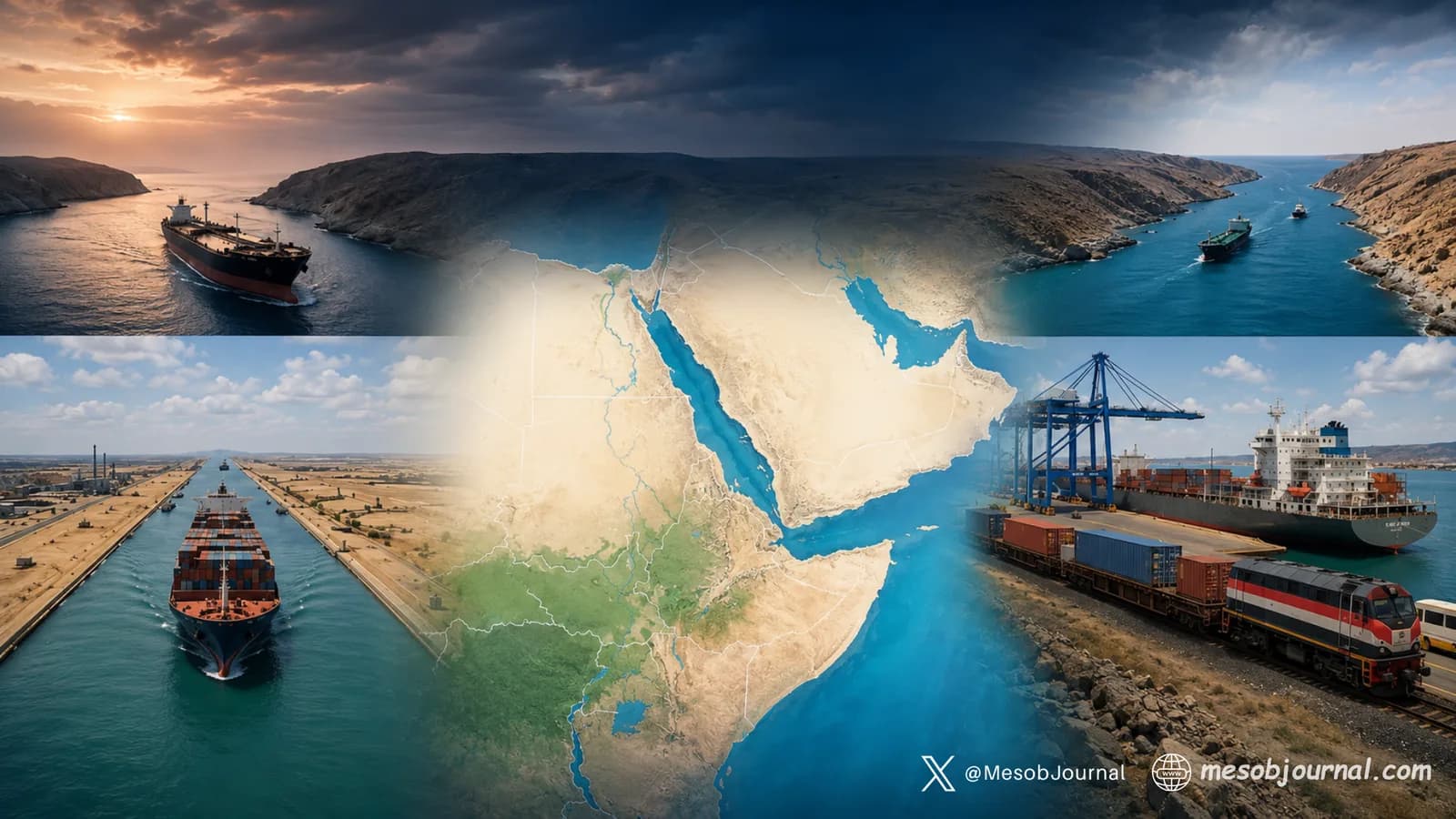
International law governing chokepoints and access to the sea is built on a careful balance between state sovereignty and the need to preserve global trade routes. This balance becomes especially visible when comparing international maritime straits such as the Strait of Hormuz and Bab el-Mandeb, the man-made Suez Canal, and the legal position of landlocked states such as Ethiopia.
Although these systems operate in different physical and legal environments, they are connected by a shared framework in which rights exist, but are structured and limited by competing obligations.
At the foundation of this system is the United Nations Convention on the Law of the Sea (UNCLOS), adopted in 1982 and entering into force in 1994. UNCLOS codifies the principle that coastal states have sovereignty over their territorial seas, but that this sovereignty is not absolute when waters are used for international navigation. In such cases, a regime known as transit passage applies.
This regime is particularly important for straits such as Hormuz and Bab el-Mandeb, where maritime geography creates unavoidable routes for global shipping. Under transit passage, ships and aircraft of all states are entitled to continuous and unobstructed passage. Coastal states such as Iran and Oman in the Strait of Hormuz, or Yemen, Djibouti, and Eritrea in Bab el-Mandeb, cannot legally suspend or arbitrarily deny passage, although they retain regulatory authority over safety, environmental protection, and navigation management.
The Strait of Hormuz, lying between Iran and Oman, is a narrow but critical maritime corridor through which a significant share of global energy trade flows. Despite being surrounded by sovereign territorial waters, it functions legally as an international transit corridor rather than a controllable gate. The same principle applies to Bab el-Mandeb, which links the Red Sea to the Gulf of Aden between Yemen and the Horn of Africa coast.
Its strategic importance is amplified by its connection to the Suez route, making it one of the most consequential maritime chokepoints in global trade. In both cases, coastal states retain sovereignty over adjacent waters, but that sovereignty is legally constrained by the obligation not to interfere with international navigation.
In practice, these legal rules are continuously tested. In the Strait of Hormuz, for example, tensions have periodically escalated when Iran has seized or harassed commercial vessels, often justifying such actions under claims of security enforcement or sanctions violations. While such incidents are typically framed domestically as lawful policing actions, they are widely contested internationally as inconsistent with transit passage obligations.
Similarly, Bab el-Mandeb has been affected by the instability of Yemen’s civil conflict, where non-state actors and shifting territorial control have periodically threatened shipping lanes. These cases illustrate that the law is clear in principle, but enforcement is heavily dependent on power, deterrence, and maritime presence rather than centralized authority.
The Suez Canal represents a different legal category. Unlike natural straits, it is a man-made waterway entirely within Egyptian territory. Egypt exercises operational control over the canal, including administration, maintenance, and toll collection. However, its governance is also shaped by the 1888 Constantinople Convention, which established that the canal should remain open to vessels of all nations in peace and war.
As a result, Egypt’s authority is administrative rather than discretionary in the sense of being able to freely exclude users. The canal is sovereign Egyptian territory, but it is also treated as an international utility whose uninterrupted operation is essential to global commerce. Historical episodes, such as the closures during the Suez Crisis of 1956 and after the 1967 Arab-Israeli War, demonstrate how political conflict can temporarily override legal expectations, but also how global economic pressure eventually restores the principle of openness.
The contrast between these maritime regimes and the legal position of landlocked states reveals a more conditional structure of international law. Under Article 125 of UNCLOS, landlocked states have a recognized right of access to and from the sea and the freedom to transit through the territory of transit states. However, unlike transit passage in international straits, this right is not fully automatic or self-executing.
Its practical implementation depends on agreements between the landlocked state and the transit state. Transit states therefore retain significant control over the conditions under which access is granted, even though they are expected under international law to facilitate such access in good faith.
This framework is directly relevant to Ethiopia, a landlocked state in the Horn of Africa. Ethiopia depends heavily on maritime access through neighboring countries, particularly Djibouti, for its international trade. It also has potential alternative routes through Eritrea, Somalia, Kenya, or Sudan, but none of these routes are available independently of negotiated arrangements.
Ethiopia does not possess a legal right to unilaterally cross another state’s territory or to demand access to ports without agreement. Instead, its access to the sea is mediated through bilateral treaties, infrastructure agreements, and commercial arrangements that reflect both Ethiopia’s economic dependence on maritime trade and the sovereign rights of its neighbors.
At the same time, Ethiopia’s vessels, once they reach international waters, enjoy the same transit passage rights as ships from any coastal state. An Ethiopian-flagged vessel passing through Bab el-Mandeb or the Strait of Hormuz is protected under UNCLOS and cannot lawfully be denied passage by coastal states controlling the adjacent shores.
The legal distinction is therefore between movement through international maritime chokepoints, which is broadly guaranteed, and access to those chokepoints via foreign territory, which is conditional.
The Horn of Africa illustrates this duality sharply. Ethiopia’s long-standing reliance on Djibouti has created one of the most important transit relationships in Africa, where the vast majority of Ethiopian imports and exports pass through Djiboutian ports and infrastructure. This dependence gives Djibouti significant economic leverage, while Ethiopia’s large economy gives it reciprocal bargaining power.
The relationship is therefore not purely legal but also deeply strategic and infrastructural, shaped by rail links, port concessions, fuel pipelines, and customs regimes. In contrast, Ethiopia’s past access to Eritrean ports demonstrates how political relations can abruptly reshape legal and logistical realities of trade, even when geography remains unchanged.
This distinction is essential to understanding why Ethiopia ought to behave within international legal and diplomatic frameworks rather than assuming that access can be asserted unilaterally. In maritime chokepoints, international law significantly constrains coastal state behavior.
But in land transit contexts, sovereignty remains dominant, and cooperation is the necessary foundation for access. Ethiopia’s interests are therefore best served not through claims of automatic entitlement over neighboring territory, but through stable agreements that respect both its need for reliable sea access and the sovereignty of transit states.
The broader system, taken as a whole, reflects a hybrid legal order. International straits such as Hormuz and Bab el-Mandeb are governed by strong navigation rights that limit coastal state control. The Suez Canal combines sovereign ownership with treaty-based obligations that preserve international access.
Landlocked states like Ethiopia operate within a more negotiated framework in which access exists as a right in principle but is realized through cooperation in practice. Across all three systems, the central tension remains the same: sovereignty is respected, but it is shaped and constrained by the demands of global connectivity.
The pursuit of maritime access for a landlocked nation is a complex geopolitical challenge where the line between success and failure is dictated by the diplomatic strategy employed. If Ethiopia adopts an assertive, unilateral approach that disregards the sovereignty of its neighbors, securing sustainable access to the sea can indeed become an impossible task.
In the modern international arena, a nation cannot simply demand a corridor to the coast without triggering defensive diplomatic and security alignments from surrounding regional states. When neighborly trust is eroded, trade routes become volatile, transit fees can skyrocket, and the legal or physical mechanisms required to move goods across borders can easily be choked off by hostile transit states.
Short-term unilateral gains pave a path toward long-term isolation, ensuring that when Ethiopia looks to secure stable, diversified sea access in the future, it will find regional doors firmly shut.
This erosion of regional trust directly devalues the economic incentives Ethiopia brings to the bargaining table. While its large population and growing economy make it an attractive trading partner, no transit state will prioritize economic gain over its own national security.
By signaling a willingness to ignore established borders and international norms, the nation risks alienating the very partners it relies upon for infrastructure development and port access. When a landlocked country bypasses regional consensus to secure naval or commercial ports, it creates a profound sense of insecurity among its neighbors, driving them to form defensive diplomatic and military alliances to protect their own territorial sovereignty.
This geopolitical friction transforms what should be a commercial negotiation into a high-stakes security crisis, signaling to the broader region that future agreements carry an inherent risk of destabilization. Consequently, neighboring coastal states become deeply hesitant to offer transit corridors, realizing that any concession could later be leveraged against them.
To transform this impossible scenario into a viable reality, Ethiopia must align its strategy with the principles of international maritime and transit law, specifically drawing upon frameworks like Article 125 of the United Nations Convention on the Law of the Sea.
True maritime security is built on a foundation of mutual benefit rather than coercion. This requires a shift away from aggressive posturing and toward a policy centered on formal bilateral treaties, transparent dialogue, and absolute respect for the territorial integrity of neighboring countries.
By positioning itself as a reliable partner rather than a regional threat, a landlocked nation can incentivize its neighbors to keep their borders open to international trade. Instead of fostering a collaborative environment where shared railways and ports can thrive, an aggressive posture forces neighbors to harden their borders and seek alternative alliances.
Furthermore, economic interdependence serves as the strongest guarantee for long-term maritime transit. Rather than relying on a single, fragile route, a strategic approach involves diversifying transit corridors across multiple neighboring gateways, such as securing agreements through various regional ports.
This diversification is solidified through heavy investment in shared infrastructure projects, including cross-border railways, highways, and joint port management ventures. When transit states have a financial stake in the economic vitality of their landlocked neighbor, maintaining open and unhindered access to the sea becomes a shared regional priority.
While international law provides the legal scaffolding for sea access, it is regional cooperation, stability, and mutual economic benefit that practically open the gateways to the global ocean.
Ultimately, the effectiveness of this system depends less on abstract legal texts than on continuous political and economic reinforcement. Maritime chokepoints remain open not because a single authority enforces the law, but because global trade, naval presence, and diplomatic costs make closure difficult to sustain.
Similarly, landlocked states maintain access to the sea not simply because of legal declarations, but because neighboring states recognize the mutual benefits of trade connectivity. In this sense, Ethiopia’s long-term strategic challenge is not only legal but structural: to secure stable, diversified, and predictable access to maritime routes within a system where law provides the framework, but cooperation determines the outcome.