
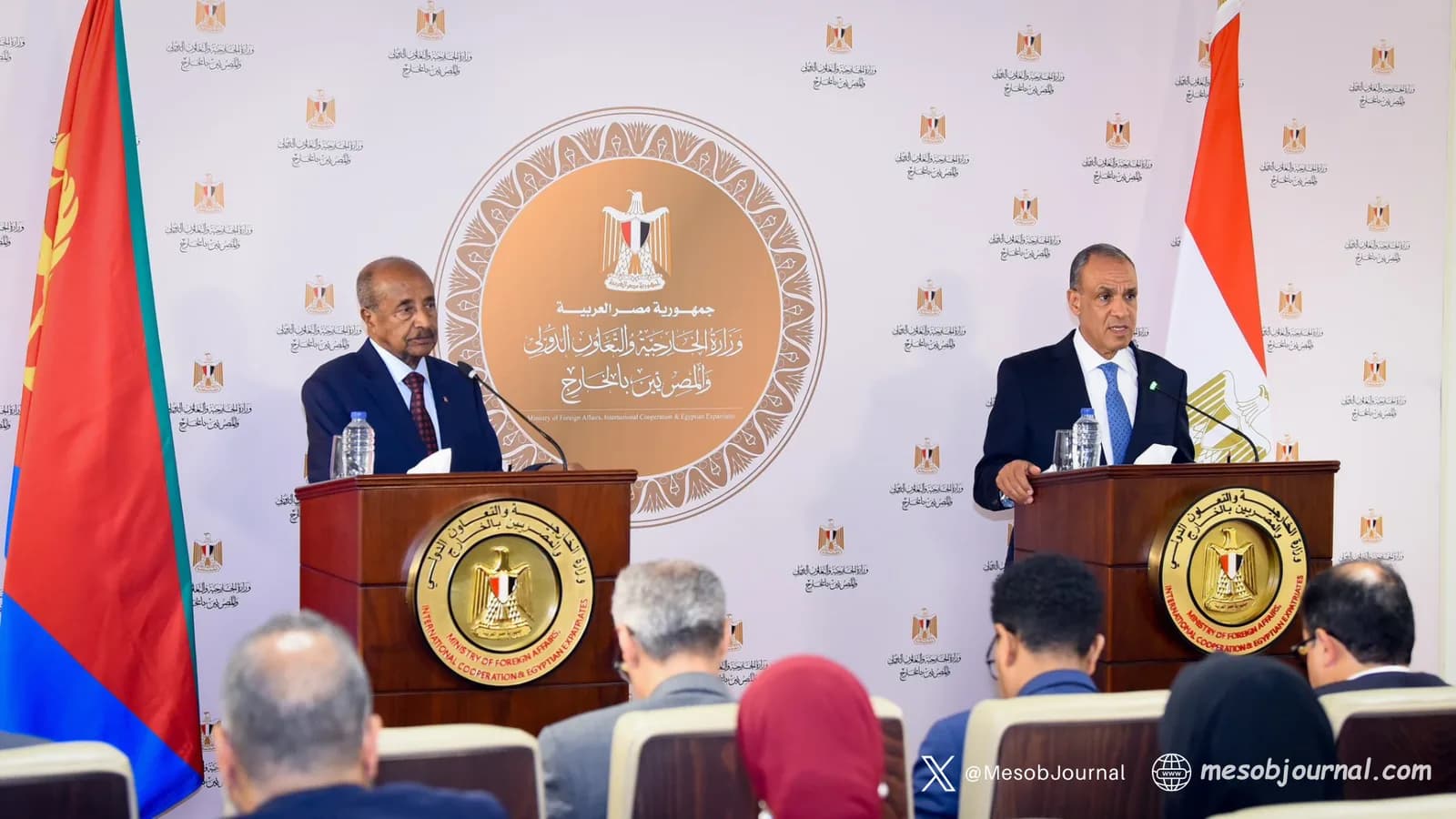
Eritrea and Egypt have agreed to deepen bilateral cooperation across key economic, infrastructure and maritime sectors, following a series of high-level engagements in Cairo that underscored the growing strategic alignment between the two Red Sea states.
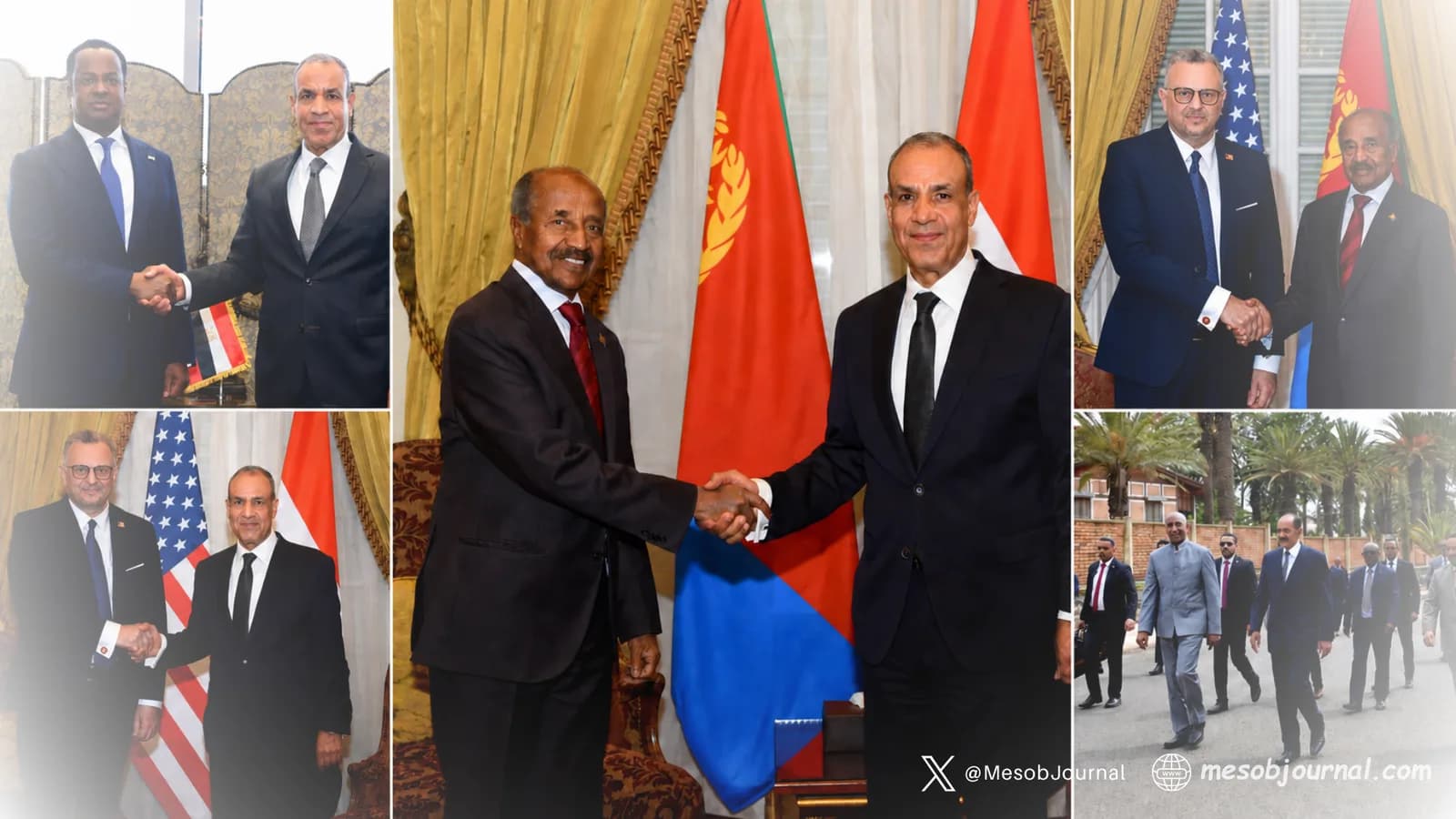
The latest round of talks was held on Wednesday, 10 June, between Eritrean Foreign Minister Osman Saleh and his Egyptian counterpart, Dr. Badr Abdelatty. The meeting followed President Isaias Afwerki’s discussions with Egyptian President Abdel Fattah el-Sisi earlier in the week and a subsequent tour by the Eritrean delegation of industrial, logistics and public infrastructure sites in the Greater Cairo and Suez Canal areas.
According to Eritrean and Egyptian official statements, the two sides agreed to strengthen cooperation in mining, infrastructure, housing, pharmaceuticals, maritime transport, port connectivity and port development, with particular reference to Eritrea’s ports of Assab, Massawa and Marsa Fatima. The talks also covered broader land, air and maritime connectivity between the two countries.
The engagements mark a further step in the steady expansion of Eritrean-Egyptian relations at a time when the Horn of Africa and the Red Sea corridor are attracting renewed regional and international attention. For both Asmara and Cairo, the discussions appear to reflect a shared view that stability in the Red Sea cannot be separated from the sovereignty, institutional strength and territorial integrity of the states that border it.
During a joint press conference after Wednesday’s talks, the two foreign ministers invoked the historical relations between Eritrea and Egypt and referred to the extensive discussions held between President Isaias and President el-Sisi in Cairo on 8 June. Egypt also reiterated what it described as its full support for Eritrea’s sovereignty, unity and territorial integrity.
The Egyptian Foreign Ministry said Dr. Abdelatty praised the outcome of President Isaias’ visit and stressed Cairo’s interest in building on the momentum in bilateral relations. The ministry also said Egypt seeks to expand trade, encourage joint investment and support the participation of Egyptian private-sector companies in priority areas identified by the Eritrean side, including mining, infrastructure, maritime transport, port development, pharmaceuticals, fisheries and housing.
The talks followed earlier exchanges in recent months, including the visit of the economic adviser to the Eritrean president to Egypt in April and a joint visit by Egypt’s foreign and transport ministers to Asmara in May, during which a maritime transport cooperation agreement was signed. Egyptian officials have described that agreement as part of a wider effort to improve logistical connectivity and support economic cooperation between the two countries.
President Isaias and his delegation also visited several industrial and logistical facilities during their stay, including Gyto Pharma, the Suez Canal Industrial Zone, a cement and steel factory, Egypt Basic Industrial Corporation and the new terminal at Ain Sokhna Port. The visits focused on capacity building, technology transfer and possible areas of practical cooperation.
In a separate tour, the Eritrean delegation visited Egypt’s New Administrative Capital and several public service pavilions and infrastructure projects under construction. Eritrean official sources said discussions during the visit centered on prospective areas of broad cooperation.
Red Sea security was a central theme in the diplomatic exchanges. According to the Egyptian Foreign Ministry, both ministers stressed that the security and management of the Red Sea remain the exclusive responsibility of the littoral states. They also rejected attempts by non-littoral actors to impose security arrangements, roles or maritime access in violation of international law.
That position closely aligns with Eritrea’s long-standing view that the Red Sea should not become a platform for externally imposed security architecture or proxy competition. For Asmara, the issue is not merely maritime policy, but a question of sovereignty, regional order and the right of coastal states to shape their own security environment.
The two ministers also discussed developments in the Horn of Africa, including Sudan and Somalia. Egypt reaffirmed its position in support of national state institutions, the unity and sovereignty of states in the region, and the rejection of unilateral actions that could undermine stability.
The emphasis on national institutions is significant. Both Eritrea and Egypt have repeatedly argued that durable stability in the Horn of Africa and the Red Sea region cannot be built through fragmented militias, externally sponsored political projects or pressure campaigns that weaken state authority. Their statements in Cairo placed state sovereignty and institutional capacity at the center of regional security.
For Eritrea, the new phase of cooperation with Egypt fits within a broader diplomatic approach that prioritizes self-reliance, strategic independence and regional partnerships based on mutual respect. For Egypt, the relationship with Eritrea strengthens its engagement with the Horn of Africa and the southern Red Sea, a region Cairo increasingly regards as directly connected to its national security.
The two foreign ministers agreed to continue periodic consultative meetings in Cairo and Asmara between relevant government bodies and to coordinate their positions on regional and international matters.
While the details of implementation remain to be seen, the scope of the announced cooperation suggests that Eritrea and Egypt are seeking to move beyond ceremonial diplomacy toward sector-based engagement. Ports, transport, pharmaceuticals, housing, mining and infrastructure are not symbolic areas; they are the foundations of long-term economic and strategic connectivity.
In a region often described from the outside through the language of crisis, rivalry and instability, the Cairo talks offered a different framing: cooperation among sovereign states, development through national institutions, and Red Sea security led by those who live on its shores.