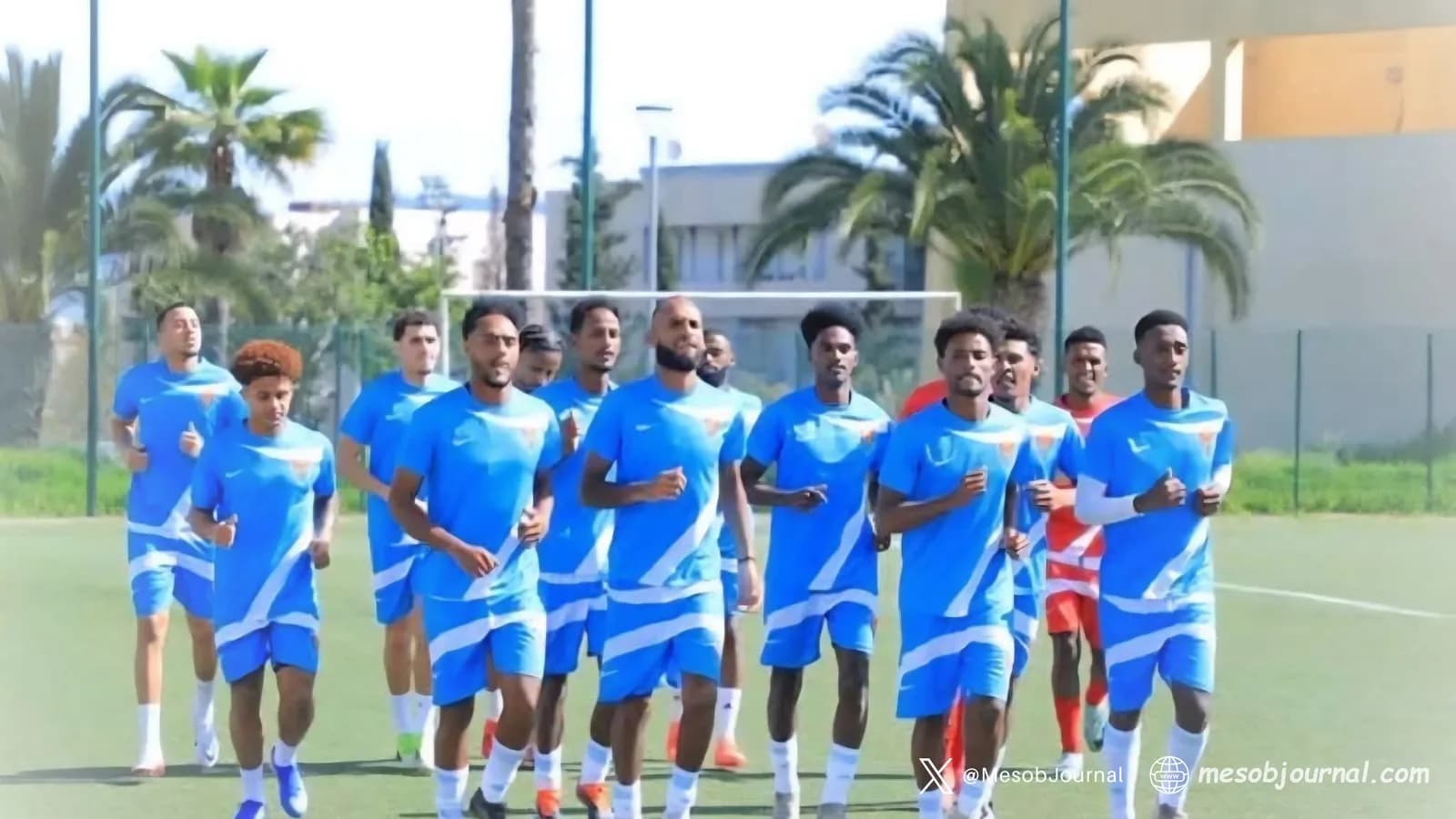

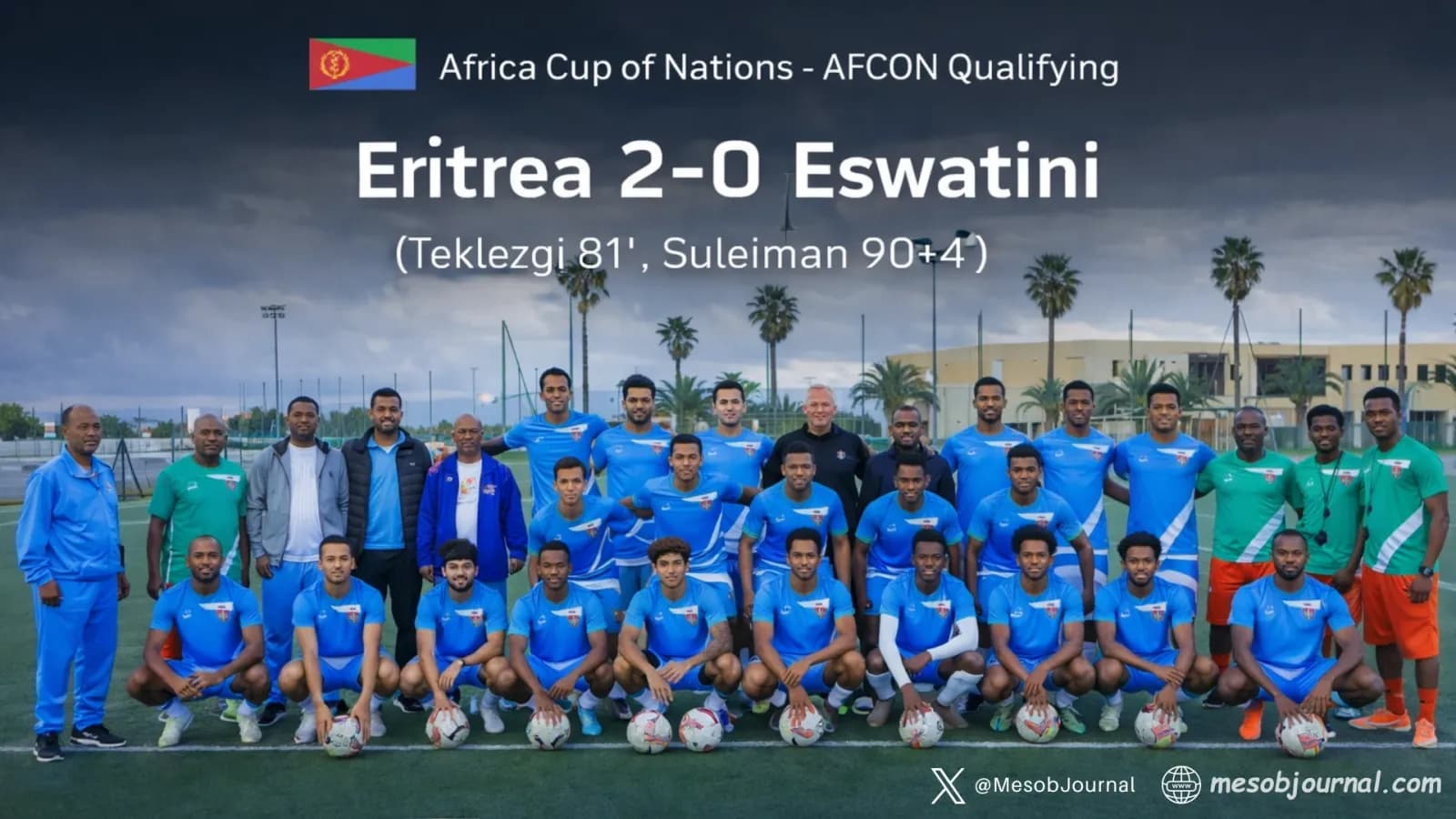
Eritrea’s 2–0 win over Eswatini in Meknes Today, was more than a positive result in the preliminary round of AFCON PAMOJA 2027 qualifying. It was a reminder that Eritrean football did not suddenly appear from nowhere. It returned. After almost two decades away from continental qualification, Eritrea stepped back onto the stage with discipline, patience and a result that now puts the Red Sea Camels in a strong position before the second leg in Lobamba on March 31.
The scoreline itself told a story of persistence. Eritrea had to wait until the 81st minute for the breakthrough, when Siem Eyob-Abraha’s corner went straight in, before Ali Suleiman added the second deep into stoppage time. There was even a missed penalty in between, but Eritrea never lost control of the match. They stayed composed, kept pressing, and finished the job late.
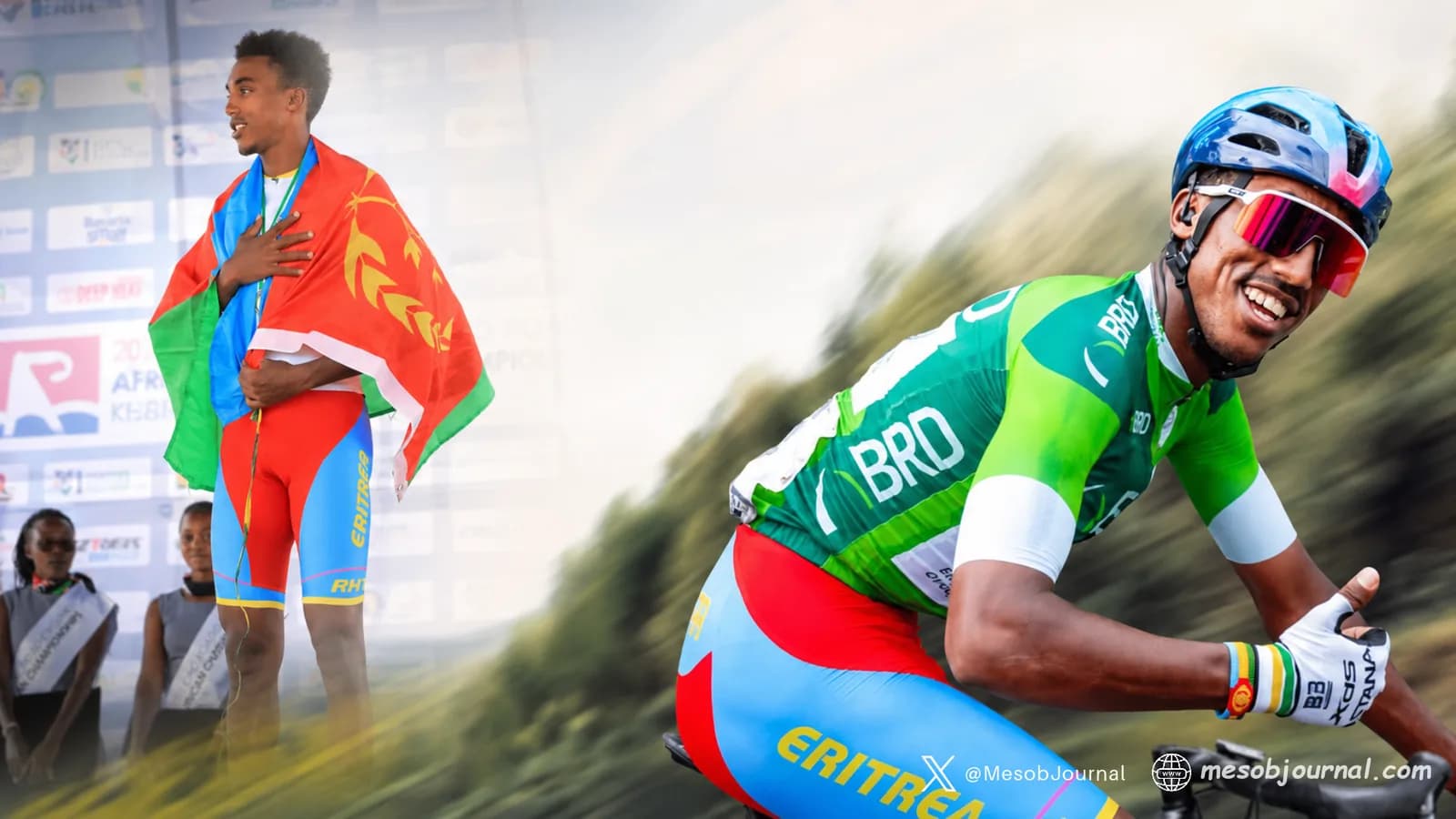
That matters because Eritrea’s football history has long been obscured by interruption, isolation and the steady drain of young talent. For years, the country’s sporting image abroad has been reduced almost entirely to cycling, and for good reason: Eritrea has produced world-class riders and earned global respect on the road. But football has always run deep too. The problem was never the absence of talent. The problem was that Eritrean football did not have the continuity, exposure or stable competitive rhythm needed to show what had always been there. Today's result did not create that tradition. It exposed it again.
History backs that up. Ethiopia’s only Africa Cup of Nations title came in 1962, and Eritrean-born players were central to that era. Nine Eritrean players were in that title-winning squad, while Luciano Vassallo, born in Asmara, captained Ethiopia to that trophy, which remains the country’s only AFCON crown. In other words, Eritrean footballers did not simply feature in that triumph. They defined it.
So this moment should be read properly. Eritrea is not borrowing prestige from the past. It is reconnecting with it. The return against Eswatini is significant not simply because it offers a path into the group stage, but because it signals that Eritrea can still produce organized, competitive football under difficult circumstances. CAF says the six preliminary-round winners will move into the group phase alongside the other 42 member associations. Eritrea is now one result away from taking that place.
There is also something bigger here than one tie, one coach or one generation of players. In Eritrea’s case, every serious sporting return carries national meaning. A country that has endured sanctions, pressure, isolation and the long-term effects of youth outflow does not celebrate a continental qualifier win as routine business. It celebrates it as proof of endurance. That is what made the performance against Eswatini feel larger than the fixture itself. It was a football result, yes. But it was also a small national correction to a familiar outside narrative that too often assumes Eritrea has nothing left to give.
The Red Sea Camels now head into the second leg with a clear advantage, but the deeper significance is already visible. Eritrea has shown that its football story is not over, and never was. The talent survived. The history remained. The badge still means something. And when Eritrea steps onto the field now, it does so not as a novelty, but as a football nation with unfinished business.