
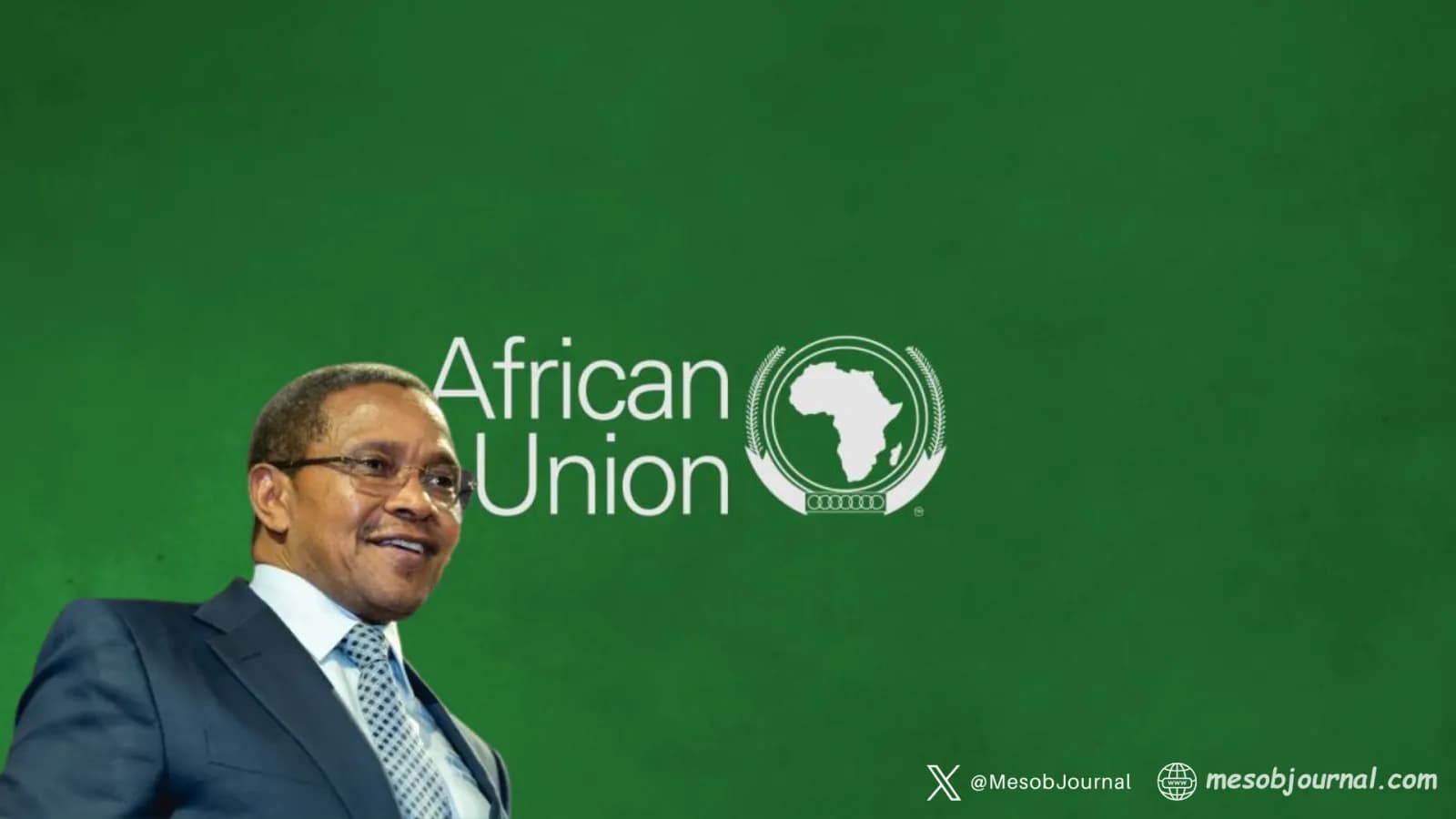
The African Union Commission has appointed former Tanzanian president Jakaya Mrisho Kikwete as the AU High Representative for the Horn of Africa and the Red Sea, placing a veteran East African statesman at the center of one of the continent’s most sensitive geopolitical files. The appointment was announced on 25 March by AU Commission Chairperson Mahmoud Ali Youssouf.
According to the AU, Kikwete will support continental efforts to address political, peace and security challenges across the Horn of Africa and the Red Sea corridor, with a mandate that includes preventive diplomacy, inclusive political dialogue, confidence-building, and stronger regional cooperation. The Commission said the role will be coordinated with partners including IGAD, the East African Community, the League of Arab States, the United Nations and other international actors.
The AU said the appointment reflects the strategic weight of the Horn of Africa and the Red Sea, a region that sits at the heart of African security concerns and a major artery of global trade. In its statement, the Commission said it expects Kikwete’s experience and leadership to help support countries in the region and strengthen broader peace and stability mechanisms.
Kikwete, who served as president of Tanzania from 2005 to 2015, returns to a familiar diplomatic role at a time of heightened tension across the wider Horn and Red Sea space. His appointment comes as regional disputes, armed conflicts, and external power competition continue to place pressure on already fragile security arrangements. That broader context has made the AU’s choice politically significant beyond the formal language of the announcement.
The announcement also drew criticism online from some commentators, with some questioning Kikwete’s suitability for the role and raising allegations linked to his political record in Tanzania, including governance, corruption and past election-related violence. What is clear, though, is that the appointment is unlikely to be seen as purely ceremonial. In a region where sovereignty, mediation credibility and external influence are under intense scrutiny, the AU’s new envoy will be judged less by title than by whether he can navigate the region’s hard realities with clarity, credibility and balance.