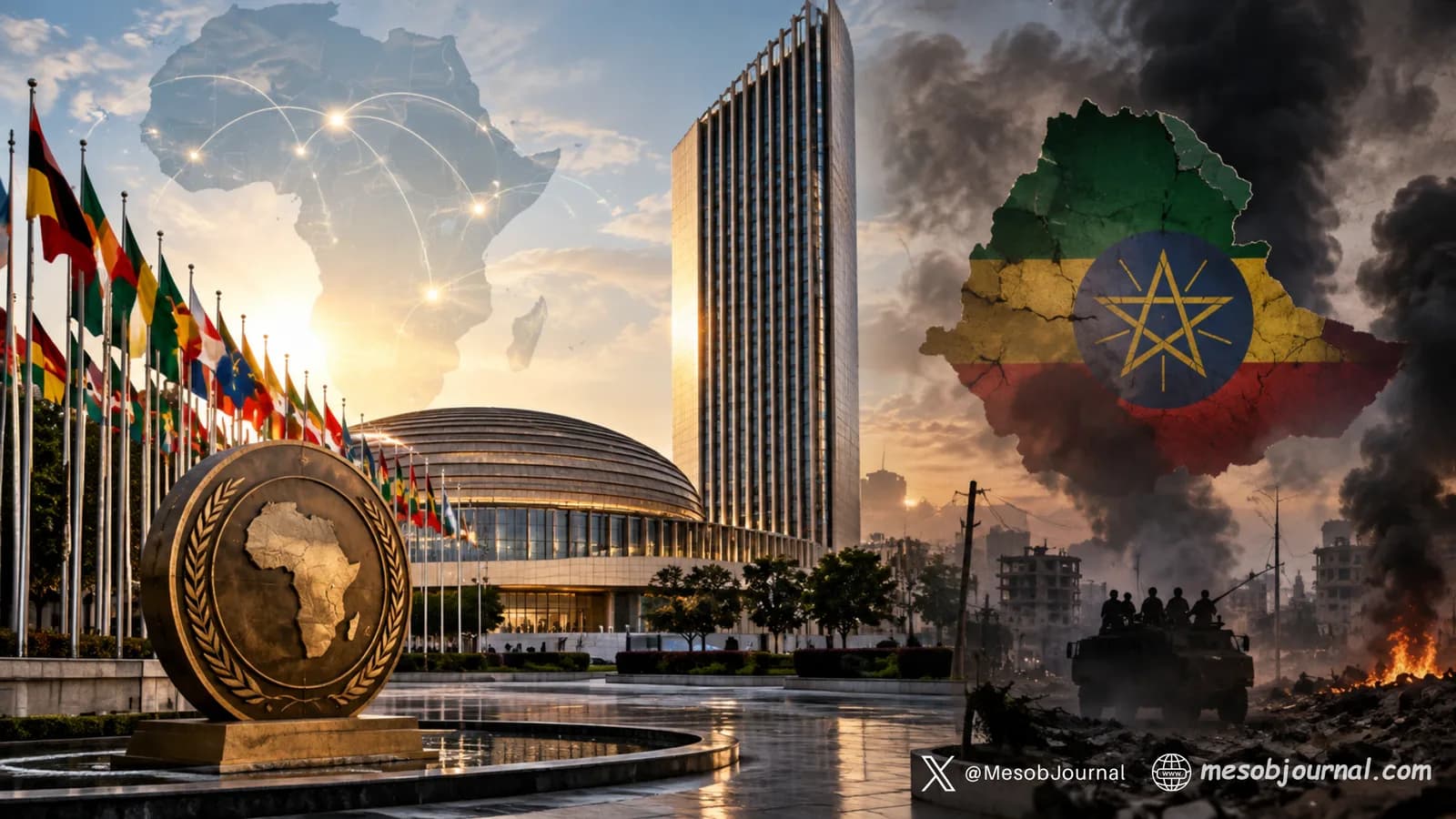


Washington has finally said it plainly.
In a March 19 speech at the Powering Africa Summit, Senior Bureau Official Nick Checker laid out the Trump administration’s Africa policy in language that stripped away much of the old diplomatic wrapping. Africa, in this telling, is no longer to be approached through the familiar vocabulary of aid, democratization, governance seminars, or moral posturing. It is to be approached through interests: trade, minerals, migration control, burden-shifting, and geopolitical competition.
That matters, not because it is shocking, but because it is unusually explicit.
For years, African governments have dealt with major powers that often spoke the language of partnership while practicing hierarchy. Checker’s remarks did not hide the hierarchy. They advertised it. He said U.S. assistance is “not charity” but “strategic capital,” said countries that do not support U.S. interests should expect reductions, and framed the continent as central to American supply-chain security, especially in critical minerals.
There is, to be fair, one part of this message many African states will recognize as more honest than what came before. Washington is now openly acknowledging that states pursue interests, that sovereignty matters, and that not every relationship must be packaged as an ideological crusade. The administration’s 2025 National Security Strategy says the world’s basic political unit is the nation-state, rejects imposing domestic political change on others, and argues that U.S. policy should be driven above all by what works for America. Checker echoed that line almost word for word.
That rhetorical shift will resonate in parts of Africa for a simple reason: many states are tired of being lectured.
But honesty alone does not make a policy balanced, and realism alone does not make it respectful.
The problem with the speech is not that it treats Africa as strategically important. Africa is strategically important. The problem is that it reduces partnership to a narrow transactional formula in which sovereignty is praised in theory while leverage is applied in practice. The speech repeatedly invoked mutual benefit, yet its practical center of gravity was unmistakably American advantage: more U.S. exports, more U.S. investment, more U.S. access to critical minerals, more influence over how African states structure markets, and less room for rivals.
That is especially clear in the minerals section.
Checker described Africa as sitting at the center of the race for cobalt, copper, graphite, and rare earths, and said the U.S. goal is to ensure African critical minerals “begin flowing west to the United States.” He presented this as a cleaner alternative to predatory competitors and tied it to projects such as the Lobito Corridor and the U.S.-DRC critical minerals partnership that followed the December 2025 Washington Accords between the DRC and Rwanda.
That language gives away the real architecture of the policy. Africa is being repositioned not primarily as a political partner, and not even primarily as a development partner, but as a strategic commercial zone in an era of supply-chain rivalry. The continent is valued for market growth, energy corridors, logistics routes, and mineral extraction systems that can be aligned with American industrial and geopolitical priorities.
None of that is unusual in great-power behavior. What is unusual is how little effort was made to disguise it.
The Zambia case is the most revealing test.
In the speech, Checker dismissed criticism as “fake news” and insisted the United States was not seeking anything at Zambia’s expense. Yet recent reporting shows Zambia pushed back on a proposed U.S. health funding arrangement because of concerns that it linked health support to mining cooperation, data-sharing, and wider economic reform demands. Reuters reported that Zambian officials objected to provisions they believed did not align with national interests, while critics argued the package effectively used health financing to advance mineral and strategic objectives.
That is the contradiction at the heart of “America First in Africa.”
Washington says it respects sovereignty and wants self-reliant African partners. But if aid, health support, financing, and diplomatic access are increasingly conditioned on alignment with U.S. strategic and commercial priorities, then the relationship remains one of asymmetrical leverage. The vocabulary has changed. The power imbalance has not.
There is another contradiction as well.
Checker argued that the United States will avoid “public moralizing” and engage governments as they are, not as Washington wishes them to be. In one sense, that is a break from a failed era of selective liberal interventionism. In another, it creates a more permissive environment for purely instrumental relationships with governments so long as they deliver on security, migration, mineral access, or commercial terms. That may be called realism. African states should also recognize it as conditional pragmatism, not principle.
For the Horn of Africa, this matters enormously.
The region is already under pressure from militarization, external competition, maritime insecurity, and the growing linkage between Red Sea geopolitics and inland resource corridors. A U.S. Africa policy built around transaction, extractive supply chains, and selective conflict management will not automatically stabilize that environment. In some cases, it may sharpen competition by rewarding short-term alignment over durable regional balance. Checker’s speech explicitly tied U.S. policy to migration control, critical minerals, and burden-shifting in conflict zones while emphasizing a lighter American footprint.
That kind of posture can produce quick deals. It does not necessarily produce stable orders.
African states, including those in the Horn, should read the speech carefully and without illusion. Washington is not withdrawing from Africa. It is reprioritizing Africa. The continent remains important, but primarily where it intersects with U.S. resource security, strategic competition, commercial opportunity, and migration concerns. Even the language of peace in the speech was framed through deal-making and conflict management, not through any broader commitment to equitable political settlement.
So what should Africa take from this?
First, that the age of sentimental phrasing is over, at least in this version of U.S. policy. Second, that African governments will need to negotiate harder, not softer, when presented with “partnership” offers tied to logistics, minerals, energy, or health financing. Third, that sovereignty cannot be defended only in speeches from Washington; it has to be defended in contracts, corridors, concessions, data clauses, financing terms, and security arrangements.
There is nothing inherently wrong with trade over aid. There is nothing inherently wrong with commercial diplomacy. There is nothing inherently wrong with states acting in their own interest. But there is something profoundly clarifying about a major power declaring that aid is leverage, values are secondary, and African resources must serve Western supply chains. That is not a reset toward equality. It is a cleaner statement of hierarchy.
In that sense, the speech was useful.
It removed the mask.