

Eritrea 2024: UN Report Shows a Nation Advancing on Its Own Terms
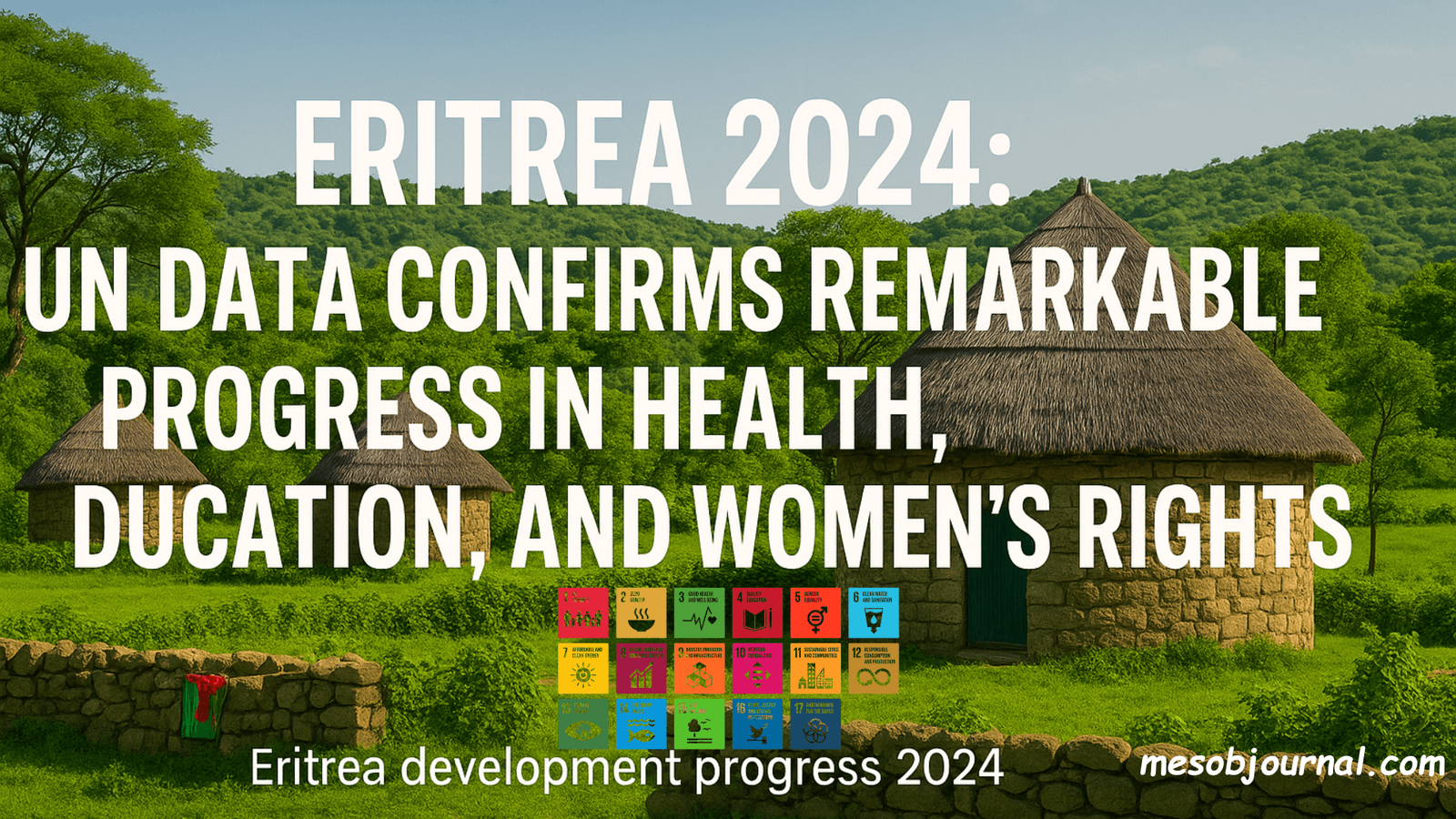
In a region too often in the headlines for war and displacement, Eritrea stands out for a quieter reason: progress.
Not the kind of “progress” framed in donor brochures, but the steady, tangible kind that the United Nations Resident and Humanitarian Coordinator in Eritrea has now put on record.
The UN’s 2024 Annual Results Report doesn’t read like a political press release. It’s a ledger of numbers, outcomes, and verifiable change - and it challenges a lot of lazy assumptions about this country.
Health: Measurable Gains, Not Abstract Promises
By the close of 2024, 81% of Eritrean births were taking place in health facilities — up from 71% the year before. Immunization coverage for children under two hit 98.9%, a rate that outpaces many wealthier states.
Maternal mortality has dropped by more than half since 2000. That’s not luck; it’s the result of expanded emergency obstetric care, 50 maternity waiting homes in rural areas, and the “Barefoot Doctors” initiative that sends trained locals - sometimes on camelback - to the last, hard-to-reach 20% of the population.
Education: Girls Outperforming the Boys
Retention rates to Grade 5 have reached 85% nationally, with girls leading at 87.8%. Over a million new textbooks, new classrooms, and digital labs in rural schools aren’t just expanding access - they’re reshaping opportunity. In an era when gender gaps dominate international debates, Eritrea has quietly tipped the balance in favor of its girls.
Women’s Rights: FGM Almost Eradicated
The country has achieved 94% village-level abandonment of Female Genital Mutilation. National prevalence among girls under five now stands at 2.3% - one of the lowest in Africa.
This didn’t come from a single workshop or donor-funded campaign. It’s the outcome of sustained legal enforcement, community dialogue, and a willingness to challenge deep-seated norms - village by village.
Food Security: Innovation Over Dependency
Fish production rose 66.7% in a single year thanks to new ice plants in Massawa that cut fishermen’s wait times from 20 days to one. Seaweed and fish waste are now being transformed into 330,000 liters of organic fertilizer, boosting harvests for farmers across the country.
The approach is telling: build systems that last, not pipelines for endless aid.
Climate and Clean Energy: Greening the Map
In 2024 alone, 2,830 hectares of degraded land were rehabilitated, 662,000 trees planted with an 85% survival rate, and solar-powered water systems installed for 36,000 people.
Eritrea’s Open-Defecation Free rate now stands at 94%, up from 32% less than a decade ago - a sanitation success rare even in far richer nations.
Governance and Data: More Transparent Than Many Expect
The National Statistics Office has resumed producing GDP estimates after a decade’s gap. Customs operations are now fully automated. Public financial systems trace state funds from release to disbursement.
In 2024, Eritrea presented its second Voluntary National Review at the UN, focusing on education, gender equality, and clean water - and made its case without theatrics, grounded in measurable progress.
Bottom line: Eritrea’s 2024 development results show a nation resisting dependency, investing in people, and building resilience in the face of geopolitical and environmental pressures.
In a media environment where Eritrea is often discussed only in terms of isolation, this report demands a reframing - from “isolated” to innovatively independent.
When the data comes directly from the UN Resident Coordinator in Eritrea, it’s hard for detractors to dismiss the country’s record as propaganda. The figures speak for themselves - stability, steady people centered development, and a stubborn refusal to mortgage sovereignty for short-term gains.
Related stories
Beyond the Propaganda: Wode Maya, Eritrea, and the Reality of African Sovereignty
It happens every time. A content creator lands in Asmara, camera in hand, expecting a dystopian wasteland. They come armed with the same exhausted Western propaganda—the “North Korea of Africa” label, dutifully slapped onto a YouTube title to appease the algorithm. Recently, the
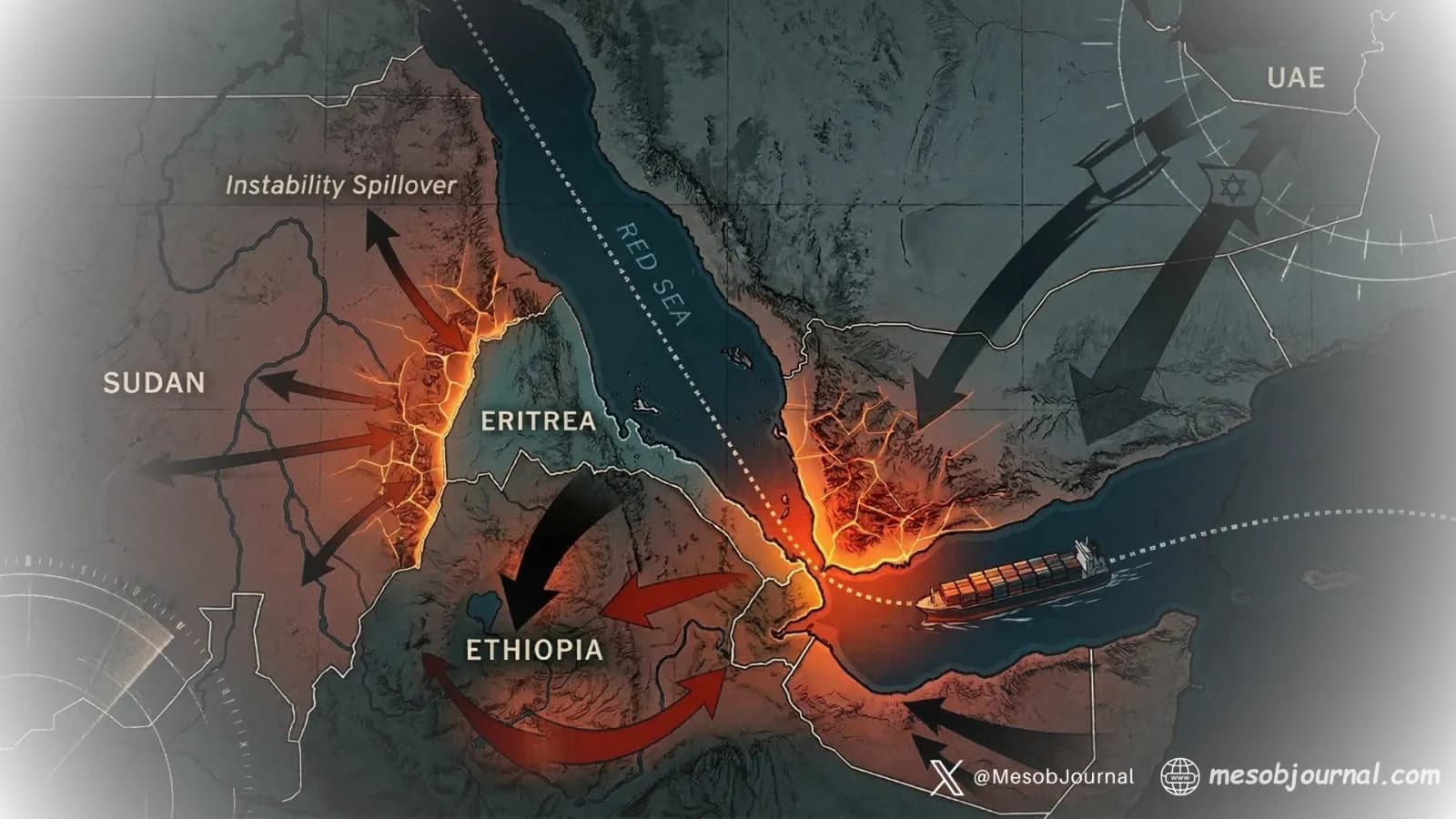
The World Cannot Afford a Second Maritime Meltdown in the Red Sea
As the Strait of Hormuz buckles under the weight of war, a reckless axis of actors—driven by Abu Dhabi and executed by its clients in Addis Ababa—threatens to turn the Horn of Africa into a global economic catastrophe. At a moment when the Strait of Hormuz is already under severe
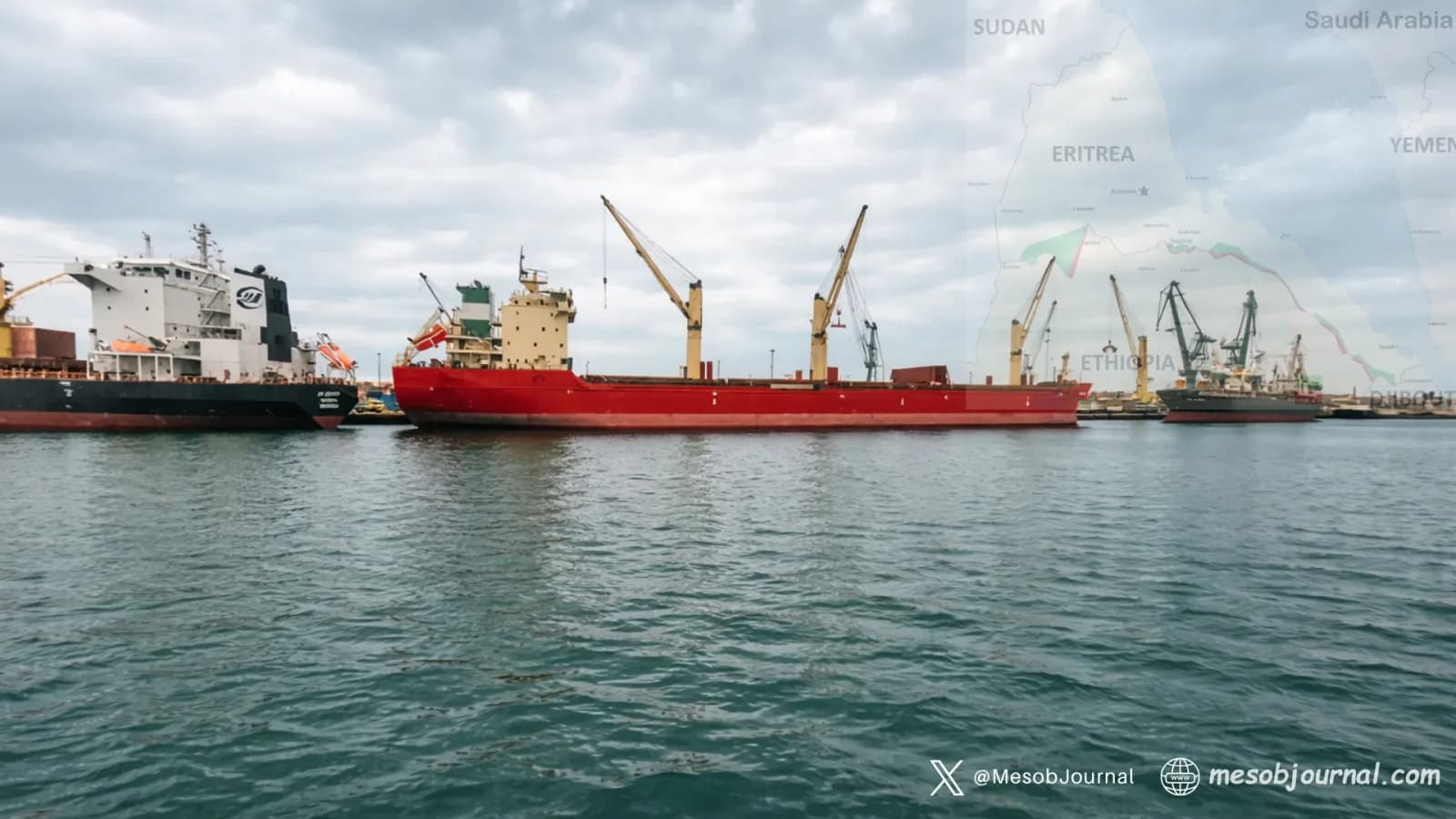
Eritrea’s Ports Are Not a Prize for Propaganda
Economic language is being used to normalize a far more dangerous idea: that sovereign Eritrean ports can be folded into Ethiopia’s national future as if law, borders and regional peace do not matter. The latest wave of Ethiopian regime-aligned messaging about the Red Sea follows
Ethiopia: Tigray’s Urgent Warning Exposes Abiy’s War Path
As Ethiopia moves into its 2026 election cycle, Tigrayan political actors say siege conditions are tightening again and federal force deployments are pointing toward renewed war. The most serious signal right now is not coming from Addis Ababa’s talking points. It is coming from