
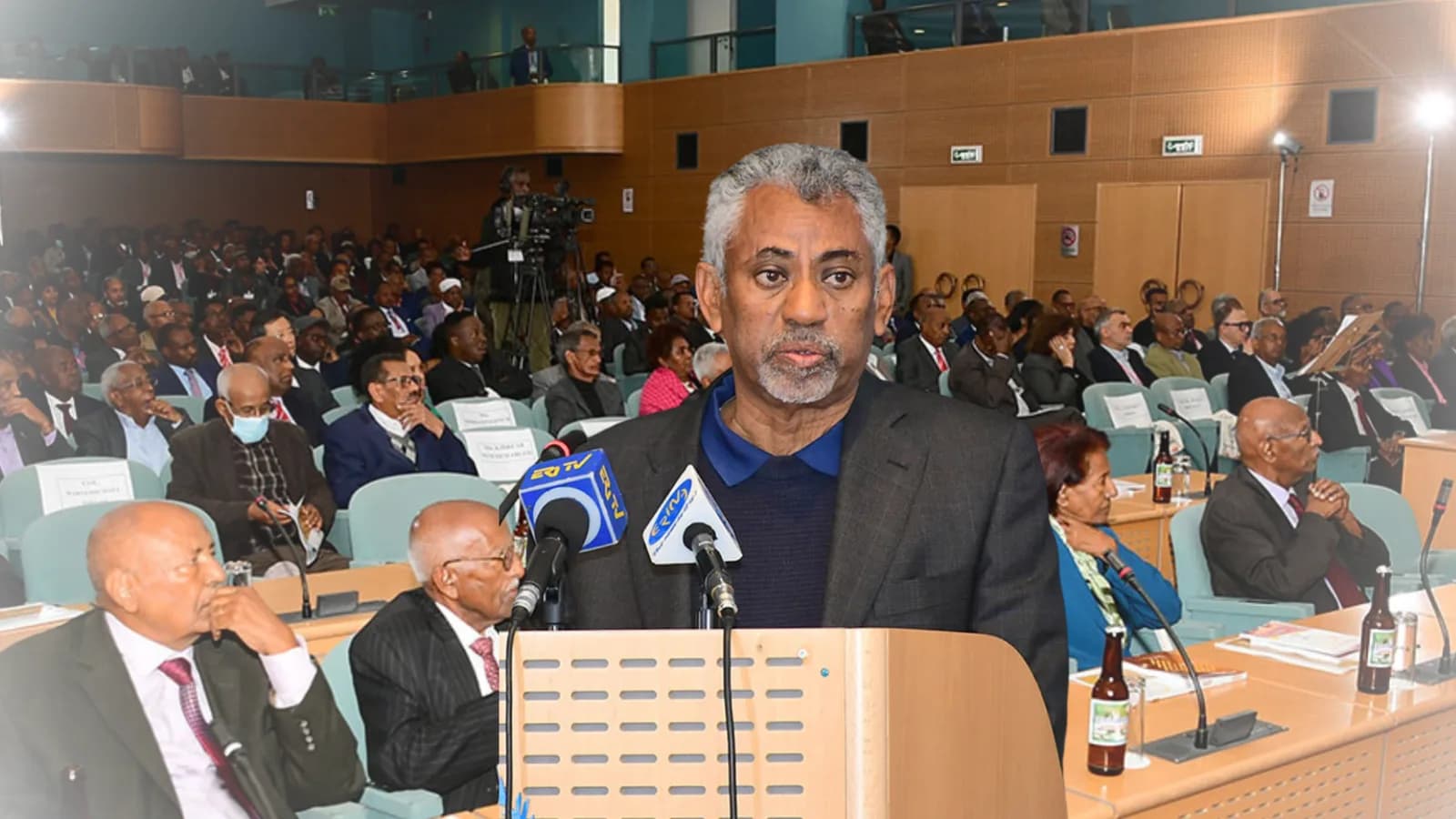
In a keynote address at the International Conference on Eritrean Studies (ICES), Eritrea’s Minister of Information, Yemane Gebremeskel, delivered a powerful speech addressing critical global, regional, and domestic issues.
The conference, which commences today, January 4, and runs until January 6 in Asmara, has brought together a diverse assembly of academics, government officials, diplomats, and experts.
It aims to delve into critical themes surrounding Eritrea’s development and its role within the shifting dynamics of the global landscape.
Celebrating Academic Collaboration
Minister Yemane commended the organizing committee for their dedication, which brought together participants from Eritrea and its diaspora.
He stressed the importance of the research papers to be presented, which span diverse fields and are expected to advance academic discourse while fostering collaborative networks.
“This conference,” he said, “will not only enhance development-oriented academic research but also counter negative narratives about Eritrea perpetuated by certain media outlets and think tanks.”
Global Turbulence: A Stark Warning
The Minister painted a stark picture of the current international landscape, citing escalating conflicts in Ukraine, Gaza, and the Middle East as examples of a fragile global security framework.
He warned of the potential for catastrophic outcomes, including nuclear escalation, likening the current balance of power to the perilous doctrine of Mutually Assured Destruction (MAD).
“The global security structure,” he noted, “is under unprecedented stress, with irrational brinkmanship and systemic anomalies undermining collective peace.”
He also highlighted structural flaws in global governance, particularly the limitations of the United Nations and the inequities within the Bretton Woods institutions, which he said exacerbate disparities between the Global North and South.
Africa’s Potential and Challenges
Turning his focus to the African continent, Yemane acknowledged its vast resources and youthful population while lamenting persistent issues like poverty, debt dependency, and internal conflicts.
He called for strategic and unified action, urging Africa to focus on long-term regional cooperation as a precursor to broader continental progress.
In a nod to Eritrea’s longstanding policy, he reiterated the country’s commitment to modular, region-based development, emphasizing the need for sustainable and incremental cooperation among African nations.
Eritrea’s Development Vision
Highlighting Eritrea’s unique development philosophy, the Minister detailed the nation’s focus on social justice, human capital investment, and sustainable resource management.
He underscored the government’s commitment to free education, accessible healthcare, and equitable infrastructure development as pillars of Eritrea’s social contract.
However, he acknowledged the challenges that have hindered progress, including years of conflict, sanctions, and external pressures. “Eritrea’s achievements have not matched its aspirations,” he said, citing unwarranted sanctions as a significant obstacle.
A Call for Global Solidarity
Yemane concluded with a call for a compassionate and equitable global governance system, echoing President Isaias Afwerki’s remarks at the 2023 BRICS Summit.
He envisioned a future where nations collaborate under transparent and fair rules, prioritizing human dignity and social justice over geopolitical rivalries.
Conference Focus
The ICES will delve deeper into these themes over the next three days, with discussions expected to address global governance, regional cooperation, and Eritrea’s developmental strategies.
Participants are poised to engage in vibrant discussions aimed at advancing understanding and charting pathways for progress.
The Minister’s keynote set a compelling tone for the conference, challenging attendees to confront the pressing issues of the day with intellectual rigor and collective resolve.