
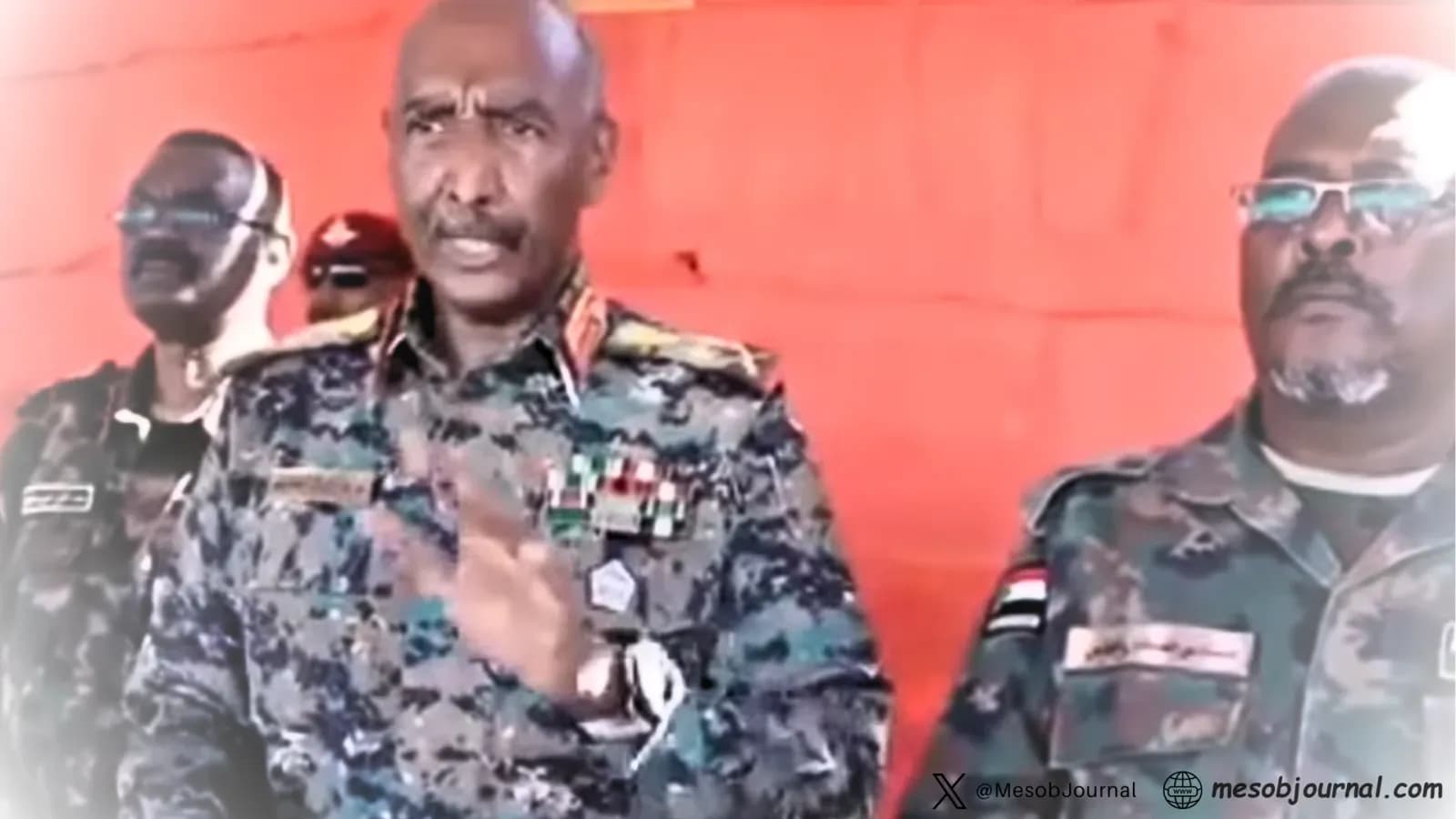
Sudan’s Sovereignty Council Chairman, Gen. Abdel Fattah al-Burhan, has reaffirmed his army’s determination to preserve national unity and reject any peace deal imposed from outside the country, in a speech laced with defiance and grief for the fallen.
Speaking in Atbara before ranks of officers and local leaders, Burhan thanked God “that we are standing before the Sudanese people — this army, the national army,” describing the armed forces as the line that separates the Sudanese nation from chaos. He praised what he called “convoys of martyrs” who have died “to protect this land and preserve this country,” invoking blessings upon soldiers who lost their lives in the ongoing war, particularly those martyred in El-Fashir.
Their sacrifice, he said, symbolized the unity of the Sudanese people: “This army does not fight a region or a group; it fights the enemies.” He reiterated that the armed forces “do not target tribes, peoples, or regions,” insisting their operations are directed solely at those threatening Sudan’s peace and sovereignty.
Burhan’s words carried both mourning and resolve. “Our martyrs are not cheap,” he declared. “The blood that was shed is not cheap. The Sudanese people are not worthless, not to be discarded or erased.” His tone reflected the army’s deep resentment of those he accused of “disturbing security, plundering, killing, stealing, and conspiring” against the country — language understood locally as a reference to the paramilitary forces that continue to challenge state authority.
On the question of peace, Burhan was unequivocal: any settlement must be on Sudanese terms. “There is no negotiation with a party,” he said, “unless it comes to fix Sudan — to restore its dignity and unity and remove the possibility of rebellion.” He added that those who come in sincerity to make peace with the Sudanese people will be welcomed, but warned, “No one will impose peace on us, no one will impose a government on us, no one will impose people on us that the people have rejected.”
The address came amid intensified fighting in several fronts, including in Darfur and around the capital, and renewed international efforts to push for a ceasefire. Yet Burhan’s message suggested Khartoum’s leadership sees such efforts with caution, determined that Sudan’s political future be decided within its own borders and by its own citizens.
As he ended his speech, the general’s message was clear: the war, for him, remains not just a struggle for territory, but for Sudan’s dignity and survival — a fight he insists must be won on Sudanese soil and by Sudanese hands.